Quick Answer: Florida acknowledgments and jurats are not interchangeable. An acknowledgment records the signer’s acknowledgment that they signed the document, while a jurat requires the signer to sign in the notary’s presence and swear or affirm that the statement is true. An oath uses a religious reference; an affirmation is a nonreligious declaration with the same function.
“Acknowledged before me” and “sworn to or affirmed” describe different notarial procedures, not different labels for the same stamp. Understanding acknowledgment vs. jurat in Florida answers two practical questions: whether you can sign beforehand and whether an oath or affirmation is required.
When arranging an appointment with Sunshine Mobile Notary, LLC, start with the document’s notarial certificate and instructions. Those details help separate the required procedure from identification, witness, and appointment logistics. This guide explains the general differences; it does not decide which act is required for a particular document.
Acknowledgment vs. Jurat in Florida: The Main Difference
For an acknowledgment, the signer appears and acknowledges signing the document; the signature can generally have been made earlier. For a jurat, the signer signs in the notary’s presence and takes an oath or affirmation about the statement’s truthfulness. Both require applicable identification and appearance procedures.
- Acknowledgment purpose: Record the signer’s acknowledgment that they signed the document.
- Acknowledgment signing: The signer can acknowledge a previously made signature.
- Acknowledgment declaration: Swearing or affirming that the contents are true is not part of this act.
- Jurat purpose: Record signing accompanied by an oath or affirmation.
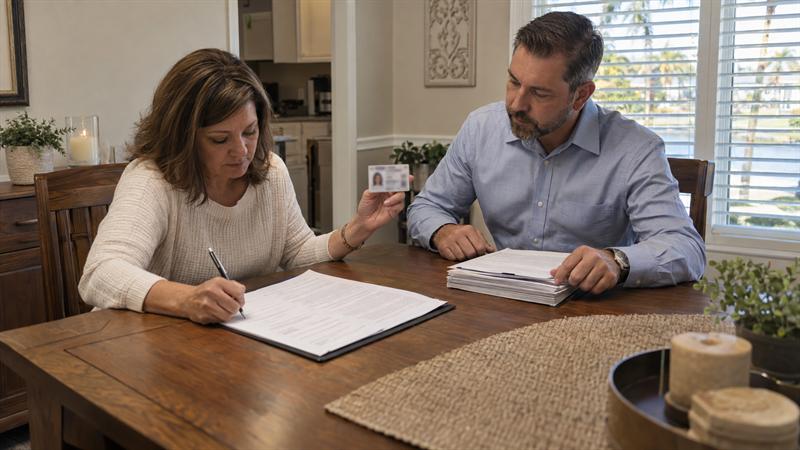
- Jurat signing: The signer signs in the notary’s presence.
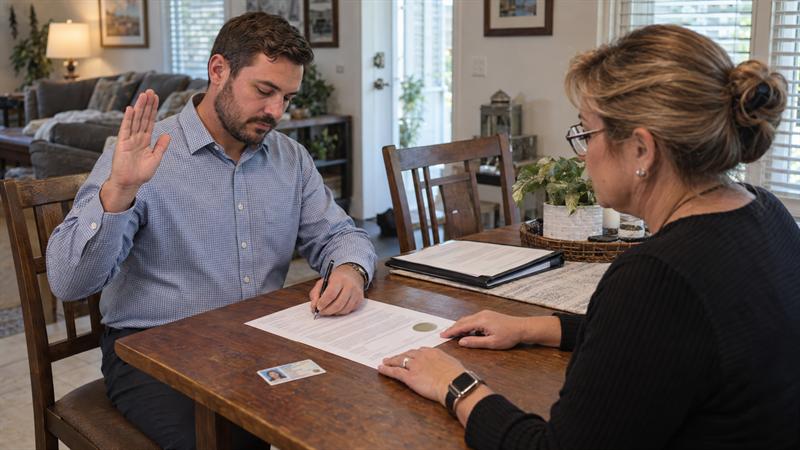
- Jurat declaration: The signer swears or affirms that the statement is true.
These distinctions follow Florida’s notarial framework, including its oath provisions, under Florida Statutes chapter 117. A notarial certificate records the act performed; it does not by itself confirm that a receiving organization will accept the document.
What Happens During a Florida Acknowledgment?
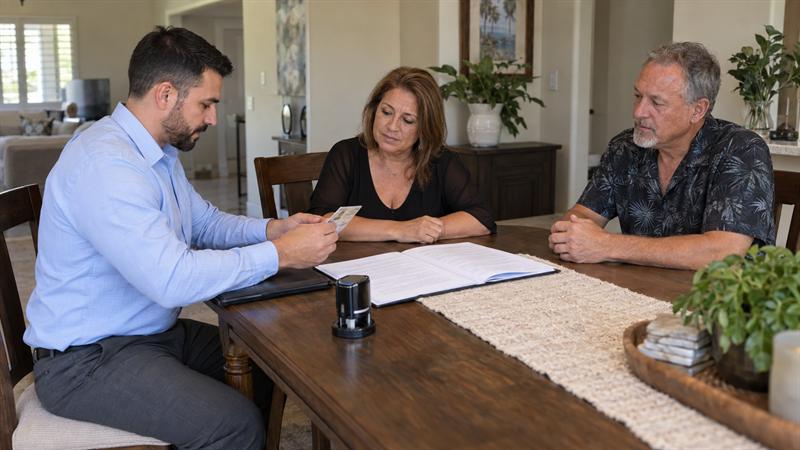
The signer appears before the notary, meets the applicable identification requirements, and acknowledges signing the document. The notary then completes the certificate for that act.
What the Signer Acknowledges
The signer acknowledges executing, or signing, the document. This is different from asking the notary to approve its contents. The basic process is:
- The signer appears before the notary.
- The notary establishes identity through an authorized method.
- The signer acknowledges signing the document.
- The notary completes the acknowledgment certificate.
An acknowledgment does not require the signer to swear that the document’s statements are true. The notary performs the notarial act rather than evaluating whether the document is favorable or appropriate for the signer’s situation.
Can the Document Already Be Signed?
Yes. A previously signed document can generally be acknowledged when the signer appears and acknowledges the signature. Signing earlier does not remove the appearance requirement.
For example, someone who signed yesterday can appear today to acknowledge that signature. The certificate records today’s notarial act, not a claim that the notary witnessed yesterday’s signing.
The procedural trap is confusing signature timing with appearance. An existing signature does not allow someone to drop off the document and skip appearing before the notary.
What Happens During a Florida Jurat?
A jurat requires both signing in the notary’s presence and taking an oath or affirmation. Identification and a stamp alone do not complete the procedure.
Florida’s notarial statutes address the signing requirement when a notary uses a jurat certificate.
Signing and Taking an Oath or Affirmation
The signer must make the sworn or affirmed declaration, not simply hand over a signed page. The procedure includes:
- Appearing and meeting applicable identification requirements.
- Signing in the notary’s presence.
- Taking an oath or affirmation about the statement’s truthfulness.
- Having the notary complete the jurat certificate.
This is where a “just stamp it” expectation breaks down: a signature does not substitute for an oath or affirmation. Omitting the declaration leaves a required part of the act unfinished.
What “Sworn to or Affirmed and Subscribed” Means
“Subscribed” means signed. “Sworn to or affirmed” means the signer made the solemn declaration associated with the statement.
For example, this wording on a certificate calls for more than acknowledging an existing signature. The signer must complete the jurat procedure, including the declaration. The notary administers that declaration but does not independently investigate the facts being stated.
Oath vs. Affirmation: What Changes?
An oath uses a religious reference; an affirmation does not. Both serve the same solemn-declaration function, so choosing an affirmation does not reduce the seriousness of the statement.
Two Ways to Make a Solemn Statement
- Oath: A solemn declaration made with a religious reference.
- Affirmation: A solemn declaration made without a religious reference.
The difference concerns the form of the declaration, not a higher or lower level of notarization. A signer who does not want a religious oath can use an affirmation.
How Oaths and Affirmations Relate to a Jurat
An oath or affirmation forms part of a jurat procedure, but either can also be administered separately. “Jurat,” “oath,” and “affirmation” are therefore not interchangeable names. The jurat records signing accompanied by the required declaration.
How Notarial Certificate Wording Helps Identify the Act
The certificate records the procedure the notary performed. It is distinct from the underlying document: the document contains the statement or transaction, while the certificate documents the notarial act.
Wording to Recognize—and Why the Document Title Is Not Enough
Two phrases provide useful recognition clues:
- “Acknowledged before me”: Signals an acknowledgment.
- “Sworn to or affirmed and subscribed before me”: Signals a jurat.
These are excerpts, not complete certificates to copy onto a document. The wording helps identify the procedure; it does not tell you that one certificate may replace another.
A document’s title alone is not a reliable basis for choosing the act. The guide to documents that may need notarization in Florida covers document examples. The certificate, instructions, and applicable requirements still need to be reviewed.
What to Do When the Certificate or Instructions Are Missing
Get clarification rather than choosing whichever certificate looks familiar. A notary can explain the differences between acknowledgments and jurats, but the preparer or receiving organization is usually the best source for confirming the required act. Questions about legal sufficiency or legal effect belong with an attorney.
- Review the instructions supplied with the document.
- Ask the receiving organization or preparer to clarify an unspecified notarial requirement.
- Keep the clarified instructions or certificate with the document for the appointment.
A problem can start when “get this notarized” is treated as a complete instruction. If neither the document nor its instructions identifies the act, a faster appointment does not resolve that missing decision. Leaving the question until signing time can interrupt the appointment while clarification is obtained.
The explanation of what a notary can and cannot do during an appointment describes the boundary between procedural assistance and legal advice.
Resolve unclear notarial instructions before arranging the signing. Take action if any of these situations applies:
- The instructions say only “notarize,” with no identified act.
- The certificate is missing or conflicts with the instructions.
- The document requires a jurat but has already been signed.
Missing or conflicting requirements need clarification from the preparer or receiving organization. For an already-signed document requiring a jurat, tell the notary so the signing step can be addressed. In each case, the next step is resolving the specific issue, not simply requesting a stamp.
Does Mobile or Online Notarization Change the Act?
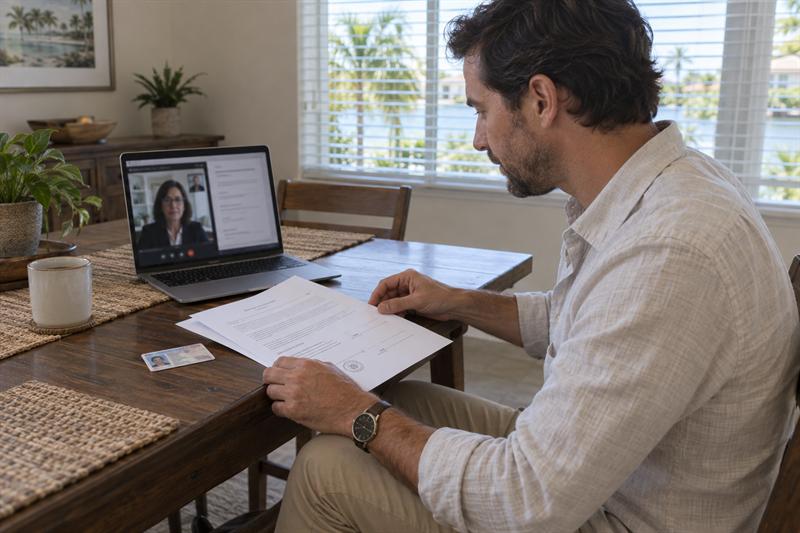
No. Mobile and remote online notarization describe how the appointment takes place, not which act the document requires. An acknowledgment remains an acknowledgment, and a jurat still requires signing and an oath or affirmation.
- In-person mobile service: The notary travels to the appointment location and meets the signer physically.
- Remote online notarization: The appointment uses an authorized online process with applicable electronic appearance and identity-verification requirements.
Where legally authorized, remote online notarization allows appearance through the required audio-video process. An ordinary video call is not a substitute. Florida’s online procedures are addressed in chapter 117, part II; suitability also involves the document, the signer, and the receiving organization’s requirements.
Sunshine Mobile Notary, LLC offers mobile service within its Southwest Florida service area and remote online options. For appointment planning, keep two questions separate: what act is required, and how will the signer appear? Discuss location needs for mobile service or document and technology suitability for an online appointment. Switching formats does not fix missing instructions.
What to Clarify Before Your Notary Appointment
Identify the procedure first, then prepare the document, participants, and appointment format. Use these checks:
- Required act: Read the certificate wording and resolve missing or conflicting instructions.
- Signing timing: If the document is unsigned and may require a jurat, keep it unsigned until the act is confirmed. If it is already signed and may need a jurat, disclose that to the notary.
- Document and identification: Prepare the document and identification that meets applicable requirements.
- Witnesses: Determine whether witnesses are separately required; the notarial act alone does not answer that question.
- Delivery method: Establish in-person logistics or online suitability rather than assuming either format works for every situation.
These are separate readiness questions. Knowing that a document needs an acknowledgment does not, by itself, establish its witness requirements or online eligibility.
Frequently Asked Questions About Florida Notarial Acts
Can a Florida Notary Choose an Acknowledgment or Jurat for Me?
A notary can explain the differences, but the preparer or receiving organization should confirm the required act. Describing what a jurat includes is different from deciding whether your document legally requires one. If the certificate or instructions are unclear, ask for clarification before the appointment.
What If I Already Signed a Document That Requires a Jurat?
The earlier signature alone does not satisfy the requirement to sign in the notary’s presence, and an oath or affirmation is also required. Tell the notary before the appointment so the signing step can be addressed. The earlier signature generally cannot be treated as one the notary witnessed.
Can I Choose an Affirmation Instead of a Religious Oath?
Yes. An affirmation is a nonreligious alternative with the same solemn-declaration function as an oath. During a jurat, it changes the form of the declaration, not the requirement to make it or the seriousness of asserting that the statement is true.
Does a Jurat Mean the Notary Has Verified Everything in the Document?
No. A jurat records a procedure in which the signer signs and swears or affirms that the statement is true. It does not mean the notary investigated the facts. The signer makes the declaration; the notary administers and documents the act.
Do I Need Witnesses as Well as a Notary?
Witness requirements depend on the document and applicable law, not simply on whether the certificate calls for an acknowledgment or jurat. Identifying the notarial act does not establish every signing requirement. A notary’s participation does not replace separately required witnesses.
Is an Apostille the Same as an Acknowledgment or Jurat?
No. An acknowledgment or jurat is a notarial act; an apostille concerns authentication for qualifying international use. An apostille does not replace a required notarial procedure or verify that the statements inside the document are true.
Key Takeaways
- Acknowledgment: The signer appears and acknowledges signing; the signature can generally have been made earlier.
- Jurat: The signer signs in the notary’s presence and takes an oath or affirmation.
- Oath and affirmation: Both have the same solemn-declaration function; affirmation is nonreligious.
- Unclear requirements: Resolve missing instructions rather than guessing, substituting certificates, or changing appointment formats.
Conclusion: Confirm the Required Act Before Arranging the Appointment
Contact Sunshine Mobile Notary, LLC to arrange mobile or remote online appointment logistics once the required act is clear. The task is not simply obtaining a stamp; it is completing the procedure the certificate records. Confusing an acknowledgment with a jurat can leave required signing or declaration steps unfinished.
Review the certificate and instructions now, resolve any missing requirement, and explain whether the document is already signed when discussing appointment options. Use the checklist for what to bring to a notary appointment to prepare. Addressing these details before signing helps keep procedural questions from becoming last-minute obstacles.