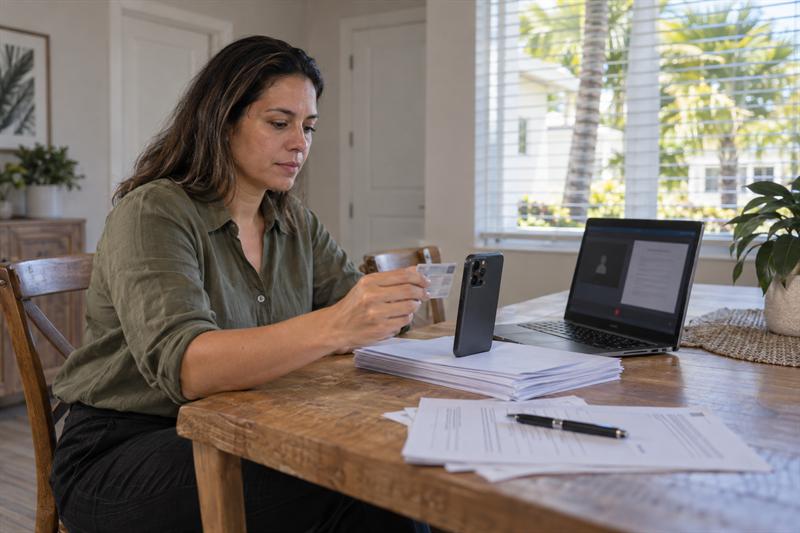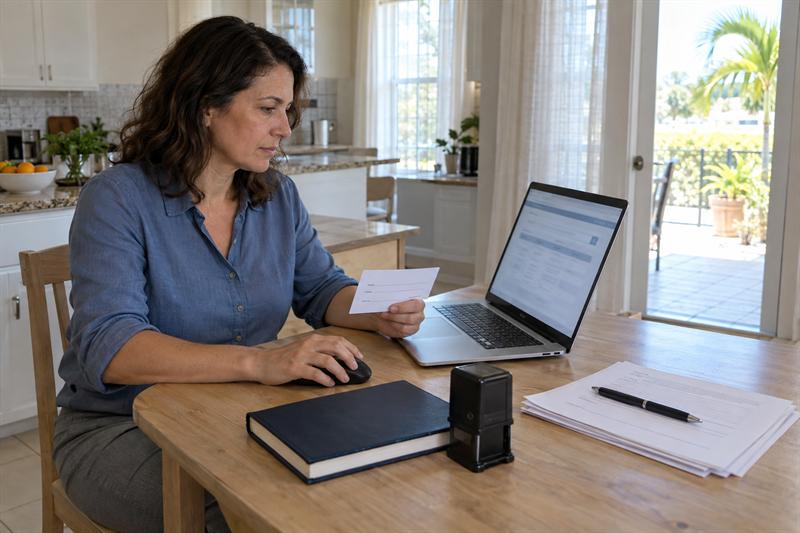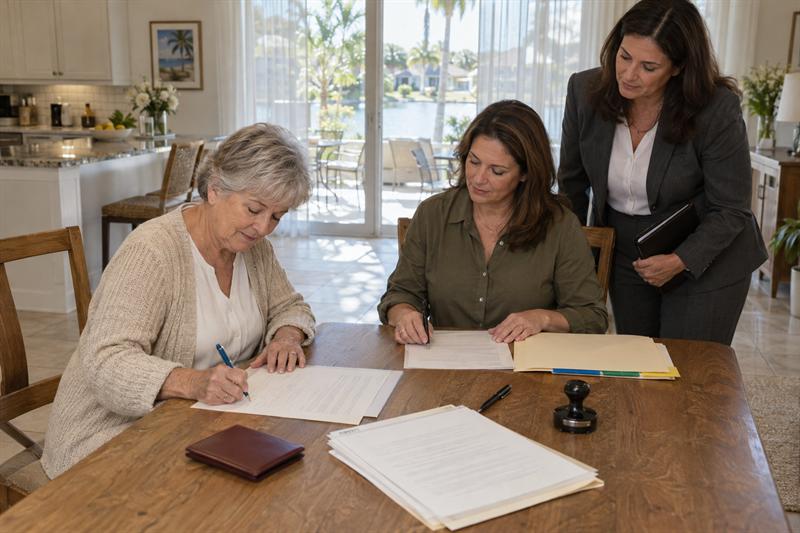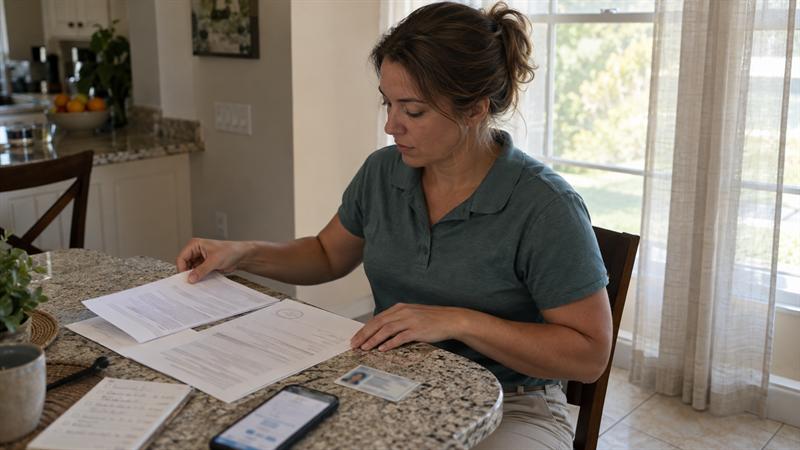
When a title company, signing service, or transaction coordinator assigns a closing, the real work starts before the signer picks up a pen. The signing must be tied to a confirmed location, a final document set, a prepared signer, and a return path the title team can rely on.
This article maps that operational path for title teams in Southwest Florida. It covers service expectations, signer logistics, the post-signing sequence, and the checks that reduce missed signings and delayed document returns.
What a Mobile Loan Signing Agent Does for Title Companies
A mobile loan signing agent travels to the signer location, verifies identity, witnesses the signing, and notarizes the closing documents. For a title company, the value is not just the stamp. The value is a controlled handoff from the assigning team to the signer and back to the file.
Understanding what happens at a closing in Florida helps the team assign the right support. A signing agent works inside the transaction workflow, so the appointment is tracked as a scheduling task, not a one-off notarization.
- What the signing agent handles: travel to the signer location, identity verification, witnessing the signing, notarization, signed page accounting, return logistics, and status confirmation.
- What the signing agent does not handle: document drafting, legal interpretation, loan term discussion, or closing cost explanation.
What Title Companies and Signing Teams Should Look For
When document issues surface after the agent is en route, the appointment becomes harder to manage. The stronger the pre-appointment checks, the clearer the title team’s visibility into signer status, document corrections, and return instructions.
- Service-area alignment: the signer location fits the agent’s listed Southwest Florida service area before the booking is confirmed.
- Confirmation process: the agent verifies signer name, location, time window, document type, and return method before travel.
- Signer preparation: the signer has instructions, valid government-issued photo ID, and a clear understanding of the appointment time.
- Document readiness: final documents are sent to the agent before travel, not handed over at arrival.
- Document-return method: the signed pages have a named endpoint, whether that is secure upload, encrypted email, courier, or office drop-off.
- Communication cadence: the title team knows who confirms the booking, who updates status, and who reports completion.
- Change handling: the team has a clear process when the location, time, or document set shifts.
When a signing goes wrong, the cause is often one of these steps being confirmed too late or changed without a clear update path.
Southwest Florida Service Areas for Signing Appointments
The listed service areas include Fort Myers, North Fort Myers, Cape Coral, Lehigh Acres, Estero, Sanibel, Captiva, North Naples, Naples, Ave Maria, Immokalee, Marco Island, Port Charlotte, Punta Gorda, Rotonda West, and Sarasota. The exact address still needs confirmation before the booking is locked.
The service area may look straightforward on a map, but the exact access point can change the schedule. Gated communities, condominium towers, medical facilities, and island routes can all shift arrival timing and signer access.
Greater Fort Myers and Cape Coral
This corridor covers Fort Myers, Cape Coral, North Fort Myers, Lehigh Acres, and Estero. For teams scheduling signings in this area, the mobile notary appointments in Fort Myers page covers local expectations for access, timing, and document handling.
If the signer is in a gated community, condominium tower, or assisted living facility, access instructions belong in the request. That detail reduces on-site delays tied to building or facility verification.
North Naples, Naples, Ave Maria, and Marco Island
When the signing sits closer to North Naples, Naples, Ave Maria, or Marco Island, the schedule should include bridge time, island access, and community entry requirements. The Mobile notary scheduling in Naples page is easier to manage when the signer location is confirmed before the document package is finalized.
Sanibel and Captiva add bridge travel and local traffic considerations. The signer location should be confirmed early enough to protect the appointment window.
Immokalee, Port Charlotte, Punta Gorda, and Rotonda West
These areas can involve longer drives from the core Fort Myers corridor. The exact address should be confirmed before the appointment is locked, especially for rural routes, property access, or a shift between the signer’s home and a business office.
Sarasota is listed as a service area and should be confirmed at request time. The request should include the full street address and any access notes that affect arrival.
What Happens After a Signing Request Is Submitted
This is where missed signings can start when the document set is not final before travel. A clear sequence gives the title team a visible status path from request to returned documents.
- Step 1. Request confirmation. The requesting team provides the signer name, location, document type, time window, and return method. The agent confirms the details while confirming availability and arranging the appointment.
- Step 2. Signer preparation. The signer receives appointment details, ID instructions, and any access notes. The time window is confirmed from both sides.
- Step 3. Document check. The final document set is in hand before departure. Page count issues are raised before departure, not during the signing session.
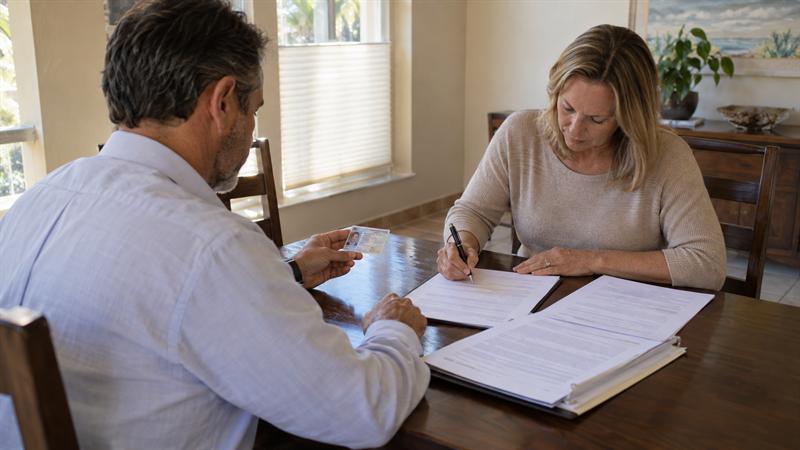
- Step 4. On-site signing. Identity is verified, the signer signs the required pages, and the notarization is completed with the signed pages accounted for.
- Step 5. Document return. The signed pages move to the agreed endpoint through secure upload, encrypted email, courier, or office drop-off.
- Step 6. Status confirmation. The title team receives confirmation that the signing is complete and the documents have been returned.
The coordination benefit goes beyond witnessing the signature. The agent carries status through the return step, which is where title files can lose time if status is not tracked.
Why Signer Logistics Matter in Southwest Florida
Problems become more likely when the signer is in a medical facility or an island community and the coordinator is tracking multiple appointments at once. The signer location is not just a ZIP code. It is a set of access, timing, and readiness factors.
Travel Zones and Scheduling Buffers
Naples and Fort Myers sit across a longer travel corridor, and island routes add bridge time. The appointment window should include a buffer for travel, community access, and document review.
A modest buffer also protects the session when the page count runs higher than expected or the signer needs time to review the final pages before signing.
Multiple Signers and Remote Participants
When more than one signer is involved, each signer needs a confirmed location and time. Treating multiple signers as one stop can create route delays and last-minute calls.
If one participant is remote, the team should confirm whether that participant is using remote online notarization or whether a local signatory is handling the signing.
Seniors, Medical Facilities, and Off-Site Signers
Medical facilities have visitor hours, access rules, and identification requirements. The signer should be confirmed as available and willing to sign at the scheduled time.
When a durable power of attorney or other authorization is part of the signing, the document set should be complete, and the authorization should be identified before the appointment is set.
After-Hours and Weekend Signing Windows
Some closings require evening or weekend appointments. The request should state the time window clearly so availability and travel routing can be checked before the booking is confirmed.
Compressed windows need earlier communication. The sooner the team states the timing constraint, the easier it is to manage the appointment and reduce pressure on the signer.
- Location access: building name, suite, gate code, parking, or facility visitor instructions.
- Signer availability: start time, expected duration, and any time-sensitive constraints.
- Participant count: number of signers and whether each is on site or remote.
- Document status: final version, page count, and any missing ID or authorization pages.
- Return method: where the signed pages go and who confirms receipt.
How Mobile and Remote Online Notarization Work Together
In-person mobile signing. The agent travels to the signer location and completes the signing physically. This remains the practical baseline for many traditional closing packages because the signer, the documents, and the notary are in the same place.
Remote online notarization. The signer appears through a secure video platform, and the notarization is completed remotely when the document type and signer meet the applicable requirements. This option is useful when a signer cannot reach the signing location and the receiving team accepts a remotely notarized page.
How they work together. A single signing can use both approaches when one signer is in person and another is remote. The key decision is whether the document set and receiving title company allow the remote component.
When one vendor handles both components, the title team has fewer coordination points. The appointment, signer preparation, and document return move through one operational channel instead of two separate vendor workflows.
Common Signing Appointment Challenges and How to Reduce Them
Most signing delays are not mysterious. They trace back to a missing detail in the request or a change that never made it to the agent in time.
- Final documents not sent in time. The agent arrives to a draft, the signing slows down, and the title team spends extra time chasing the correct pages.
- Signer location changes. The signer moves to a hospital, office, or nearby community, and the original route no longer fits the appointment window.
- Signer ID issues. The signer shows up without valid government-issued photo ID, and the appointment pauses until the document is corrected.
- Return method not confirmed. The signing is completed, but the signed pages remain with the agent because no return instruction was given at request time.
- Too-short appointment window. The time block does not allow room for travel, document review, identity verification, and multiple signers, and the file moves slower than expected.
If the signer location is not locked before the document package is sent, the result is usually a last-minute location change. If the return method is missing, the signed document becomes a holding problem after the appointment.
Questions to Ask Before Assigning a Signing Appointment
Before the signing goes on the calendar, the coordinator should run through the checkpoints that protect the file.
- Is the signer’s exact location confirmed and within the service area? This determines whether the appointment can be booked with a realistic travel window.
- Are the final documents sent to the signing agent before the appointment? This prevents the agent from carrying an old or incomplete package to the signer.
- Has the signer been told to bring valid government-issued photo ID? This avoids a common on-site delay when the signer arrives without the required identification.
- Is the document-return method agreed on? This ensures the signed pages move to the title file without an extra call after the signing.
- Are multiple signers involved, and does each have a confirmed location and time? This prevents one signer from waiting because another signer’s route was not planned.
- Does the appointment time leave buffer for travel, document review, and identity verification? This keeps the session from collapsing when the page count or access is more complex than expected.
- Is there a confirmed contact for the signing team? This gives the agent a reliable person to call when the signer, location, or document set changes.
Answering these before the appointment saves more time than managing them during the signing.
How Sunshine Mobile Notary, LLC Approaches Signing Coordination
If a signing team is repeatedly losing time to unconfirmed signer addresses, missing return instructions, and document status gaps, the problem is coordination.
- The signer location is still being confirmed after the document package is already in transit.
- The return method is being mentioned after the appointment rather than in the original request.
- Multiple signers are being treated as one stop instead of separate routes.
- The appointment window has no buffer for island access, facility hours, or document review.
When those indicators appear, the signing needs a pre-travel review before the agent departs. Sunshine Mobile Notary, LLC provides mobile notary appointments across its listed Southwest Florida service areas and a remote online notarization option, so the title team can confirm service-area fit, verify signer preparation, and track document status through the return.
How to Request a Signing Appointment
The request is where the signing is either set up right or set up wrong. The more complete the request, the faster the agent can confirm availability, signer readiness, and document handling.
- Signer name and signer location: include the full street address and any building, suite, gate, or facility access notes.
- Date and time window: state the requested start time and any latest acceptable end time.
- Document type and page count: this helps the agent prepare for the signing session and flag timing issues early.
- Document return method: specify secure upload, encrypted email, courier, or office drop-off.
- Signing team contact: provide the name and phone number of the person who can approve changes quickly.
- Multiple signer details: list each signer with a separate location and time when more than one person is signing.
For same-day or compressed requests, the timeline should be stated plainly in the request. That lets the agent confirm the available window or propose the next workable slot without guessing.
For recurring volume, title companies and signing teams can request a detailed estimate. That keeps scheduling, travel, and return workflow visible before the appointment is placed.
Once the agent confirms the details, the signing moves from a line item to a scheduled operational step with a clear owner at every stage.
Key Takeaways
- A mobile loan signing agent for a title company is a coordination role, not just a notarization task.
- Service-area confirmation is a standard step, not an obstacle.
- Signer logistics such as ID preparation, location access, and multiple signers are the variables most likely to cause a reschedule.
- Document return should be agreed on before the appointment, not after.
- In-person mobile signing and remote online notarization can support different parts of the same closing.
- A clear, complete initial request is the fastest path to a confirmed appointment.
Frequently Asked Questions
What is a mobile loan signing agent, and how is the role different from a general notary public?
A mobile loan signing agent is a notary public who travels to the signer location to verify identity, witness the signing, and notarize closing documents within a transaction workflow. The difference is context. A general notary may handle a one-time document, while a signing agent manages the appointment around a closing file.
The signing agent can also track document status, help confirm signing readiness, and return the signed pages to the title team’s designated endpoint. The agent does not draft documents, explain loan terms, or give legal advice. The role is operational, and the value comes from keeping the closing package moving.
Does a mobile loan signing agent in Southwest Florida cover Naples and Fort Myers, or is it limited to one area?
The listed service areas span Fort Myers, Cape Coral, Naples, Marco Island, Port Charlotte, Punta Gorda, Immokalee, and Sarasota, among other communities. Because the area covers multiple corridors, the exact signer location usually determines the scheduling window.
A Naples signing, a Marco Island signing, and a Fort Myers signing all fall within the listed Southwest Florida service areas, but each involves different travel and access considerations. That is why the exact signer address is confirmed before the booking is locked.
Can part of a loan signing be completed by remote online notary and part in person?
In some transactions, a signing can be split when one signer is in person and another uses remote online notarization. The decision depends on the document type, the signer’s circumstances, and whether the title company or lender accepts a remotely notarized page.
A practical approach is to keep the in-person portion as the baseline for the closing package. Remote online notarization adds flexibility when a signer cannot reach the signing location. The receiving team should confirm which pages must be notarized in person and which can be handled remotely.
What information should a title company include when requesting a mobile loan signing appointment?
The request should include the signer name, exact signer location, date and time window, document type, page count, return method, and a contact person for the signing team. These details let the agent confirm the appointment without a second round of back-and-forth.
When multiple signers are involved, each signer should have a separate location and time. If the signing is in a medical facility, gated community, or commercial building, access instructions belong in the request. The more complete the request, the fewer follow-ups disrupt the workflow.
What happens if the signer’s location or the appointment time changes after the request is submitted?
A small shift, such as a short time change or a nearby location within the same area, is usually manageable if communicated quickly. A larger change, such as moving the signing from Naples to Fort Myers or relocating to a medical facility in a different corridor, usually requires a new scheduling window.
The fastest response is to send the updated location, time, and contact information as soon as the change is known. The agent can then confirm whether the updated details still fit the available window or whether the appointment needs to be rebooked. Delays in updating details can turn a simple change into a missed signing.
How does a title company receive signed documents after a mobile loan signing is complete?
The return method is set in the initial request and should match how the title team normally receives closing documents. It can be secure upload, encrypted email, courier, or in-person drop-off at the title office.
Once the signing is complete, the agent sends the signed pages to that endpoint and the title team receives completion status. The most useful return method is the one that fits the team’s existing document workflow, because it avoids creating a second tracking task after the signing is done.
Conclusion
The core problem is not the signature. The core problem is the handoff. When signer location, document status, and return path are not locked before travel, the signing produces reschedules, delayed file movement, and extra follow-up calls for the title team.
When a title company treats the signing as a coordination task, the workflow becomes visible. The request is confirmed, the signer is prepared, the documents are final, and the signed pages return to the named endpoint without a separate chase.
Sunshine Mobile Notary, LLC is the practical next step for title companies, signing services, and transaction coordinators who need that handoff controlled across Southwest Florida. The service is built around the points where missed signings often start: service-area confirmation, signer logistics, document readiness, and return coordination.
Start with the request details: signer location, document status, time window, and return method. If those details can be confirmed, the signing moves forward with fewer interruptions and a clearer path back to the file.