Many people arrive at a notary appointment with one question: “What can a notary do for me?” The bigger issue is often whether the document is ready and whether an unanswered question belongs with the notary, document provider, lender, title company, government agency, or attorney.
At Sunshine Mobile Notary, LLC, incomplete documents, unclear witness instructions, and missing certificate directions can prevent an appointment from moving forward as expected. Those details generally need to be resolved before the notarial act begins. This guide provides general Florida notary education and is not legal advice or document-specific instruction.
The Short Answer: What Can a Notary Do?
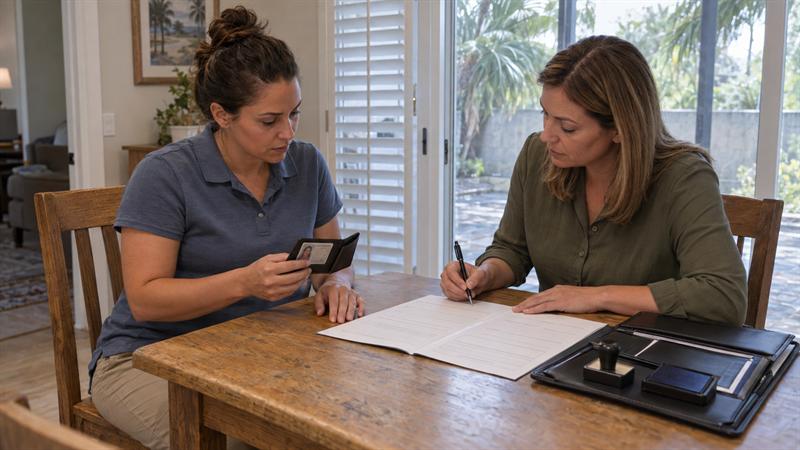
A notary public performs an authorized notarial act when the required conditions are present. That generally includes checking identity, confirming that the signer appears to be acting voluntarily and is aware of the signing, administering an oath or affirmation when required, and completing the applicable notarial certificate. A notary does not determine what a document means, whether it is legally appropriate, or whether the signer should proceed.
- A notary can: verify identity, take an acknowledgment or witness a signature when appropriate, administer an oath or affirmation, and complete the notarial portion of a document.
- A notary cannot: provide legal advice, interpret legal terms, select document forms, complete substantive document blanks, or guarantee the document’s acceptance.
The distinction is important: notarization addresses the signing process. It does not replace the instructions needed to prepare, use, file, record, or enforce a document.
What a Notary Can Do During an Appointment
Verify the Signer’s Identity
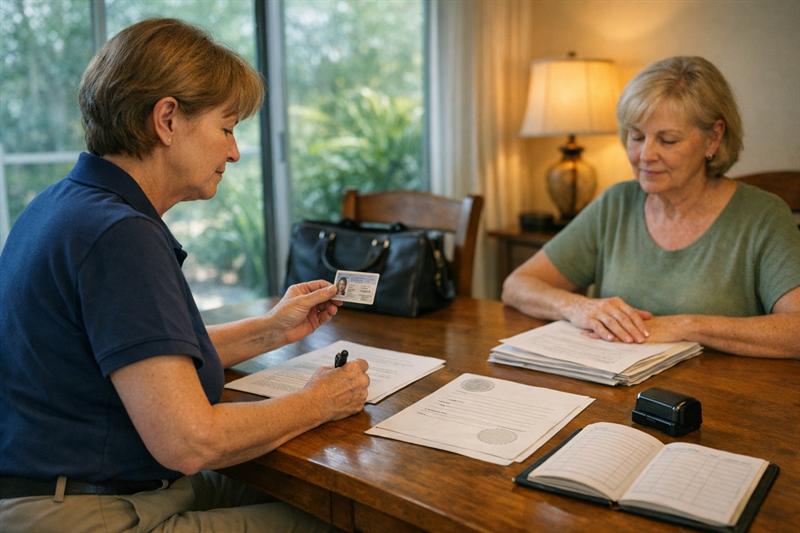
A notary checks identification to establish that the person appearing for the appointment is the person named in the document. Identification is not a minor appointment detail. If the signer does not have acceptable identification, the notarization may not move forward as planned.
Last-minute ID problems can arise when a signer brings expired identification, identification that does not match the document name, or identification that does not meet the applicable requirements. Reviewing what to bring to a notary appointment before scheduling can help reduce avoidable delays.
Confirm Willingness and Awareness
A notary also looks for signs that the signer is acting willingly and appears aware of the act of signing. This does not mean the notary decides whether the document is wise, fair, or legally beneficial. It means the signing should not appear forced, confused, or disconnected from the signer’s own decision.
If pressure from another person, visible confusion, or an inability to participate becomes the central issue, the notarization may need to stop. Families and other parties may assume a notary can simply “get the paperwork signed.” Notarization is not a shortcut around questions about consent, legal capacity, or document meaning.
Administer an Oath or Affirmation When Needed
Some documents require a signer to make a sworn statement. In those situations, a notary may administer an oath or affirmation before completing the notarial certificate. Affidavits and sworn statements are common examples, but the document instructions determine which notarial act is required.
An oath or affirmation is different from simply signing a form. The signer formally confirms that the statements being made are true. A notary can administer that act, but should not decide which certificate is appropriate for the signer’s legal situation.
Complete the Notarial Certificate
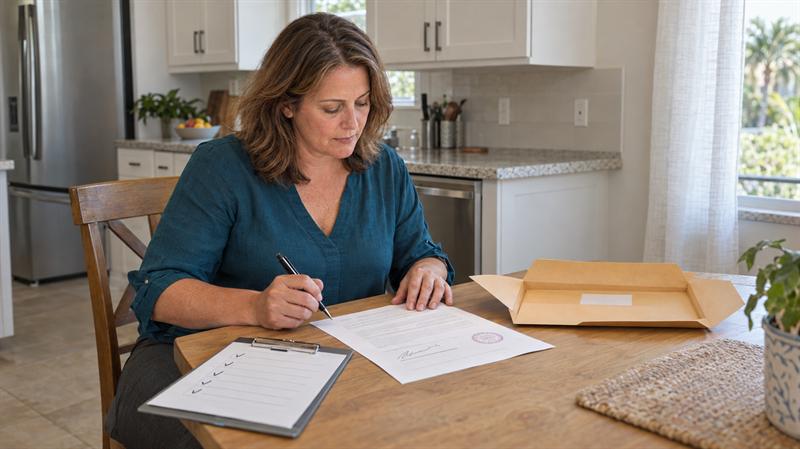
The notarial certificate is the part of the document completed by the notary to describe the act performed. Depending on the document and its instructions, that certificate may reflect an acknowledgment, jurat, oath, affirmation, or another authorized notarial act.
Completing the certificate does not mean the notary prepared the document. The document’s legal text, blank fields, instructions, and intended use remain the responsibility of the signer and the party that created, requested, or will receive it.
What a Notary Cannot Do
Give Legal Advice or Explain What a Document Means
A notary cannot explain legal rights, obligations, deadlines, risks, or consequences within a document. For example, a notary cannot tell a signer whether a power of attorney gives someone too much authority, whether a deed changes ownership as intended, or whether a contract is appropriate to sign.
A signer may ask, “What does this paragraph mean?” or “Should I sign this?” Those are legal questions that require guidance from an attorney, not a notary.
Choose the Form, Notarial Certificate, or Signing Instructions
A notary cannot decide which form a signer needs or which notarial certificate best fits the signer’s legal situation. The correct instructions should come from the document recipient, lender, title company, employer, agency, attorney, or person who prepared the document.
If a document says only “notarize this” without identifying the required act, that missing instruction generally needs to be resolved before signing. A recipient may reject a document if the wrong certificate is used or its required signing process is not followed.
Draft, Edit, or Complete Legal Documents
A notary cannot fill in substantive blanks, revise legal language, prepare a legal form, or decide what information belongs in a missing field. A blank property description, date, address, account number, beneficiary designation, or other document detail should be handled by the party responsible for the document.
Missing pages, unsigned sections, blank fields, and unclear certificate wording can pause an appointment because the notary cannot make those decisions for the signer. Review these common mistakes that can delay a notary appointment before the document is ready for signature.
Guarantee That a Document Will Be Accepted, Recorded, or Enforced
Notarization does not guarantee that a lender, court, recorder, government agency, employer, foreign authority, or other recipient will accept the document. Acceptance, filing, recording, and legal enforceability are separate matters.
A properly completed notarial certificate does not correct a document with the wrong form, missing attachments, incorrect instructions, or filing defects. The receiving organization controls its own requirements. Notarization completes one procedural step, not the entire transaction.
Notarize When Required Conditions Are Not Met
A notary may need to pause or decline a notarization when required conditions are missing. Common issues include inadequate identification, an absent signer, concerns about willingness, incomplete documents, missing witnesses, or uncertainty about the requested notarial act.
Addressing these issues before the appointment can help avoid a second appointment, a rejected submission, or the need to correct the document after signatures have been placed. Preparation helps prevent avoidable travel, scheduling, and signing delays.
A Notary Is Not the Same as an Attorney, Witness, or Filing Office
Notary vs. Attorney
An attorney provides legal advice and representation. A notary performs authorized notarial acts and remains impartial. These roles are not interchangeable.
A document may require notarization even when no attorney prepared it. That does not make the notary responsible for explaining the document or deciding whether it is appropriate for the signer’s circumstances.
Notary vs. Signature Witness
A signature witness and a notary can have separate responsibilities. Some documents require witnesses in addition to notarization, and the witness requirement may include rules about who may serve and when that person must be present.
It is a mistake to assume that a notary automatically counts as a witness. That assumption can lead to a rejected document or a second signing. The document provider or recipient should identify witness requirements before the appointment is arranged.
Notary vs. Lender, Title Company, Clerk, Agency, or Document Recipient
Lenders and title companies provide transaction-specific instructions for loan and real estate documents. Clerks, recorders, and agencies determine filing, recording, licensing, and procedural requirements. The document recipient decides what it will accept.
The notary’s role is narrower: completing the authorized notarial act once the required conditions are satisfied. For real estate transactions, it can help to understand what happens during a Florida loan signing, including the difference between guidance from the title or lending side and the notary’s impartial role.
Who Should Answer Questions About Your Document?
The right answer depends on the question. Sending the question to the right party early can help prevent unresolved document issues from surfacing during the notary appointment.
- Questions about legal meaning, rights, obligations, or consequences: These belong with an attorney.
- Questions about the correct form, certificate, or signing instructions: These belong with the document provider, recipient, lender, title company, employer, agency, or institution that supplied the document.
- Questions about filing, recording, licensing, or processing: These belong with the relevant clerk, recorder, government office, title company, or receiving organization.
- Questions about appointment logistics: These belong with the notary service, including location, scheduling, general identification readiness, and available appointment formats.
If the only instruction is “get this notarized,” an important detail may still be missing. Identify who will receive the document and obtain that party’s instructions before the appointment.
What to Have Ready Before a Notary Appointment
Acceptable Identification
Have acceptable identification ready before the appointment begins. The name on the identification should align with the document and the signer’s appointment information.
Identification problems can delay an appointment because they affect the notary’s ability to proceed. Check identification before the notary arrives rather than discovering that it is expired, unavailable, or inconsistent with the document name at signing time.
A Complete Document and Clear Signing Instructions
Review the document for missing pages, blank fields, attachment references, signature lines, and instructions from the recipient. The goal is not to interpret the document. It is to make sure the signer has the instructions needed to present a complete document for notarization.
If a field is blank and the signer does not know what belongs there, the document is generally not ready. The notary cannot decide how to complete the form.
Required Witnesses, If Applicable
Find out whether witnesses are required, whether they need to be present during signing, and whether they must meet specific qualifications. Witness requirements are separate from notarial requirements.
Waiting until the appointment to address witnesses can lead to rescheduling. A witness is not simply an extra person in the room. The document instructions determine whether that person is needed and what role they must play.
The Right Appointment Format and Location
Mobile notarization can be practical when travel, mobility, work schedules, healthcare settings, family obligations, or location constraints make an office visit difficult. Remote online notarization can be appropriate when the document recipient accepts that format and the transaction fits the process.
The appointment format changes logistics, not the notary’s role. Whether a signer meets a mobile notary at home or completes an online session, the document still needs clear instructions, the signer still needs acceptable identification, and required witnesses still need to be addressed.
Common Appointment Situations: What the Notary Can Do and What You Need to Do First
“I Do Not Understand This Document”
A notary cannot explain the legal meaning of the document or advise whether signing is the right choice. The key distinction is between understanding the signing process and understanding the document’s legal effect.
If the question is about what a clause means, what rights are being given up, or what happens after signing, the answer requires legal guidance. If the question is about a missing instruction or required certificate, the document provider or recipient is the appropriate source.
“My Document Has Blanks or Missing Information”
A notary cannot decide how to complete blank fields or change legal wording. Missing information should come from the person or organization responsible for preparing or receiving the document.
Filling in information based on a guess simply to keep the appointment moving can lead to rejection, correction requests, or the need to execute a new document. Resolve blanks before signature time.
“I Do Not Know Which Notarial Certificate I Need”
A notary should not select a certificate based on the signer’s legal needs. The document recipient, provider, lender, title company, agency, or attorney should identify whether the document needs an acknowledgment, jurat, or another form of notarization.
The fact that a document needs notarization does not answer which act is required. Recipient instructions matter more than a general description of the document.
“My Document Requires Witnesses”
Witnesses may be required in addition to notarization. The document instructions should explain whether witnesses need to sign, whether they must be present at the time of execution, and whether they must meet particular qualifications.
The notary does not necessarily replace a missing witness simply because both roles relate to signing. Treat witness planning as its own requirement, not an item to sort out after the appointment begins.
“I Already Signed the Document”
An existing signature does not produce one universal answer. The proper timing of the signature depends on the type of notarial act and the instructions connected to that document.
Do not cross out, re-sign, or alter the document based on assumption. The key question is whether the conditions for the requested notarial act can still be satisfied, not simply whether the signature line already contains a name.
“I Need to Use This Document Outside the United States”
Notarization and an apostille are separate processes. A notarized document used outside the United States may require additional authentication, depending on the destination country and the organization receiving it.
A common misunderstanding is assuming that every international document needs an apostille or that notarization alone finishes the process. Learn more about when an apostille may be needed for a document used outside the United States before sending documents abroad.
Mobile and Remote Online Notarization: What Changes and What Does Not
Mobile notarization changes where the appointment happens. Sunshine Mobile Notary, LLC offers appointments at agreed locations, which can be useful when a signer cannot easily visit a bank, shipping store, or office during limited hours.
Remote online notarization changes how the appointment happens by using an online process and identity-verification technology. It does not change the need for document readiness, signer participation, recipient acceptance, or the notary’s impartial boundaries.
If location or timing is the main issue, mobile service may be the more practical choice. If an eligible transaction needs to be completed remotely and the recipient accepts online notarization, remote online notarization may fit. Confirm recipient requirements before choosing an appointment format.
Company Approach: Clear Boundaries Prevent Failed Appointments
Sunshine Mobile Notary, LLC approaches each appointment as a process that should be prepared before the signing begins. The most efficient appointment is not simply the fastest one on the calendar. It is one where the signer has identification, complete documents, clear instructions, and any required witnesses ready.
If your appointment includes any of the following, action may be needed before signing:
- You do not know what the document means or whether you should sign it.
- You have blank fields, missing pages, or no instructions about the required certificate.
- You were told that witnesses are needed but do not know who can serve.
- You need the document accepted by a lender, agency, court, recorder, employer, or foreign organization but have not confirmed its requirements.
These details can lead to rejected paperwork, repeat appointments, or documents that cannot move to the next step. Resolve the document requirements first, then use mobile or remote service to complete the notarial appointment in the format that fits.
Key Takeaways
- A notary can verify identity, confirm willingness and awareness, administer an oath or affirmation when required, and complete an authorized notarial act.
- A notary cannot give legal advice, explain document meaning, choose forms or certificates based on a signer’s legal needs, prepare legal documents, or guarantee acceptance.
- Questions about legal meaning belong with an attorney. Questions about document instructions belong with the party that prepared, requested, or will receive the document.
- Missing ID, incomplete forms, unclear instructions, and absent witnesses can delay notarization.
- Mobile and remote online notarization improve access and convenience, but they do not change the need for a complete document and clear instructions.
Conclusion: Prepare the Document First, Then Schedule the Notarization
The notary appointment itself is often straightforward when the document is complete and the instructions are clear. Problems arise when unresolved document questions are left for the notary to answer, even though those decisions belong to an attorney, lender, title company, agency, document preparer, or recipient.
Sunshine Mobile Notary, LLC is a practical next step once the document is complete, the required instructions are clear, and the signer is ready with identification and any needed witnesses. Mobile service and remote online notarization can remove location and scheduling barriers while keeping the appointment focused on the authorized notarial act.
Frequently Asked Questions
Can a notary explain a document before I sign it?
No. A notary cannot interpret legal language, explain rights or obligations, or advise whether signing is in the signer’s best interest. A notary may identify where the notarial certificate is completed, but cannot explain whether a deed, affidavit, power of attorney, or contract creates a legal obligation. Notarization addresses the signing process, not the document’s legal meaning.
Can a notary tell me which notarial certificate I need?
No. The required certificate should come from the document recipient, preparer, lender, title company, government agency, employer, or attorney responsible for the instructions. An acknowledgment and a jurat are different notarial acts, and the correct choice depends on the document’s purpose and the recipient’s requirements. The notary completes the appropriate act but does not make the underlying document decision.
Can a notary fill out blank spaces on my document?
No. A notary cannot decide what belongs in blank fields, revise legal language, or complete a legal document for a signer. A missing address, date, property description, account detail, or other substantive item should come from the party responsible for the document. Completing a notarial certificate is different from completing the signer’s document.
Can a notary provide witnesses for my document?
Not necessarily. Witnesses and notaries have separate roles, and some documents require witnesses in addition to notarization. The document’s instructions determine whether witnesses are needed, whether they must be present during signing, and whether they must meet specific qualifications. A notary is not automatically a witness simply because both roles relate to the same document.
Can a notary notarize a document that has already been signed?
The answer depends on the requested notarial act and the document instructions. Some acts involve the signer acknowledging an existing signature, while others require a sworn statement before the notary. The deciding issue is whether the required conditions for that specific act are present. An existing signature alone does not tell the full story.
Can I use mobile or remote online notarization for any document?
No. Mobile notarization and remote online notarization change where or how the appointment occurs, but they do not override recipient requirements. A mobile appointment may be useful when travel is the issue. Remote online notarization may fit an eligible transaction when the receiving party accepts that format. The document recipient’s requirements determine which option works.