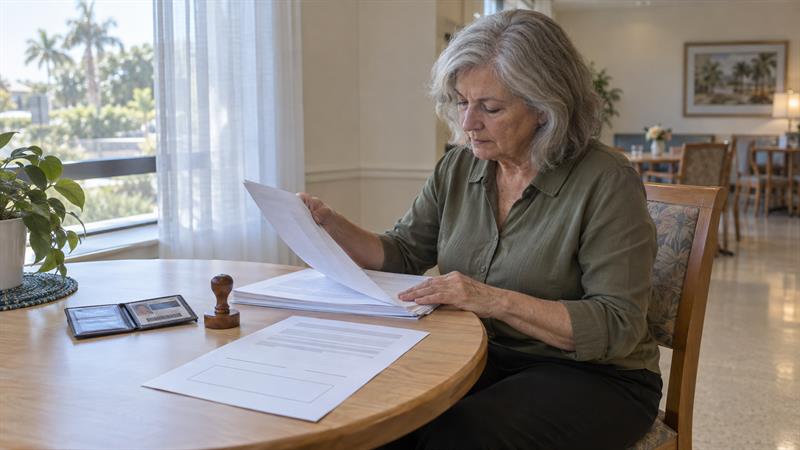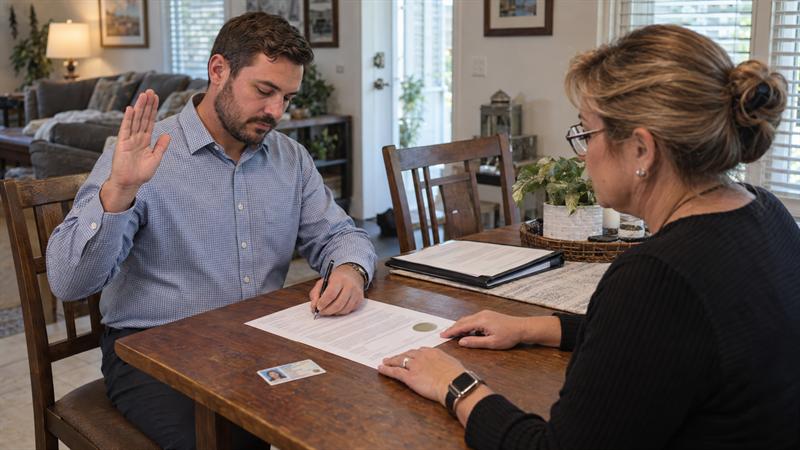
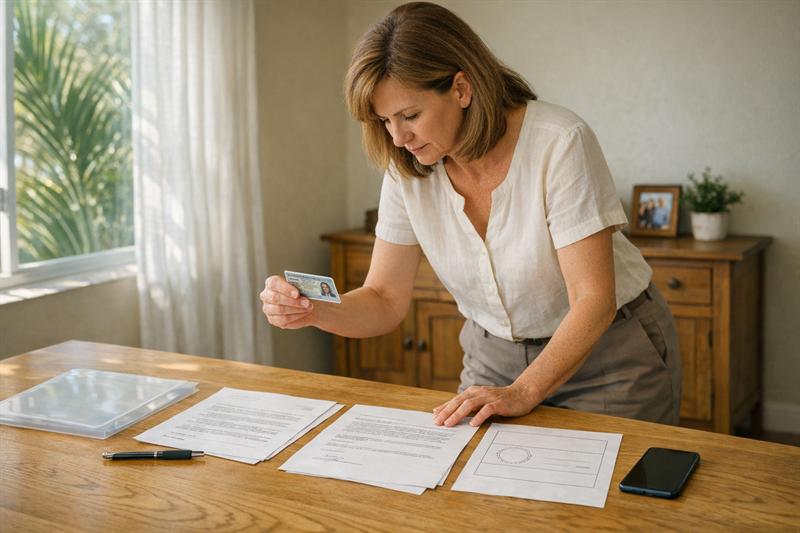
A notary appointment checklist can help prevent a simple signing from becoming a second trip. Common issues include expired identification, a missing attachment, an absent witness, or a document signed before the signer confirmed the instructions.
Notarization is one part of a larger document process. A lender, title company, court, agency, employer, or healthcare provider may also require specific witnesses, delivery steps, formatting, or filing after the notarial act is complete.
Quick Notary Appointment Checklist
Use this checklist before an in-person or remote notarization appointment:
- Bring current, acceptable government-issued photo identification. The notary must verify the signer’s identity under applicable requirements.
- Bring the complete document. Include every page, attachment, exhibit, and supporting form.
- Bring recipient instructions. Confirm what the lender, title company, agency, court, employer, or other recipient requires.
- Make sure all required signers are available. A missing signer can leave the appointment incomplete.
- Confirm whether witnesses are required. Not every document needs witnesses, but required witnesses should be present when needed.
- Have appointment and payment details ready. For mobile service, confirm the location and access instructions before the visit.
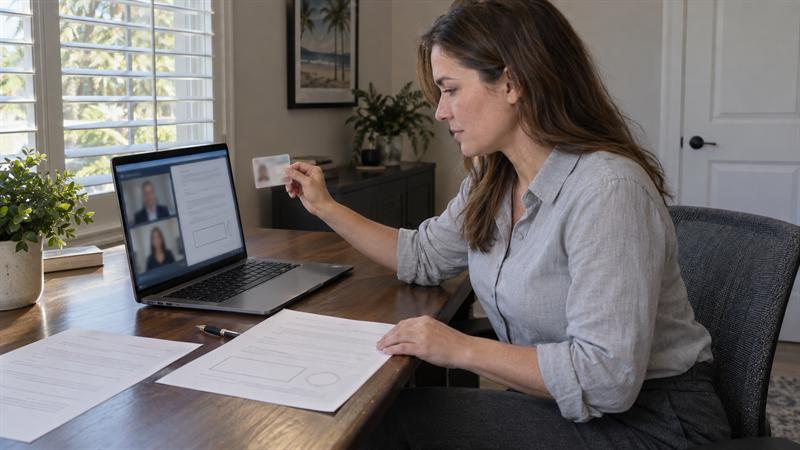
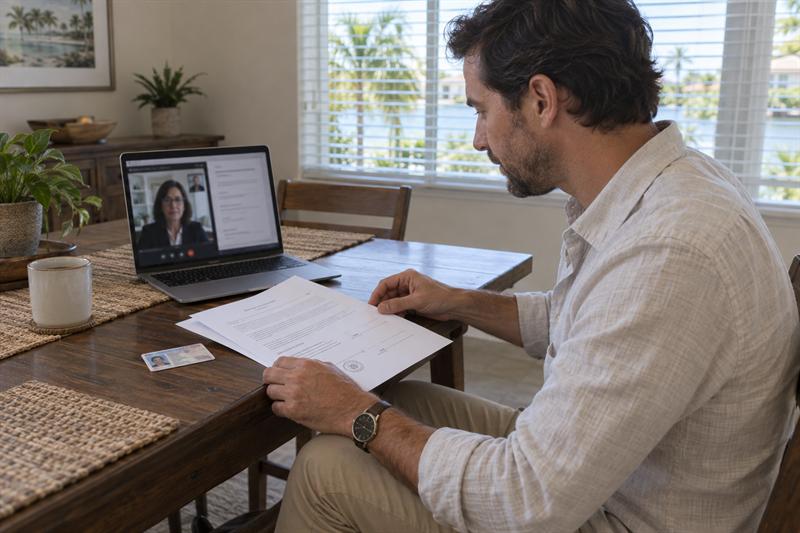
- For remote online notarization, prepare your technology. You generally need a compatible device, working camera and microphone, reliable internet, identification, and access to the online session.
Not every notarized document follows the same requirements. Confirm document-specific details with the document source or receiving organization before the appointment.
1. Bring Acceptable Identification
Why a Notary Needs to Verify Your Identity
Verifying the signer’s identity is an essential part of notarization. If the signer cannot present acceptable identification, the notarization may not be able to proceed.
Review your identification before the appointment. A common problem is finding the document first and realizing later that a driver license is expired, missing, or left at another location. That can delay the signing and create an unnecessary return trip for a mobile appointment.
What to Do if Your ID Is Expired, Missing, or Shows a Different Name
Address identification issues before scheduling or before the notary travels. If your ID is expired or unavailable, do not wait until the appointment to ask whether another form of identification may work.
- Check that your identification is current and readable.
- Compare the name on your ID with the name printed on the document.
- Contact the document provider or receiving organization if the names differ.
- Confirm identification questions before arranging a mobile or online session.
A notary generally cannot decide whether a name difference will be accepted by the document recipient. If the name on your ID does not match the document, get direction from the document source before the signing takes place.
2. Bring a Complete Document—But Do Not Sign Too Early
Review the Document Before the Appointment
Bring the full document, not only the signature page. Missing pages, blank fields, incomplete attachments, and unclear notarial wording can create problems because a notary cannot determine what information belongs in the paperwork.
- Check that every page is included and in the correct order.
- Look for attachments, exhibits, instructions, and supporting forms.
- Review obvious blanks or unfinished sections.
- Confirm that you have the correct version of the document.
- Keep the document clean and readable, without unapproved corrections.
Notarization does not make an incomplete document acceptable to the receiving party. If a title company, court, lender, agency, or other recipient rejects the paperwork after notarization, the signer may still need to correct the issue and complete additional steps.
When Should You Sign a Document That Needs Notarization?
Follow the document instructions and the notary’s direction before signing when your signature needs notarization. This helps keep the signing aligned with the required notarial act and avoids confusion about when the signature was made or acknowledged.
Instructions vary by document. If the paperwork includes unclear directions about signatures, witnesses, initials, or dates, contact the document provider or receiving organization before the appointment.
- Read the document instructions before the appointment.
- Do not sign signature lines early unless the instructions clearly direct you to do so.
- Bring the document unsigned when the signing must occur during the appointment.
- Ask the recipient, not the notary, to clarify questions about document content.
A notary does not provide legal advice or explain the legal meaning of a document. When signing instructions are unclear, get direction from the organization that prepared or will receive the document.
What if There Are Corrections, White-Out, or Missing Information?
Confirm the document before the appointment if it has white-out, crossed-out information, blank fields, missing pages, or unexplained changes. These issues can lead to rejection by the recipient even when the signer and notary are ready.
The notary generally does not decide whether a correction is acceptable for recording, filing, lending, or legal use. The recipient, recording office, lender, court, title company, agency, or document provider determines what it will accept.
3. Make Sure Every Required Signer Can Attend
Who Needs to Be Present for Notarization?
Each person whose signature requires notarization generally needs to participate in the notarization process. If a required signer is absent, the appointment may be incomplete and the document may remain unfinished.
This matters for spouses, co-owners, business representatives, family members, and other multi-party documents. Appointments can be delayed when one signer assumes another person can sign later without confirming whether that approach meets the document requirements.
- Confirm every signer named in the document.
- Verify that each required signer has current identification.
- Set an appointment time when all required participants are available.
- Confirm signing requirements with the recipient if multiple parties are involved.
Plan Ahead for Multiple Signers
Multiple-signer appointments require more coordination than a single signature. Confirm names exactly as they appear on the document, make sure everyone has identification, and plan for all required participants to be present at the scheduled time.
For an in-person appointment, location details matter too. Review how a mobile notary appointment works in Fort Myers before scheduling a signing with several people, a secured building, or visitor procedures.
4. Confirm Whether Witnesses Are Required
Witness Requirements Depend on the Document
Not every notarized document requires witnesses. When witnesses are required, the requirement may come from the document, applicable requirements, or instructions from the organization receiving the paperwork.
Do not assume a witness requirement applies just because another document required one. The opposite mistake can also create delays: arriving without witnesses for a document that cannot be completed without them.
- Does the document require witnesses?
- How many witnesses are required?
- Must the witnesses be present during the signing?
If you do not have clear answers, contact the document provider or recipient before booking. Witness questions should be resolved before the appointment.
How to Prepare Witnesses for the Appointment
Required witnesses need to be available at the correct time and place. Their role is to witness the signing when required, not to interpret the document or replace a signer.
- Confirm that each witness is available for the full signing time.
- Verify any witness identification or eligibility instructions with the document source.
- Make sure witnesses know the appointment location or online-session details.
- Do not wait until the appointment to ask whether a family member, employee, or other person is eligible to serve as a witness.
For mobile appointments, all required people should be ready before the notary arrives. A missing witness can lead to a rescheduled or partially completed appointment.
5. Bring Instructions From the Person or Organization Receiving the Document
Notarization Is Different From Filing, Recording, or Legal Review
A notary verifies identity and performs an authorized notarial act. A notary does not prepare legal documents, choose legal wording, determine legal sufficiency, or decide whether a recipient will accept the completed paperwork.
- What a notary does: verifies identity, confirms the signer is participating willingly, and completes the applicable notarial act.
- What a notary does not do: provide legal advice, complete legal forms, select document language, or determine the legal effect of a document.
- What the receiving organization may require: witnesses, original signatures, filing steps, recording standards, delivery deadlines, fees, or document-specific formatting.
This distinction matters because notarization is not the same as recording a deed, filing a court form, completing a loan package, or meeting a title company’s requirements. If the document is part of a real estate transaction, understanding what happens at a Florida loan closing can help explain why complete instructions and coordinated signers matter.
Questions to Ask the Receiving Organization Before You Book
Get these answers before the appointment:
- What type of notarization does the document require?
- Are witnesses required?
- Must the document be signed in front of the notary?
- Will the recipient accept remote online notarization?
- Are there filing, recording, delivery, fee, or deadline requirements afterward?
- Does the recipient require an original document?
If the instructions only say “get this notarized,” contact the recipient before scheduling. That step can prevent completing a notarization that does not meet the recipient’s requirements.
6. If You Are Using a Mobile Notary, Prepare the Meeting Location
What to Prepare for a Mobile Notary Appointment
A mobile appointment works best when the location is ready before the notary arrives. Have the document, identification, signers, witnesses, and meeting space in place at the scheduled time.
- Choose a quiet, well-lit place to review and sign documents.
- Provide a stable table or writing surface.
- Share gate codes, parking details, room numbers, or visitor instructions in advance.
- Have every document and identification card ready in one place.
- Confirm that all signers and witnesses are present.
- Consider privacy and accessibility, especially at homes, workplaces, care settings, or residential communities.
Access information and participant readiness can affect whether a mobile appointment starts on time. Confirm those details before the scheduled visit so the notarial process can remain focused and efficient.
When a Mobile Appointment May Be More Practical
In-person mobile notarization may be practical when a document requires in-person participation, the recipient does not accept remote notarization, several people must sign together, or the signer cannot easily travel.
It may also suit workplaces, care settings, residences, or tight schedules where bringing all participants to an office creates more difficulty. The right format depends on the document, signer location, participant availability, and the receiving organization’s requirements.
7. If You Are Using Remote Online Notarization, Prepare Your Technology
Remote Online Notarization Checklist
Remote online notarization requires more than a scanned document or a video call. The signer completes an authorized online process that includes identity verification and live audio-video communication.
- Use a compatible device with a working camera and microphone.
- Prepare your identification for the online verification process.
- Use a reliable internet connection in a private, quiet location.
- Follow the instructions for the authorized online platform.
- Confirm that the document recipient accepts remote online notarization.
Technology problems can delay a session when the signer waits until it begins to test the camera, microphone, internet connection, or identification process. For a walkthrough, read how remote online notarization works in Florida step by step.
When In-Person Notarization May Be a Better Fit
Choose in-person notarization when the recipient requires it, the document has in-person witness instructions, the signer does not have reliable technology, or multiple participants cannot coordinate effectively online.
- The recipient does not accept remote notarization.
- The document requires in-person signatures or witnesses.
- The signer lacks a usable device, camera, microphone, or reliable internet.
- Multiple signers cannot join and complete the process effectively online.
- The document source specifically directs the signer to use an in-person notary.
The most practical option is generally the one the recipient will accept and the participants can complete correctly. If the remote process is creating technology or coordination issues, an in-person mobile appointment may be the clearer next step.
Common Reasons a Notary Appointment May Need to Be Delayed
Many delayed appointments have one thing in common: a required detail was not confirmed in advance.
- No acceptable identification: The notary may be unable to complete identity verification without appropriate identification.
- A required signer is absent: The document may remain incomplete until that person can participate.
- A required witness is unavailable: The appointment may need to wait until the witness requirement is met.
- The document is incomplete: Missing pages, blank fields, or unaddressed corrections can create recipient-acceptance problems.
- Recipient instructions are unclear: The signer may complete the wrong process or miss a required next step.
- The remote session is not ready: Camera, microphone, internet, or identity-verification problems can interrupt the online process.
- The signer is not ready or willing to proceed: A notarial act should not move forward until the signer is prepared to sign voluntarily.
Do not schedule around an unresolved document problem. If any of these signs apply, resolve the missing instruction, participant, identification issue, or technology problem before the appointment:
- Your ID is expired, missing, or does not match the document name.
- You do not know whether the document needs witnesses.
- A signer, witness, or required attachment is not available.
- The recipient has not confirmed whether remote notarization is accepted.
Addressing these preparation issues early can help the notarization proceed without avoidable delays.
Final Checklist Before Your Notary Appointment
- Confirm you have the correct document and every page.
- Bring current acceptable identification.
- Follow the document instructions and wait for the notary’s direction when appropriate before signing.
- Confirm all required signers are available.
- Confirm witness requirements and witness availability.
- Verify what the recipient requires after notarization.
- Prepare the mobile meeting location or remote online technology.
When one of these items is unresolved, contact the document source or receiving organization before scheduling. That can help prevent an extra appointment, repeated travel, and delayed document delivery.
Key Takeaways
- A notary appointment can be delayed by missing identification, incomplete documents, absent participants, or unconfirmed recipient instructions.
- Notarization does not replace legal review, document preparation, filing, recording, or recipient acceptance requirements.
- Witness requirements are document-specific and should be confirmed before the appointment.
- Mobile notarization requires location and participant readiness.
- Remote online notarization requires recipient acceptance, identity verification, and working technology.
- Resolve document-content questions with the recipient, document provider, attorney, lender, title company, court, or agency before the signing.
Conclusion: Prepare Once and Avoid an Extra Appointment
The real cause of a delayed notary appointment is often incomplete preparation: the wrong ID, an unfinished document, a missing signer or witness, unclear recipient instructions, or an online session that was not tested.
Leaving those issues unresolved can lead to repeat appointments, missed deadlines, rejected paperwork, and more coordination for everyone involved. Sunshine Mobile Notary, LLC provides mobile and remote notarial services for signers who have confirmed their document requirements and are ready to complete the appropriate notarization process.
When your documents, participants, and recipient instructions are ready, schedule a mobile or remote notary appointment with Sunshine Mobile Notary, LLC. Choose the format that fits the document, then confirm with the receiving party that it will be accepted.
Sunshine Mobile Notary, LLC’s Approach to Appointment Preparation
Sunshine Mobile Notary, LLC focuses on the practical details that help determine whether an appointment can proceed: signer identification, document readiness, required participants, meeting logistics, and remote-session preparation. The goal is not to interpret the document, but to help signers arrive prepared for the notarial process they need.
Preparation issues can include an incomplete document packet, an unscheduled witness, or a recipient that accepts only an in-person process when an online session was planned. Identifying those details before the appointment helps keep the notarization process focused and efficient.
Questions about document content, legal effect, filing, recording, witnesses, or recipient acceptance should be resolved with the appropriate document source or qualified professional before the appointment.
Frequently Asked Questions About Notary Appointments
What do I need to bring to a notary appointment?
Bring current acceptable identification, the complete document, all required signers, witnesses if required, and instructions from the organization receiving the document. The recipient may require specific signing, witness, delivery, or acceptance steps beyond notarization. Confirm these details before scheduling so the appointment is planned around the right people, paperwork, and notarization format.
Should I sign my document before going to a notary?
Follow the document instructions and the notary’s direction when the signature needs notarization. Some documents require signing or acknowledgment during the notarial process, and the document provider or recipient should clarify any special instructions. Review the paperwork before the appointment and resolve unclear signing directions before completing signature fields.
Do I need witnesses for a notary appointment?
Some documents require witnesses, while others do not. Witness requirements may come from the document, applicable requirements, or the receiving organization’s instructions, and the number or role of witnesses can vary. Confirm the requirement before booking so every required participant is available at the appointment.
Can I use an expired ID for notarization?
An expired ID can create an identification issue because the notary must verify the signer’s identity under applicable requirements. Check your identification before the appointment, especially before arranging a mobile visit, and address any expired, missing, or mismatched identification in advance. If the name on the ID differs from the document, get direction from the document source or recipient before scheduling.
What is the difference between a mobile notary and remote online notarization?
A mobile notary meets the signer in person at an agreed location. Remote online notarization is completed through an authorized online process using live audio-video communication and identity verification. Choose the option the recipient accepts and the signers can complete correctly, then review whether a mobile notary or online notary is right for your situation.
Can a notary tell me how to fill out my document?
A notary cannot provide legal advice, choose legal wording, complete legal forms, or determine whether a document is legally correct. Questions about document content, legal effect, or acceptance belong with the document provider, receiving organization, attorney, title company, lender, court, or agency. Resolve those questions before the appointment, then schedule the notarial service that fits the confirmed requirements.