At Sunshine Mobile Notary, LLC, one of the most important distinctions in estate-related signings is this: having a power of attorney document is not the same as being ready to notarize it. The form may be drafted and printed, but the appointment can still stall if the signer is not present, the ID is not available, the witness plan is unclear, or facility access was never coordinated.
This guide focuses on power of attorney notarization logistics, not legal advice about which form to use. If the goal is to complete the signing smoothly the first time, these are the practical details to confirm first.
Why power of attorney notarizations often get delayed
Power of attorney notarizations are often delayed because people focus on the document and overlook the appointment details that make the notarization possible. That can lead to a wasted visit, a rescheduled signing, or a document that still cannot be used right away.
- The document has blanks, missing pages, or unclear signature areas
- The signer already signed before the appointment
- Required witnesses were never confirmed or coordinated
- The signer’s ID is expired, unavailable, or left at another location
- The signer is in a hospital or care facility and access details were never arranged
- The receiving institution has extra requirements no one checked ahead of time
A common issue is that families assume the notary will sort out these details on site. That is usually where delays begin. The notary can complete the notarial act when the appointment is properly set up, but missing logistics often lead to delay instead of a quick fix.
For broader appointment prep, this simple notary appointment checklist helps clarify the basics that should be ready before any signing.
Legal preparation and notarization logistics are not the same thing
Choosing the right power of attorney form is a legal preparation question. Getting that document signed and notarized correctly is a separate logistics question. Those two steps are often blended together, and that confusion can create last-minute problems.
A notary can identify the signer, complete the required notarial act, and observe the signing process. A notary does not choose the form, explain its legal effect, or decide whether it meets the signer’s estate-planning goals. What a notary can and cannot do during an appointment explains that boundary in more detail.
What to confirm before scheduling the appointment
If a power of attorney signing is time-sensitive, it helps to confirm the logistics before the appointment is finalized. That is often the difference between a smooth signing and a preventable delay.
Sunshine Mobile Notary, LLC regularly handles appointments where the family is ready emotionally, but the appointment is not ready operationally. That can lead to a second appointment, more coordination, and more stress around a document that was supposed to solve a problem.
Make sure the document is complete but unsigned
The document should be reviewed for completeness before the appointment. Missing pages, blank fields, or incomplete signature blocks can slow everything down because the notary cannot fill in legal content or decide what belongs in those spaces.
The signer also generally should not sign ahead of time. People sometimes try to save time by signing before the notary arrives, but that can create a process problem instead of a shortcut. If the document is meant to be signed during the notarization, pre-signing can disrupt the appointment flow.
Confirm who needs to be present
The signer is the essential person in the appointment. Family members, agents, adult children, spouses, or caregivers may help coordinate the visit, but the notarial act centers on the signer’s identity, willingness, and participation.
This comes up frequently in urgent family situations. Several people may be managing the paperwork, but no one has clearly confirmed whether the signer will be present, available, and ready at the scheduled time. If the signer is not the person actively participating, the appointment may not be able to move forward.
Ask whether witnesses are required
Witness logistics are one of the biggest failure points in power of attorney signings. People often assume the notary is the only person needed, then realize too late that witnesses were part of the document’s signing setup or expected by the recipient.
This can become harder in hospitals, assisted living settings, and urgent home visits because witness coordination is more difficult when timing is tight. If witnesses are part of the signing, that should be clear before the appointment is locked in, not when the notary is already on site.
Check what form of ID the signer will use
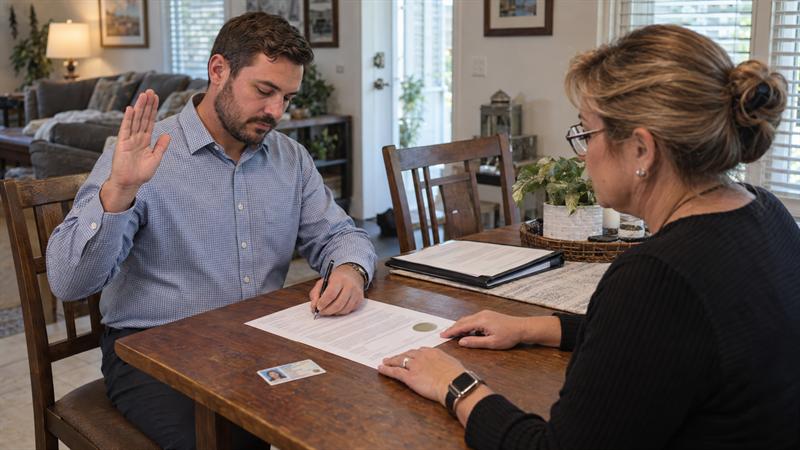
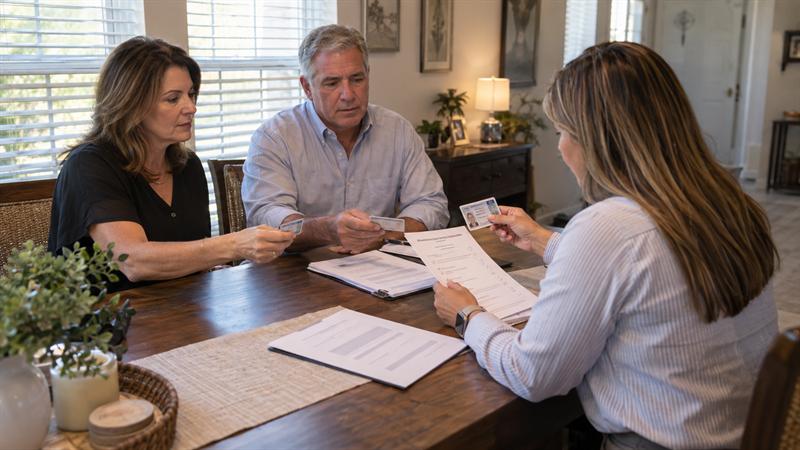
The signer should have acceptable identification ready and physically available at the appointment. ID issues are rarely complicated in theory, but they can cause immediate delays because the document cannot move forward if identity cannot be properly established.
A common problem is that the signer has valid identification, but it is in another bag, another room, or another location entirely. That sounds minor until the notary is present and the signing cannot continue. For Florida-specific guidance, see acceptable forms of ID for a notary in Florida.
Confirm whether the receiving institution has extra requirements
This is one of the most overlooked details. A power of attorney can be notarized correctly and still face delays if the bank, agency, attorney, or care provider expects a specific format, witness setup, or supporting paperwork that no one confirmed first.
If that step is ignored, the appointment may be completed, but the document still may not be usable in the way the family expected. This is where problems can continue after notarization, and it is often avoidable when recipient expectations are checked in advance.
If you are seeing any of the signs below, the appointment likely needs more planning before it moves forward:
- The document was printed from another source, but no one has confirmed whether witnesses are needed
- The signer is in a hospital, rehab center, or assisted living location with access restrictions
- The signer’s ID is not already in hand at the signing location
- The receiving institution has not confirmed whether it accepts the exact document format being used
When those issues are present, more preparation is usually needed before the appointment, not during it.
Who the notary can identify at a power of attorney signing
The notary identifies the signer and observes the signing process tied to the notarial act. That remains true even when family members, caregivers, or the named agent are present and helping manage the situation.
This matters because estate-related appointments often involve several people speaking at once. The signer is still the central person for the notarization. When others answer every question, direct the signer, or take over the process, the appointment can become harder to complete clearly.
At Sunshine Mobile Notary, LLC, this comes up regularly in family-coordinated signings. The practical takeaway is simple: support people can help with logistics, but the signer must remain the person the notary is able to identify and observe for the signing itself.
Why willingness and awareness matter
The signer should appear to understand that they are signing the document and should do so willingly. This is not about making legal or medical judgments. It is about whether the signer can participate in the notarization in a way that makes the act clear.
If the appointment is set at a time when the signer is exhausted, heavily interrupted, or unable to engage with the process, the signing can become more difficult. That is why timing matters as much as paperwork, especially in medical or care settings.
Witness logistics for power of attorney documents
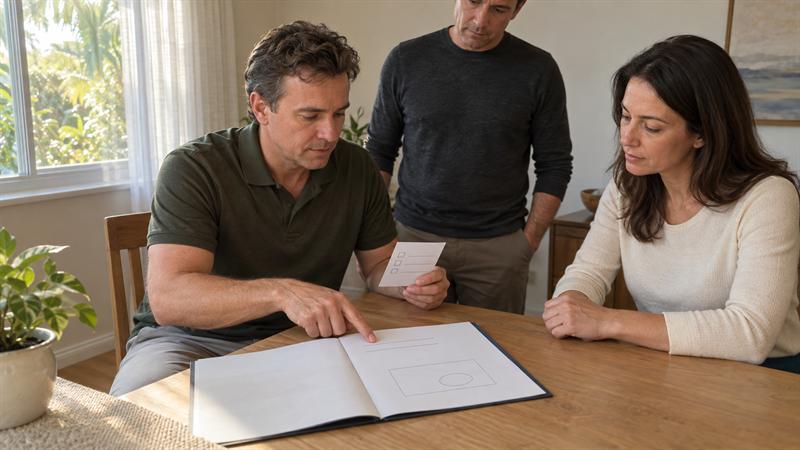
Witness planning should happen before the appointment is confirmed because witness problems are often what derail these signings. Once the notary is on site, missing or unsuitable witnesses can create immediate friction and may lead to delay.
A common issue is that families assume witnesses will be easy to find at the last minute. That rarely works well. In a home setting, there may not be enough available adults. In a facility setting, people may assume staff can step in, but that assumption often creates more confusion than clarity.
Timing also matters. Even when witnesses are identified, they may not be present when the signer is ready, or they may arrive before access issues are resolved and then leave. That kind of mismatch can turn a short appointment into a scheduling problem.
Location-specific planning: home, hospital, rehab, or care facility
The signing location changes the logistics more than most people expect. A power of attorney notarization at home is usually simpler to manage. A signing in a hospital, rehab center, or assisted living facility has more moving parts, and those details are often what slow everything down.
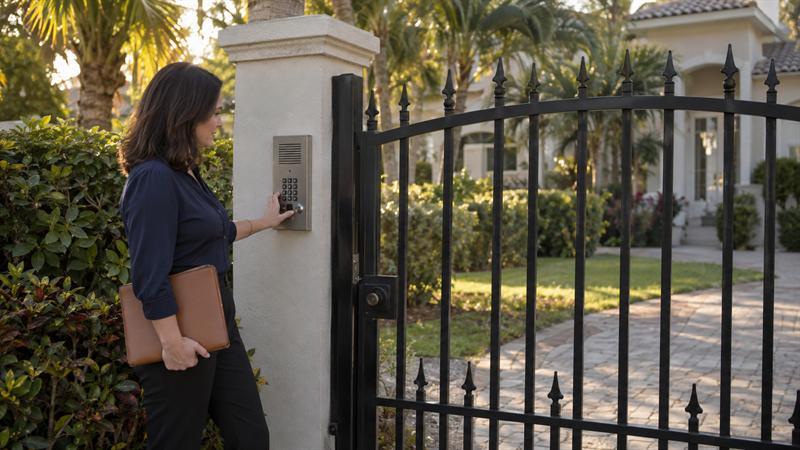
At home, the main issues are usually whether the document, ID, and witnesses are all actually there. In facilities, the problems often shift to front-desk access, room changes, visitor procedures, elevator delays, parking, and interruptions from staff schedules or care routines.
This can become harder when no single person is handling access planning. One family member may know the room number, another may have the ID, and another may be communicating with the signer. That split coordination is where avoidable delays can build.
For a deeper look at facility and gated-access issues, this guide to mobile notary access planning covers the practical details that commonly affect arrival and entry.
What families should coordinate before the notary arrives
- Who will meet the notary and guide access if the location is not straightforward
- How parking, check-in, gate, floor, room, or unit access will work
- Whether the signer’s ID is physically at the location
- Whether witnesses know when and where they need to be present
- Whether the full document, including all pages, is already on site
If those details are unclear, the appointment may start late and become more difficult from there. In urgent signings, that lost time can matter.
Can a power of attorney be notarized remotely?
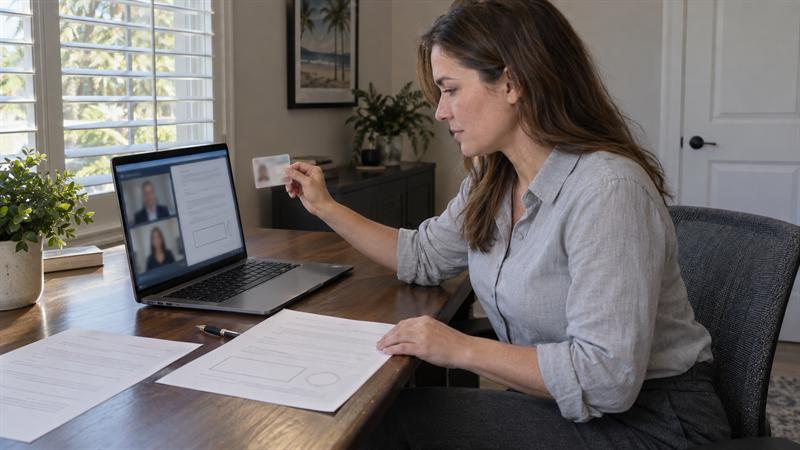
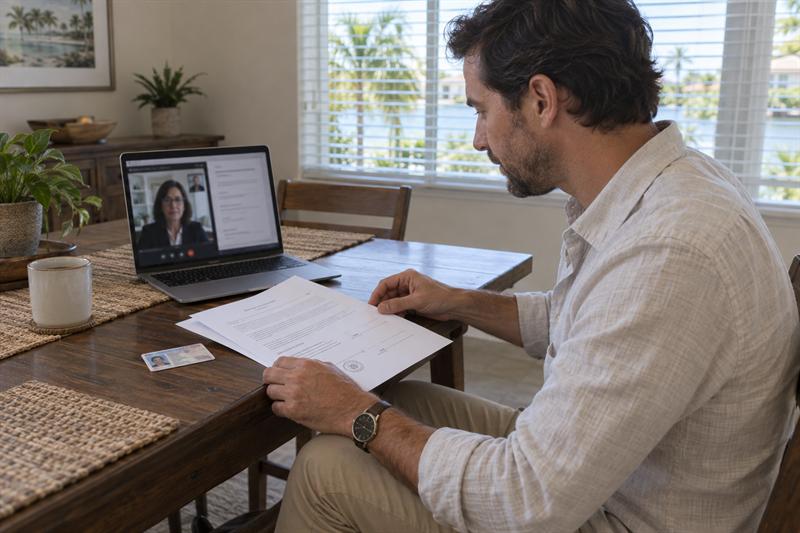
Yes, a power of attorney may be a fit for remote online notarization in some situations, but remote is not automatically the best option. The most practical choice depends on the signer’s comfort with technology, the document setup, and whether the receiving party accepts that format.
Many readers treat remote and electronic signing as the same thing, and that confusion can cause problems quickly. Remote online notarization is a specific process, not just an electronic signature on a document. For that distinction, this explanation of e-signature vs. remote online notarization in Florida helps clarify what each one does.
Another recurring issue is recipient acceptance. Even when remote notarization is available, the receiving institution still needs to accept that format. If that is not checked early, the signing may be completed in a way that does not solve the underlying problem.
When in-person mobile notarization may be more practical
- The signer has limited mobility and travel is difficult
- The appointment is happening in a hospital, rehab center, or assisted living setting
- Several people need to coordinate in one place
- The signer is not comfortable using technology for a remote session
- The appointment works better with documents, witnesses, and participants physically present together
When those conditions are present, in-person mobile notarization is often the more practical option because it reduces technical friction and keeps the appointment centered on the signer’s actual environment.
A simple pre-appointment checklist for power of attorney notarization
Use this checklist before the appointment is scheduled or before the notary arrives. This is one of the fastest ways to spot problems early and avoid a failed visit.
Document checklist
- Complete document is ready
- All pages are present
- No unresolved blanks remain where they should already be completed
- The document is unsigned if the signing is intended to happen during the appointment
- Any instructions from the attorney or receiving institution are available
Signer checklist
- The signer will be physically present for the appointment
- Valid ID is ready and on site
- The signer is able to review and sign the document
- The appointment time fits the signer’s condition, routine, or facility schedule
Location and witness checklist
- Witness needs have been confirmed
- Witnesses are coordinated for the correct time and place
- Address, gate, parking, floor, room, or unit details are confirmed
- Recipient requirements have been checked ahead of time
Key Takeaways
- Many power of attorney notarization delays start with logistics, not the notarization itself.
- The biggest friction points are document completeness, signer presence, valid ID, witness planning, and recipient requirements.
- Hospital, rehab, and assisted living signings usually require more coordination because access and timing often become part of the problem.
- Remote online notarization is useful in some situations, but in-person mobile service is often the more practical option when mobility, technology, or location issues are involved.
Conclusion
The real problem with power of attorney notarization is not usually the document alone. It is the chain of missed details around the document: the signer is not ready, the ID is not there, the witnesses were never coordinated, or the receiving institution expects something different. When those issues are not handled well, the result can be delay, repeat appointments, and paperwork that still does not move the matter forward.
That is why acting early is practical. Sunshine Mobile Notary, LLC helps signers and families work through the appointment logistics that commonly cause estate-related signings to stall, whether the need is a mobile appointment at home or a more complex signing in a facility setting. If the goal is to reduce preventable delays and keep the process moving, Sunshine Mobile Notary, LLC is a practical next step.
Company Approach
Sunshine Mobile Notary, LLC approaches power of attorney signings as a logistics problem that needs to be handled cleanly before the appointment begins. That means looking beyond the document itself and focusing on what usually causes the signing to stop: access issues, timing conflicts, witness confusion, missing ID, and recipient requirements that no one confirmed in advance.
This approach matters because estate-related appointments are rarely casual. They are often tied to caregiving, health events, financial urgency, or family coordination under stress. A process that works on paper but falls apart on site does not help. The value is in making the appointment workable in the real setting where the signer is actually located.
FAQ
What should be ready before a power of attorney notarization appointment?
The main items are the full document, the signer, acceptable ID, any required witnesses, and the location details for the appointment. If any one of those is missing, the signing may slow down or stop.
A useful distinction is that having the paperwork is not enough by itself. For example, a family may have the form printed but still lose the appointment because one page is missing, the signer’s ID is not in the room, or the witnesses were never lined up. Those are the details that determine whether the notarization can actually move forward.
Does a power of attorney need witnesses and a notary?
Some power of attorney signings involve both notarization and witnesses, which is why witness planning should never be treated as an afterthought. This is one of the most commonly misunderstood parts of the process because people often focus on finding a notary first and only later realize the witness setup was never addressed.
What matters most is the difference between the notarial act and the broader signing requirements tied to the document. That distinction becomes especially important in mobile and facility settings, where finding the right people at the right time is often harder than expected.
Can a power of attorney be notarized in a hospital or nursing home?
Yes, it often can, provided the signer can participate in the signing and the appointment logistics are workable. The location itself is not usually the obstacle. The real issues are access, timing, interruptions, and whether the signer’s ID and document are actually there.
A common misunderstanding is that getting a notary to the facility is the difficult part. In reality, the harder part is often coordinating visitor procedures, room access, parking, or making sure the signer’s wallet did not stay at home. That is why facility signings need more planning than people expect.
Can a notary tell me whether my power of attorney form is the right one?
No. A notary’s role is tied to the notarization process, not to choosing or approving the legal form. That means the notary can identify the signer and complete the notarial act, but not advise whether the document is the right legal tool for the signer’s situation.
This is an important distinction because many people reach the appointment stage with both legal and logistical questions still mixed together. A document can be ready to sign from a scheduling standpoint while still raising legal questions that belong outside the notarial process.
What kind of ID is usually needed to notarize a power of attorney?
The signer generally needs an acceptable form of identification that is available at the appointment. The biggest issue is usually not whether the signer has ID somewhere, but whether it is actually present and ready when the signing starts.
This becomes a bigger problem in hospitals, rehab centers, and family-managed appointments. A signer may have valid ID, but if it is in another bag or at another location, the appointment usually stops until that issue is fixed. That is why ID should be treated as a first-step item, not a last-minute check.
Is mobile or remote notarization better for a power of attorney signing?
It depends on the signer’s situation, but in-person mobile notarization is often the more practical option when mobility, care-facility access, or witness coordination are part of the equation. Remote online notarization is useful when the signer is comfortable with the technology and the document setup fits that process.
The key distinction is that convenience alone should not decide it. Remote may sound faster, but if the signer is not comfortable with the technology or the receiving institution expects a different format, the problem simply shifts instead of getting solved. In-person service is often the better fit when the goal is to reduce friction around the signer’s actual circumstances.