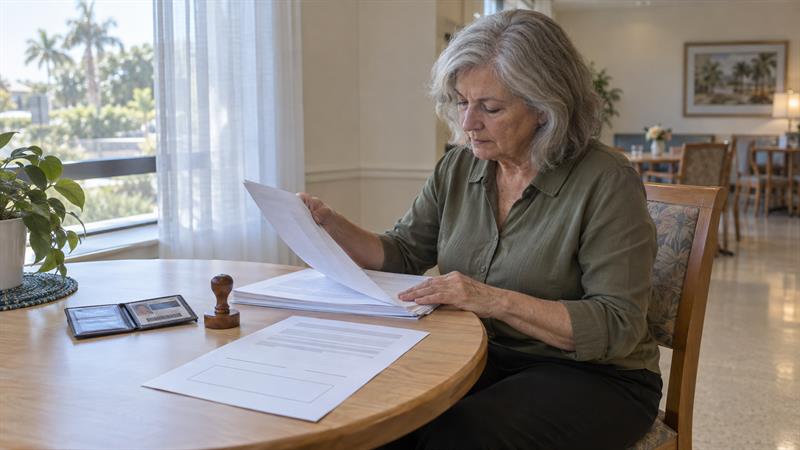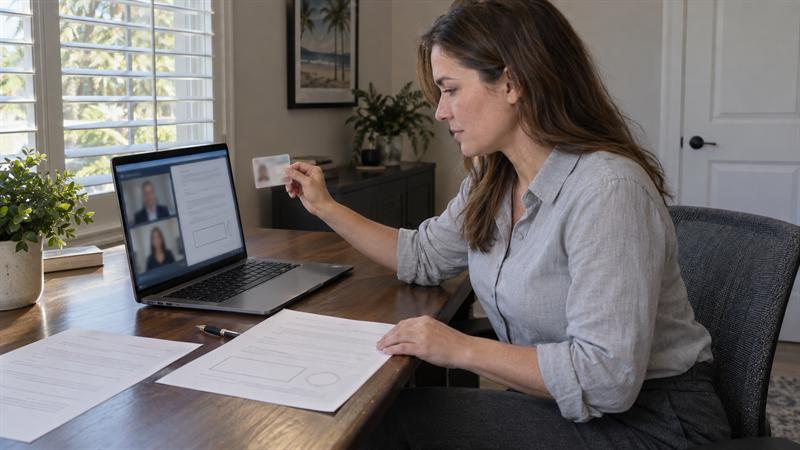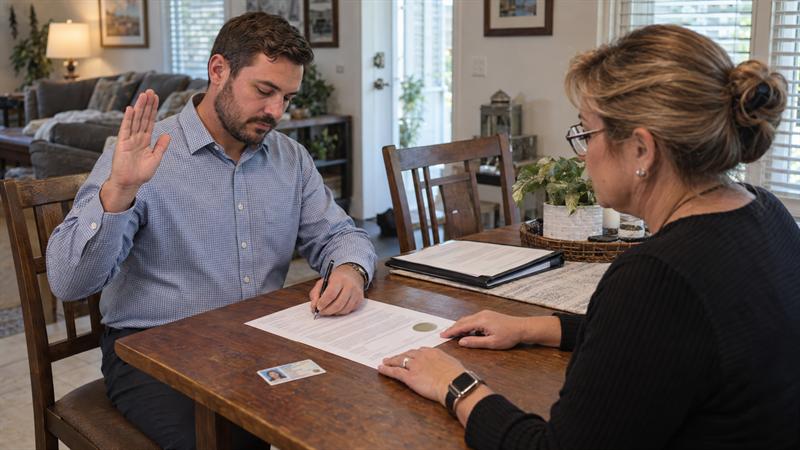
At Sunshine Mobile Notary, LLC, this is one of the most common preparation issues that comes up before a signing. A document may be ready for notarization, but the appointment can still stall because no one confirmed whether witness signatures were required or how many witnesses were needed.
That is where confusion often starts. People see a notary block and assume the notary covers everything. In practice, witness requirements are separate from the notarial act, and missing them can lead to delays, rescheduling, or documents that are not ready for recording or submission.
Why Witness Requirements Cause So Much Confusion in Florida
Witness requirements cause confusion because notarization and witnessing are not the same step. A document might require notarization, witnesses, both, or neither. If that distinction is missed, the signing setup is often incomplete from the start.
A common pattern is that signers focus on ID and the notary seal, but not on the witness lines in the document. By the time the issue is noticed, everyone is already at the table and the appointment can slow down. For a clearer look at the notary’s role, see what a notary can and cannot do during an appointment.
The difference between notarization and witnessing a signature
Notarization is the formal notarial act. The notary verifies identity, confirms the signer is appearing for the act required, and completes the notarial certificate.
A witness serves a different function. The witness observes the signing and signs the document in a witness capacity. These roles may appear on the same document, but they are not interchangeable just because they happen at the same appointment.
Why the notary does not decide whether your document needs witnesses
The witness requirement usually comes from the document itself, the rules behind that document, or the receiving party’s instructions. The notary performs the notarial act. The notary does not decide how the document should have been prepared or what a title company, attorney, clerk, or agency will require for acceptance.
This comes up with last-minute calls. Someone has been told they “just need a notary,” but the document has witness lines or execution instructions that were never reviewed. Once that happens, the appointment becomes a coordination issue instead of a simple signing.
Do All Notarized Documents in Florida Need Witnesses?
No. Not all notarized documents in Florida need witnesses. Some do, and some only require the notarial act.
The problem is assuming that every notarized document follows the same pattern. That can lead to missed preparation or unnecessary confusion. A better approach is to review the document, look for witness signature lines, and confirm any attached instructions before the appointment. This issue overlaps with several points covered in common mistakes to avoid before your notary appointment.
Documents that may require witnesses
- Deeds and certain real estate-related documents
- Powers of attorney and some estate-related documents
- Forms where the requesting institution specifically requires witness signatures
These are the documents that commonly create confusion because the signer expects a standard notarization, but the document requires more than that.
Documents that may only need notarization
Some affidavits, acknowledgments, sworn statements, and routine forms only need notarization. Even then, the document wording still controls. If the form includes witness lines or separate signing instructions, those need to be treated as actual requirements, not optional extras.
Common Florida Documents Where Witnesses Are Often Required
The most familiar example in Florida is the deed. That is why so many witness-related questions turn into deed questions. But deeds are not the whole picture. Witness requirements also come up with powers of attorney, estate-related paperwork, and institution-created forms that use their own execution standards.
What matters most is not just the general rule. It is whether the document in hand needs extra people present before the appointment begins.
Deeds and other recordable real estate documents
Deeds are commonly associated with witness requirements in Florida because recording and execution standards can be more formal than everyday notarized forms. When a deed is being signed, witness issues are not a minor detail. They can affect whether the document is fully ready for recording.
This issue can become harder to manage when the deed is being signed at a home, office, facility, or other location where no one planned for additional participants. In those situations, missing witness coordination can become the main obstacle.
Powers of attorney and estate-related paperwork
Powers of attorney and estate-related documents raise witness questions because they carry significant legal effect. These signings tend to be less forgiving when execution details are overlooked.
A common pattern is that families are focused on urgency and assume the paperwork can be handled like a simple form. That can lead to delays when witness requirements surface late in the process.
Forms where the requesting agency sets its own witness instructions
Some witness requirements come from the organization receiving the form rather than from general notary expectations. Banks, schools, employers, courts, and private institutions may include witness lines or instructions that need to be followed closely.
If those instructions are missed, the document may come back for correction or need to be signed again. That can create a second appointment, more coordination, and more delay.
How Many Witnesses Are Needed?
The number of witnesses depends on the document. Some forms call for one witness. Others call for two. The document itself should be checked first, because that is usually where the answer becomes clear.
This comes up during appointment scheduling. A signer says witnesses are “probably not needed,” but the document later shows witness blocks that no one planned for. That can lead to rescheduling or a last-minute effort to find available adults. For broader appointment prep, see what to bring to a notary appointment.
One-witness situations
Some documents ask for a single witness. In those cases, the safest approach is to follow the signature blocks exactly as presented. If there is one witness line, treat that as part of the signing requirement, not as a formatting detail.
Two-witness situations
Two witnesses are commonly associated with certain Florida document contexts, especially deed-related execution. That is one reason property-related signings may require more preparation than people expect.
Do not assume the notary automatically fills one of those roles. That assumption is a common source of delayed signings.
Why the document itself should be checked first
Signature lines, witness blocks, and instruction pages usually answer the question faster than general online searching. If the document has designated witness sections, that is a strong sign the requirement should be addressed before the appointment starts.
If the issue is ignored, the appointment can turn into a document review session instead of a completed signing. That costs time and creates avoidable delays.
Who Can Be a Witness in Florida?
A witness generally needs to be present, able to observe the signer, and able to sign where the document requires a witness signature. That is the practical starting point.
But this is where signers often oversimplify the issue. Many assume any nearby adult will do. In real signings, the better question is whether that person is an appropriate witness for the document and whether their involvement could create avoidable questions later.
Basic witness qualifications
- Present at the signing
- Able to observe the signer
- Able to sign the document where required
Those are the core basics. The larger concern is whether the witness choice makes the document cleaner or more complicated.
When it is safer to avoid interested parties as witnesses
Even when it seems convenient, using someone closely tied to the transaction, property, or family issue can create more questions later. Neutral witnesses are often the cleaner choice, especially for documents involving authority, ownership, or estate matters.
When families are trying to solve the problem quickly, the closest available person is not always the best person to sign as witness. What feels efficient in the moment can create avoidable concerns after the document leaves the table.
Do witnesses need identification?
Signer ID and witness identification are not the same issue. The signer’s identification is central to the notarial act. Witness identification is a separate question and depends on the document or the receiving requirements involved.
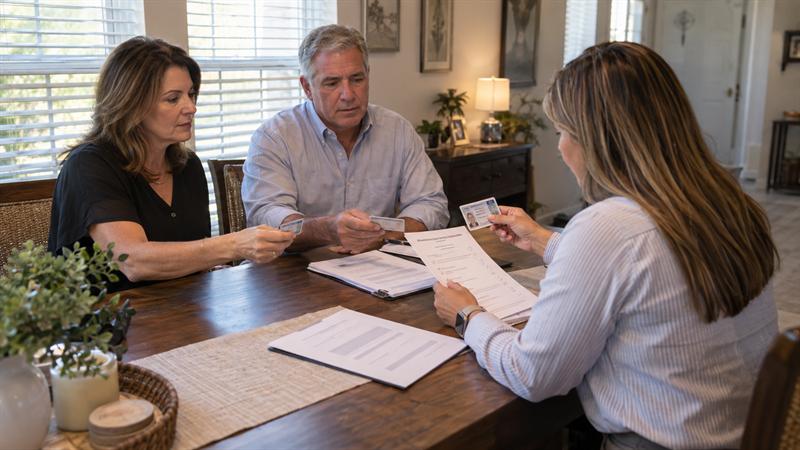
This distinction matters because people sometimes prepare the signer’s ID correctly and assume that covers every participant. It does not. If you need a refresher on signer identification rules, review acceptable forms of ID for notary in Florida.
Can a Florida Notary Also Be a Witness?
This is one of the most common witness questions because people want the simplest setup possible. The short answer is that this should not be treated as an automatic assumption. Document context and receiving requirements matter, and smoother appointments usually happen when separate witnesses are arranged.
This is where problems often start. People think the notary covers every extra signature need, then discover that role overlap creates uncertainty or acceptance concerns later. Separate roles reduce confusion and make the execution trail easier to follow.
Why this question matters
Many signers expect the notary to satisfy any witness requirement automatically. That expectation usually comes from convenience, not from careful document review.
Once that assumption is built into the appointment, the margin for error gets smaller. If the document or receiving party expects separate witness signatures, the appointment can slow down immediately.
Why many appointments are smoother when separate witnesses are arranged
Separate witnesses reduce ambiguity. Everyone’s role is clearer, the signature structure is easier to follow, and the document is less likely to raise questions after signing.
This matters most in real estate, powers of attorney, estate-related paperwork, and other formal documents where execution details carry more weight. When the signing is important enough to require witnesses, clear separation of roles is usually the more practical setup.
If your document has witness lines and any of these signs are showing up, it is worth clarifying the setup before the appointment moves forward:
- You are not sure whether one witness or two are required
- You assumed the notary would count as a witness
- No separate witnesses have been arranged yet
- The document is tied to recording, property transfer, or legal authority
When those issues are already in play, the appointment is no longer just about notarization. It usually needs witness coordination first.
Witness vs. Credible Witness: Not the Same Thing
A credible witness and a document witness serve different functions. Confusing the two leads to bad preparation and unnecessary delays.
A document witness is there to observe the signing and sign the document as a witness. A credible witness relates to identifying a signer in certain notarization situations. Those are different roles, and one does not automatically satisfy the other.
What a credible witness does
A credible witness supports the identification process when that method is allowed and appropriate for the notarization. This role is tied to proving identity for the notarial act.
That does not make the person a substitute for a required document witness. This distinction gets misunderstood when a signer is already struggling with ID or participant logistics.
What a document witness does
A document witness observes the execution of the document and signs in the witness capacity required by that document. This role is tied to the signing event itself.
If a document requires witness signatures, that requirement still has to be satisfied on its own terms. A credible witness addresses an identification issue. A document witness addresses a signing requirement.
How to Coordinate Witnesses Before a Mobile or Remote Online Notary Appointment
Witness coordination should happen before the appointment is finalized. Waiting until the notary arrives can lead to delays, incomplete signings, or a second appointment.
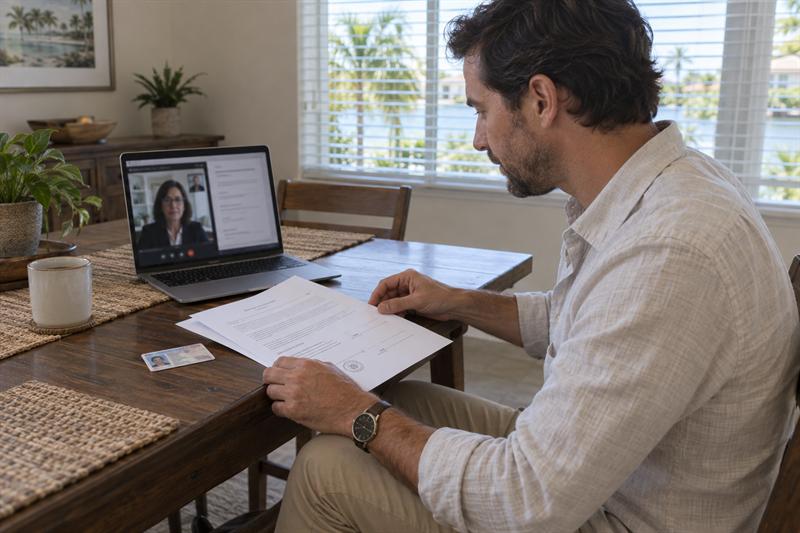
At Sunshine Mobile Notary, LLC, this is where preparation makes the biggest difference. Mobile and remote online notarization appointments usually run more smoothly when the document type, signer count, witness count, and location logistics are confirmed up front. If the signing is happening at home, in an office, or in a facility, the planning process matters just as much as the notarization itself.
What to confirm when scheduling
- The document type
- Whether witness lines appear on the document
- The number of required witnesses
- Whether all signers and witnesses will be present
- Whether the document will be recorded or submitted to an institution with its own rules
This is the part people skip when they are in a hurry. That can result in a notary appointment being treated like a generic errand when it actually requires a coordinated signing setup. If you are preparing for a mobile visit, how to schedule a mobile notary appointment helps clarify what information should be ready before booking.
What to ask the document preparer, attorney, title company, or receiving agency
Ask whether witnesses are required, how many are required, whether the witnesses should be disinterested, and whether any specific signing structure is expected. Those questions often uncover the real requirement quickly.
If those points are not clarified, the notary appointment carries uncertainty that should have been resolved earlier. That usually leads to delay, not efficiency.
What happens if witnesses are missing at the appointment
The signing may stop, the document may not be ready for recording or acceptance, and the appointment may need to be rescheduled. For time-sensitive documents, that delay is often more than an inconvenience. It interrupts the process the document was meant to move forward.
This can become more difficult with mobile appointments because travel time, access coordination, and participant scheduling are already in play. One missing witness can turn a straightforward appointment into a second round of planning.
A Simple Florida Witness Requirement Checklist
- Does the document have witness lines?
- Did the preparer or receiving party confirm that witnesses are required?
- How many witnesses are needed?
- Will the witnesses be present at signing?
- Do all signers have acceptable ID for the notarial act?
This checklist keeps the issue simple. If any of those answers are unclear, the signing is not fully prepared yet.
Key Takeaways
- Not every notarized document in Florida needs witnesses.
- Witness requirements usually come from the document or receiving party, not from the notarial act itself.
- Deeds and other higher-formality documents create witness issues more frequently than routine forms.
- Assuming the notary covers witness requirements is a common mistake that leads to delays.
- Witness coordination should be handled before a mobile or remote online notarization appointment is finalized.
Conclusion
The real problem is not just whether a document needs witnesses. The real problem is discovering that requirement too late, after the appointment is already in motion. That is what can lead to rescheduling, incomplete signings, and documents that are not ready for recording or submission.
At Sunshine Mobile Notary, LLC, the practical goal is to help prevent those delays by helping signers sort out the setup before the appointment begins. If your document includes witness lines, involves property, authority, or recording, or already has unclear signing instructions, the next step is to schedule with Sunshine Mobile Notary, LLC so the signing can be coordinated correctly from the start.
FAQ
Do all notarized documents in Florida need witnesses?
No. Some notarized documents only need the notarial act, while others require witnesses in addition to notarization. The difference usually becomes clear from the document itself, especially if it includes witness lines or execution instructions.
A deed-related document is a good example of why this matters. People tend to treat every notarized document the same way, but deed signings and similar formal documents usually involve more structure than a routine affidavit or acknowledgment.
Can a Florida notary also sign as a witness?
This should not be treated as an automatic shortcut. The notary’s role and the witness role are different, and smoother appointments usually happen when separate witnesses are arranged.
The important issue is not just whether a second signature can be added. The real issue is whether the document will be accepted without questions later. When separate witnesses are present, the execution trail is usually clearer and easier to follow.
How many witnesses are usually required for a deed in Florida?
Deeds are commonly associated with witness requirements, which is one reason they create more preparation problems than routine notarizations. That is also why deed signings need more attention to setup before the appointment starts.
The practical implication is straightforward. If the document involves property transfer or recording, witness planning should be treated as part of the signing requirement, not as a detail to figure out after the notary arrives.
Who can be a witness for a notarized document in Florida?
A witness generally needs to be present, able to observe the signer, and able to sign in the witness section of the document. That is the basic function of the role.
What usually gets misunderstood is that availability is not the only factor. For more formal documents, neutral witnesses tend to create fewer complications than people closely tied to the transaction or family matter.
What is a credible witness in Florida notarization?
A credible witness is part of the identification side of a notarization in certain situations. A document witness is part of the signing side of the document. They are not the same thing.
This distinction matters because a person helping establish identity does not automatically satisfy a witness line on the document. One role supports the notarial act. The other supports the document’s execution requirement.
What should be confirmed before a mobile notary appointment if witnesses are required?
The document type, the number of required witnesses, whether witness lines appear on the document, and whether all participants will be present should be confirmed first. Those details determine whether the appointment is actually ready to happen.
For mobile appointments, this matters even more because travel, timing, and access logistics are already part of the setup. When witness planning is skipped, the appointment usually stops being simple and starts becoming a scheduling problem.