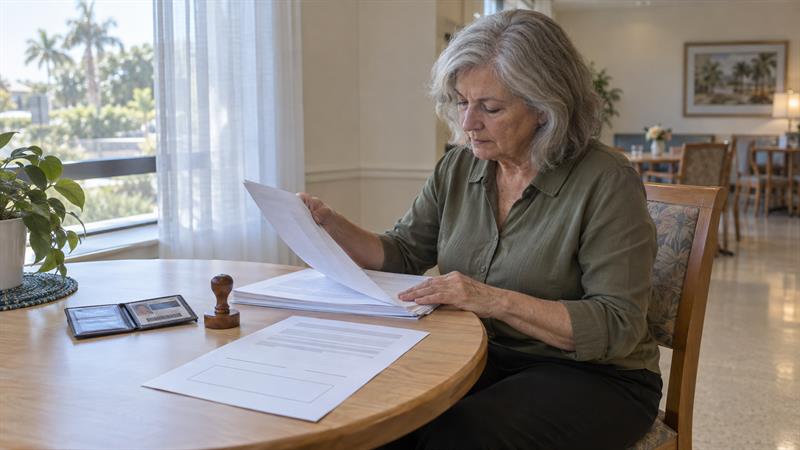
A document can be complete and ready to sign, yet the notarization may stop if the signer cannot be properly identified. Expired cards, damaged IDs, name differences, and missing photo identification can create last-minute appointment issues.
Florida notary identification requirements are more specific than bringing any card with a name and photo. This guide explains the forms of ID a Florida notary may accept, what to consider when standard ID is unavailable, and how to prepare for a mobile or remote online notarization appointment.
Florida Notary Identification Requirements at a Glance
A Florida notary must identify the signer through personal knowledge or satisfactory evidence of identity. In many appointments, satisfactory evidence means a current qualifying government-issued ID that allows the notary to reasonably confirm who is signing. If standard ID is unavailable, credible witnesses may be an option when Florida requirements are met.
- Bring qualifying identification for every signer.
- Use an ID type permitted under Florida notary rules.
- Make sure the ID is current, readable, and identifies the person appearing before the notary.
- Address missing, damaged, expired, or unusual ID before the appointment.
- Confirm whether the document requires witnesses in addition to the notary.
Identity is only one part of the appointment. The signer must also appear before the notary, sign willingly, and appear aware of what they are signing. A notary verifies identity and performs the notarial act, but does not provide legal advice about whether a person should sign a document.
Acceptable Forms of ID for a Notary in Florida
Florida notaries rely on identification categories permitted by Florida law. The ID should be current and provide a reasonable basis for identifying the signer. A workplace badge, credit card, membership card, Social Security card, or document that only shows a name does not generally meet that standard.
For an in-person appointment, bring the physical ID. Remote online notarization follows a different identity-verification process, discussed below.
Common Forms of Identification Most Signers Use
- Florida driver license
- Florida identification card
- Driver license or state-issued identification card from another U.S. state or territory
- United States passport
- United States armed forces identification card
These are IDs many people bring to a mobile notary appointment. Even with a familiar form of ID, the notary must still be able to reasonably identify the signer from the document presented.
Other Identification Florida Law May Permit
- Veteran health identification card issued by the U.S. Department of Veterans Affairs
- Inmate identification card issued by the Florida Department of Corrections or a sheriff’s department, when applicable
- Foreign passport stamped by U.S. Citizenship and Immigration Services
- Identification card issued by a federally recognized tribal government
The category of identification matters, but so does the condition of the document. An ID within an allowed category may still create a problem if the photo, name, signature, or other identifying details cannot be read or do not support a reasonable identification of the signer.
What Makes an ID Acceptable for Notarization?
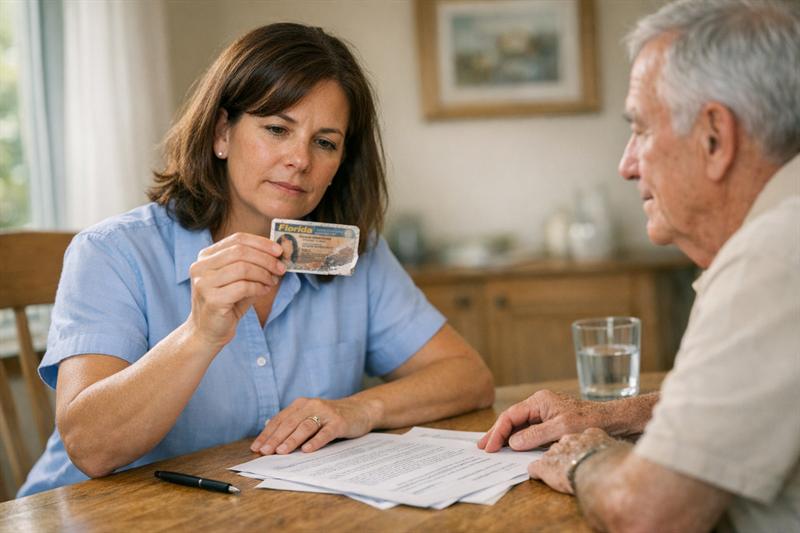
An acceptable ID is more than a card the signer happens to have available. It should be a current qualifying identification document that gives the notary a reasonable basis to verify the signer’s identity at the appointment.
- The ID should be a government-issued document within an accepted category.
- The photo should reasonably match the signer appearing before the notary.
- The name and other identifying details should be readable.
- The ID should appear intact and authentic.
- The signer should be the person shown on the identification.
This is where problems can start: a signer may assume a faded card, a phone photo of an ID, or a document with a missing corner will be enough. If the notary cannot reasonably rely on the ID, the appointment may need to be postponed until another appropriate option is available.
Before the appointment, review what to expect from a mobile notary appointment so every signer, ID, document, and witness requirement is considered before travel is arranged.
Can a Florida Notary Accept an Expired, Damaged, or Out-of-State ID?
These questions are best addressed before an appointment is scheduled. An identification issue discovered at the signing table can delay the process or require another visit.
Can a Florida Notary Accept an Expired ID?
Florida law generally requires current identification when a notary relies on an ID as satisfactory evidence of identity. An expired ID should not be assumed to be acceptable.
- Look for another current qualifying form of identification.
- Explain the situation before scheduling a mobile visit.
- Ask whether credible witnesses may be appropriate under the circumstances.
Preparing another form of ID or another legally appropriate option before the appointment is usually the most practical step.
What If the ID Is Damaged or Difficult to Read?
A damaged ID can create the same problem as missing ID when key details cannot be verified. If the photo is unclear, the name is worn away, the signature is missing, or the document appears altered, the notary may be unable to rely on it.
- Bring a second qualifying ID if one is available.
- Do not rely on a photocopy or a photo stored on a phone for an in-person appointment.
- Call ahead if the ID is cracked, faded, water-damaged, or difficult to read.
The question is not only whether the signer still has the card, but whether the card can reasonably verify identity. Addressing that distinction before travel is arranged can prevent an avoidable delay.
Can a Florida Notary Accept an Out-of-State Driver License?
A current out-of-state driver license or state-issued ID can be acceptable in Florida. The important point is that it must meet the applicable identification requirements and allow the notary to reasonably identify the signer.
Out-of-state ID does not automatically resolve a document-name issue. If the document uses a different name than the ID, raise that question with the document recipient or a qualified legal professional before signing. A notary cannot decide how a document should be completed or whether a name variation is legally sufficient.
What If the Signer Does Not Have Acceptable ID?
Missing standard identification does not always end the process, but it changes what must be arranged before the appointment. Florida notary practice recognizes personal knowledge and credible witnesses in specific circumstances. Neither option should be treated as an informal substitute for valid ID.
If a signer has no qualifying ID, address the issue before the notary travels to the signing location. Otherwise, the appointment may need to be postponed while an appropriate identity-verification option is arranged.
Personal Knowledge of the Signer
Personal knowledge has a specific meaning in notarial practice. It is not established by a same-day introduction, a phone call, a relative’s statement, or a person simply saying they know the signer.
This option is limited in ordinary mobile appointments because the notary must personally know the signer as required by Florida law. When personal knowledge is not available, the next question is whether credible witnesses can be used.
Using Credible Witnesses for Florida Notarization
Credible witnesses can help establish identity when a signer does not have satisfactory identification and Florida requirements are met. They are different from witnesses required to sign a will, deed, power of attorney, or another document.
Depending on the circumstances, one credible witness personally known to the notary, or two credible witnesses whose identities are established for the notary, may be used. Credible witnesses must personally know the signer, take the required oath or affirmation, and meet the applicable standards for the notarization.
Confirm the ID and witness plan before scheduling the signing.
- The signer has no qualifying ID.
- A family member is expected to vouch for the signer without confirming the credible-witness requirements.
- The document requires its own witnesses, but no one has confirmed whether those people may also serve an identity-verification role.
- The appointment is at a hospital, rehabilitation center, or assisted living community where timing and access are limited.
These situations benefit from advance planning. Sunshine Mobile Notary, LLC can discuss appointment logistics before travel is scheduled, including whether a mobile appointment and an appropriate witness arrangement may be needed.
Remote Online Notarization ID Requirements in Florida
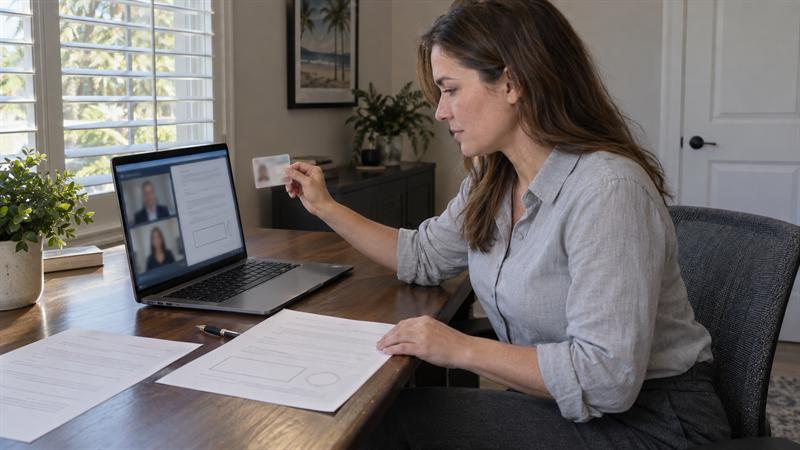
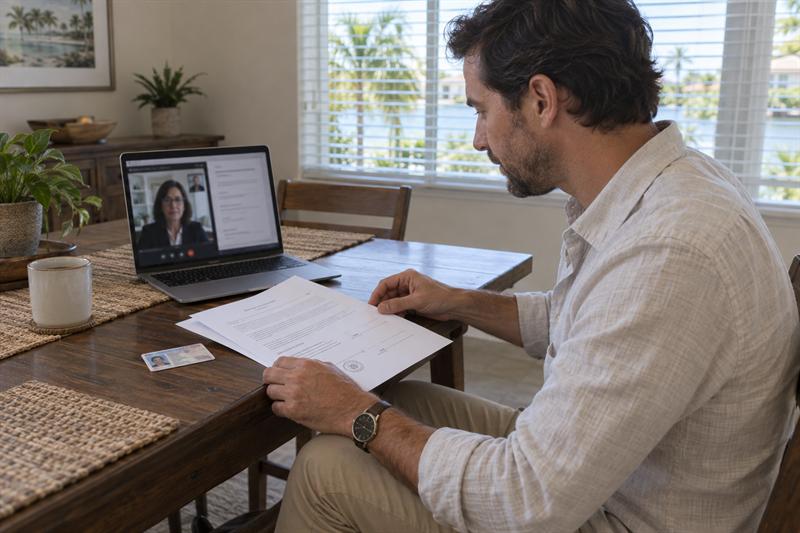
Remote online notarization is not simply showing a driver license during a video call. It generally uses an online notarization platform with identity-proofing and credential-analysis steps before the remote notarial act is completed.
- In-person mobile appointment: The signer appears in person and presents qualifying identification to the notary.
- Remote online notarization: The signer completes identity-verification steps through the online platform before the remote notarial act is completed.
Remote notarization can be practical when travel is difficult and the document is suitable for an online session. It is not the right option for every document, signer, or situation. For a closer look at the process, review how remote online notarization works in Florida.
How to Prepare for a Mobile Notary Appointment
A prepared appointment generally moves more smoothly because identity, document, and witness issues are handled before the notary arrives. A rushed appointment can lead to missing IDs, absent signers, unresolved witness arrangements, or documents that need clarification from the receiving organization.
- Bring qualifying identification for every signer.
- Confirm that every required signer will be present.
- Confirm whether the document needs witnesses in addition to the notary.
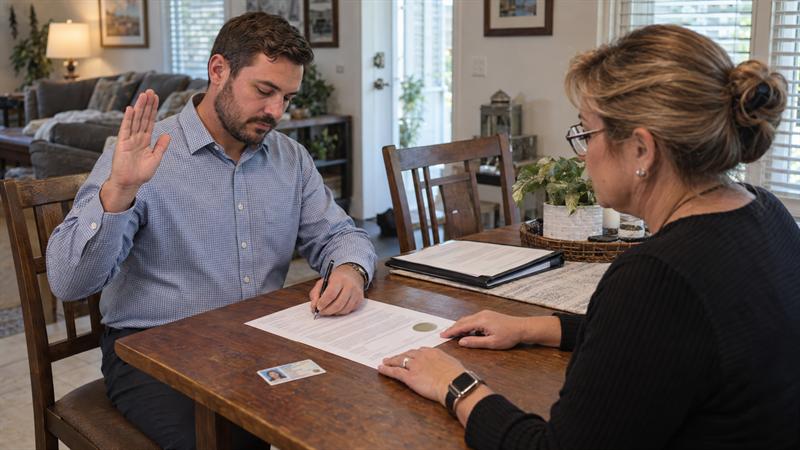
- Ask before signing if the document includes an oath, jurat, or other notarial certificate that must be completed in the notary’s presence.
- Make sure the signer is willing and appears aware of what they are signing.
- Discuss missing ID, name changes, multiple signers, care-facility visits, and witness needs before the notary travels.
- Have the complete document ready, including every page that needs to be signed or notarized.
Mobile service can be helpful when the signer is at home, in an office, at a hospital, in an assisted living community, or in another setting where travel is difficult. Readers deciding between appointment types can compare mobile notary and online notary options before booking.
Key Takeaways
- Florida notary identification requirements are specific, and not every photo ID qualifies.
- Every signer should have readable, current qualifying identification ready before the appointment.
- Expired, damaged, or unusual identification should be discussed in advance.
- Personal knowledge and credible witnesses are limited legal alternatives, not last-minute workarounds.
- Remote online notarization uses a different identity-verification process from an in-person mobile appointment.
- Early planning helps prevent delays when ID or witness issues are discovered at signing time.
Conclusion: Confirm Your ID Before Scheduling a Notary Appointment
The issue is not simply forgetting an ID. It is discovering at the appointment that the signer cannot be properly identified, the document has a name discrepancy, or required witnesses were never arranged. That can lead to a delayed signing and another appointment when the document is time-sensitive.
Sunshine Mobile Notary, LLC can assist with mobile appointments in Southwest Florida and discuss whether remote online notarization may fit the situation. Confirm the identification, signer details, document readiness, and witness needs before booking so the appointment is planned around the issues that commonly cause delays.
Company Approach
Sunshine Mobile Notary, LLC approaches identification questions as appointment-readiness questions. The focus is on identifying obstacles before travel is scheduled, especially when a signer is in a care setting, several people must sign, identification is unusual, or witnesses are required.
That approach matters because a notary cannot overlook an identification issue simply because a deadline is urgent. Clear information before the appointment helps the signer prepare the appropriate option: bring another qualifying ID, arrange credible witnesses when appropriate, schedule a mobile visit, or explore a remote online notarization session.
FAQ Block: Florida Notary ID Requirements
Can a Florida notary accept a birth certificate as identification?
Direct answer: A birth certificate generally is not the standard identification used to establish identity for notarization.
Proof or specificity: Florida notary identification requirements rely on personal knowledge or satisfactory evidence of identity through qualifying identification or legally appropriate alternatives. A birth certificate does not provide the photo-based identity verification used in a typical appointment.
Next step: Bring a qualifying ID when possible, or discuss appropriate identity-verification options before the appointment.
Can a Florida notary accept a Social Security card?
Direct answer: A Social Security card alone generally is not used as satisfactory evidence of identity for a Florida notarization.
Proof or specificity: It does not provide the photo-based verification features found on the government-issued IDs commonly used to identify a signer.
Next step: Prepare a qualifying photo ID or contact the notary before scheduling if the signer does not have standard identification.
Can I use a photo or photocopy of my ID for a mobile notary appointment?
Direct answer: For an in-person mobile notary appointment, the signer should be prepared to present the physical qualifying identification document.
Proof or specificity: A phone photo or photocopy may not provide the same basis for a notary to reasonably rely on the identification presented.
Next step: If the physical ID is unavailable, address that issue before the notary travels to the signing location.
Does the name on my ID need to match the name on the document?
Direct answer: Name differences should be addressed before the signing appointment.
Proof or specificity: The ID verifies the signer’s identity, while the document must also be completed according to the receiving organization’s requirements or applicable legal requirements. A notary cannot advise on whether a name variation is legally sufficient for the document.
Next step: Review the document and ID in advance, then ask the document recipient or a qualified legal professional about name-format questions.
Can a family member be a credible witness for a Florida notarization?
Direct answer: A family member should not be assumed to qualify automatically as a credible witness.
Proof or specificity: Credible-witness use depends on Florida requirements and the facts of the appointment. Credible witnesses are also different from witnesses who sign the document itself.
Next step: Discuss the proposed witness arrangement before the appointment so the appropriate identity-verification process can be planned.
What should I do if the signer is in a hospital, rehabilitation center, or assisted living community?
Direct answer: Confirm the signer’s qualifying ID, willingness, document readiness, facility access procedures, and witness needs before scheduling a mobile visit.
Proof or specificity: These appointments can involve limited visiting windows, access procedures, and signers who cannot easily return for a second appointment. Missing ID or witness issues can delay the notarization after the notary arrives.
Next step: Contact Sunshine Mobile Notary, LLC before booking to discuss the location, the signer’s identification, and whether a mobile or remote online notarization appointment is the more practical option.