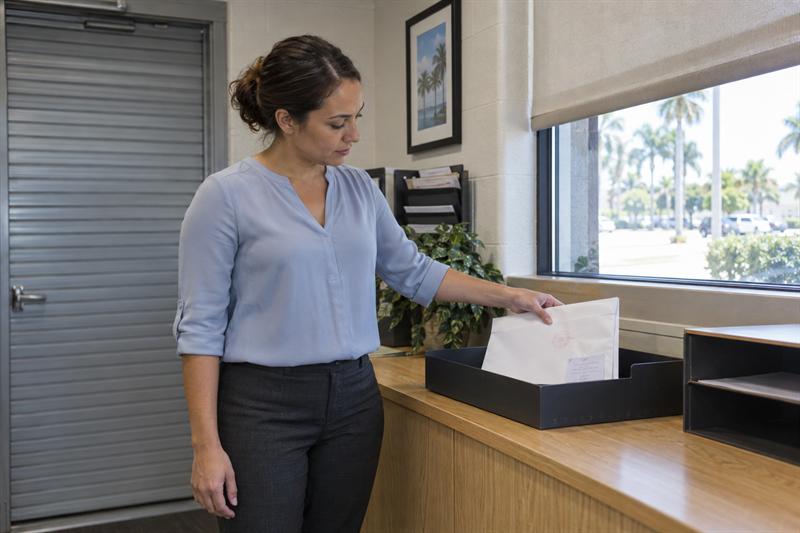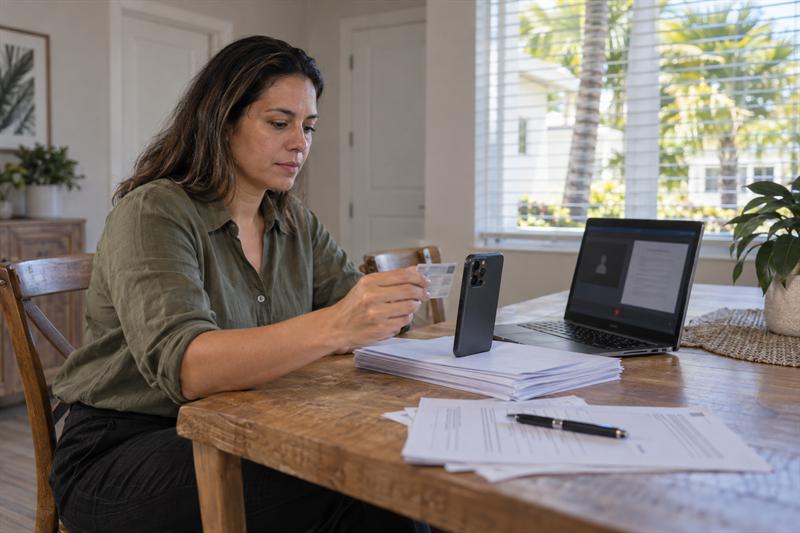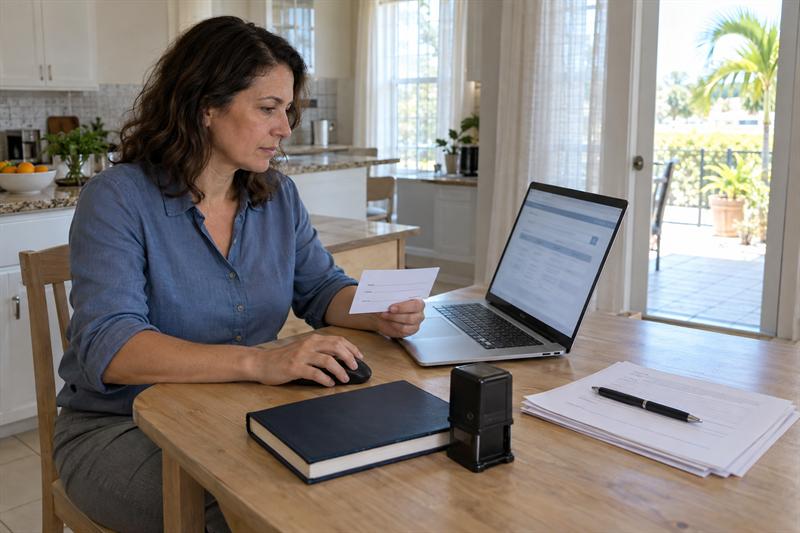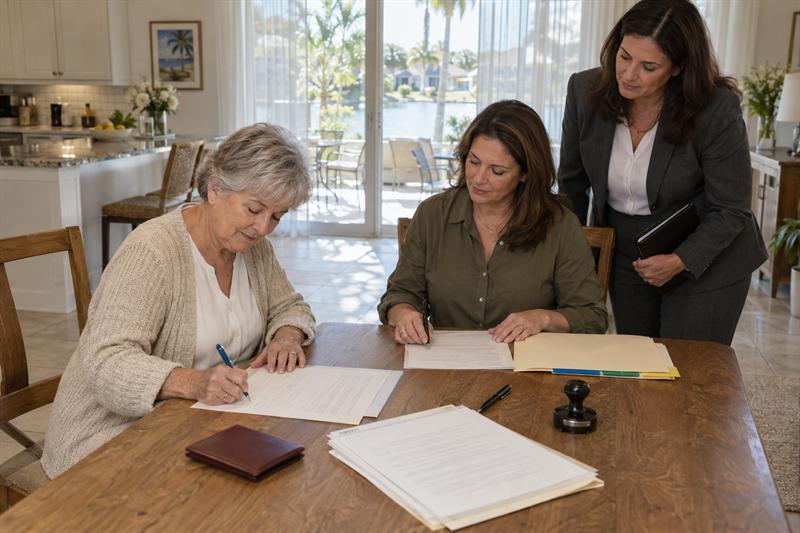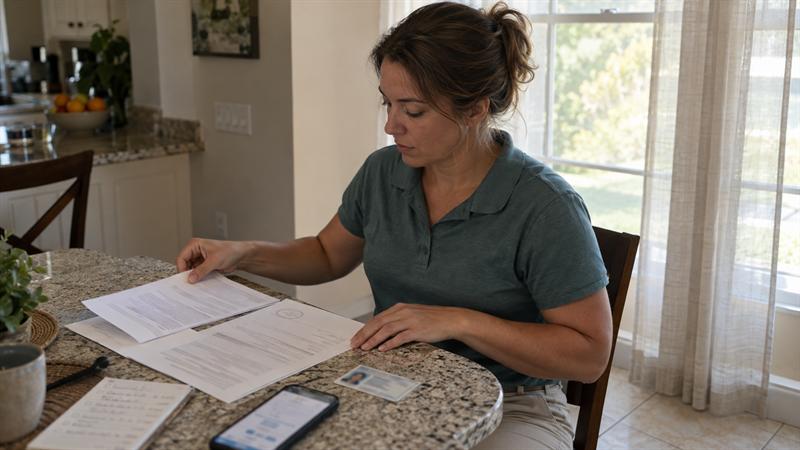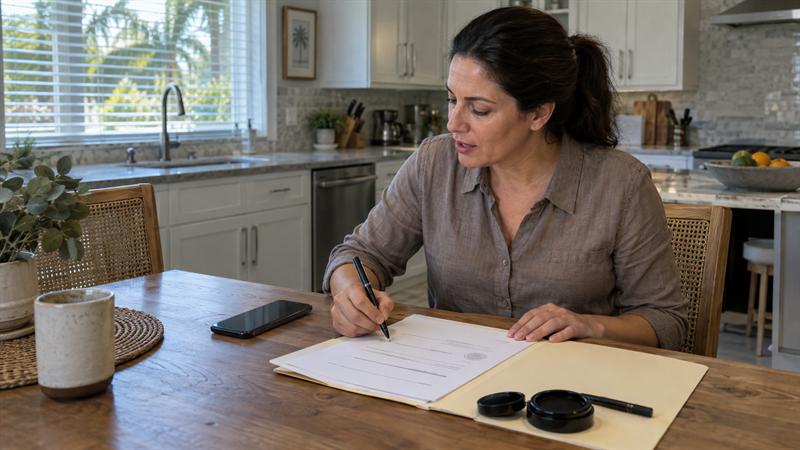
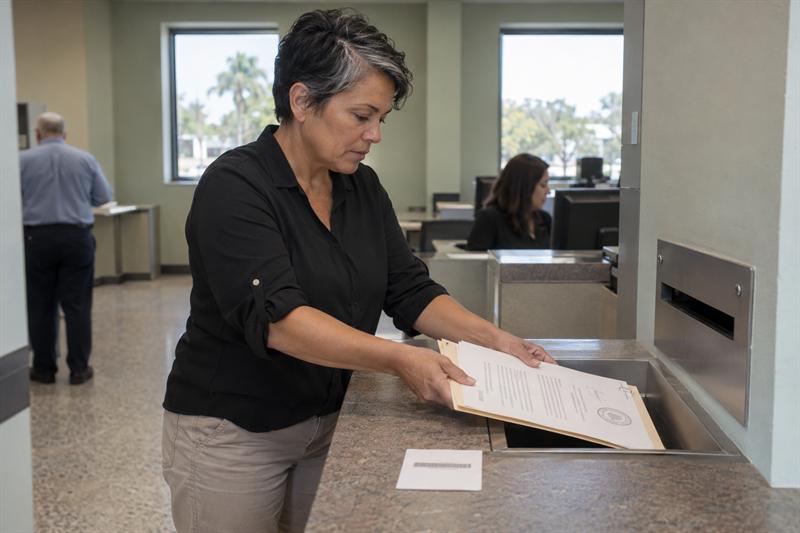
At Sunshine Mobile Notary, LLC, this is one of the most common questions after an appointment. People leave with a properly notarized document, but the next step is often unclear, and that is where the process can stall.
What to Do With a Notarized Document After the Appointment
What happens next depends on who needs the document and what it is meant to accomplish. In most cases, a notarized document follows one of four paths: it is delivered to a recipient, recorded with the county, returned to a title or lender team, or moved into a separate authentication or apostille process for international use.
This is where many problems begin. A document can be properly notarized and still be delayed because it was sent to the wrong place, sent in the wrong format, or never moved into the next required step.
Why “Notarized” Is Not the Final Step
Notarization confirms the signing act. It does not decide where the document goes next, whether the original is required, or whether the document belongs in county records.
This comes up regularly with deeds, affidavits, powers of attorney, and closing packages. The signing itself may be complete, but confusion often starts right after the appointment when the signer assumes the seal finishes the process. It does not. The document still has to reach the right destination in the right form.
The 4 Most Common Next-Step Paths
- Direct delivery to a recipient: Common when a private party, employer, institution, or agency requested the document.
- County recording: Common for certain property-related and official-record documents.
- Loan signing return or title handoff: Common for closing packages that need to go back into a lender or title workflow.
- Authentication or apostille: Relevant when a document will be used outside the United States.
If you are not sure which path applies, the real issue is usually not the notarization itself. It is the document’s destination.
Step 1: Confirm Who Needs the Document and in What Format
Before sending anything, confirm who the final recipient is and what that recipient will accept. Some recipients require the original signed document. Others review a scan first but still need the original later. Some need a recorded copy. Others only need the completed document delivered directly.
A common mistake is focusing on finishing the notarization, then guessing at the next step. That can lead to lost time, duplicate shipping, or rejection because the recipient needed something more specific than a notarized copy. For a deeper look at this issue, see how to confirm a recipient will accept your notarized document before you book an appointment.
Original Document vs Copy
The original matters more than many people expect. If a document is going into a formal process, especially recording or title-related handling, the original signed and notarized version is often the document that moves the matter forward.
A scan can still be useful for review or reference, but it is not automatically interchangeable with the original. This issue often becomes more complicated when a signer sends a copy, assumes the matter is complete, and later learns that the recipient cannot process it without the original.
When to Confirm Acceptance Before Sending Anything
Recipient acceptance should be confirmed before shipment, submission, or recording. This is where problems often develop because the document itself is valid, but the receiving office or company has handling rules that were never checked.
- Does the recipient need the original document or a copy first?
- Are there instructions that control how the document should be packaged or delivered?
- Does the document need to be recorded before the recipient can use it?
- Is there a deadline or sequence that affects when the document should be sent?
If any of those points are unclear, the next step is not shipping. The next step is identifying the exact handoff requirement.
Step 2: Decide Whether the Document Needs to Be Recorded
Not every notarized document gets recorded. Recording is a separate county process used for documents that belong in official public records, especially certain property-related instruments and similar filings.
This is one of the biggest misunderstandings in post-signing workflow. People often assume that if a document is notarized, it automatically needs to go to the clerk. That assumption can lead to unnecessary submissions, delays, or confusion about what the clerk will accept. Sunshine Mobile Notary, LLC also assists clients with county recording support in Southwest Florida.
Documents Commonly Associated With County Recording
Deeds are the most familiar example, but they are not the only documents that can move into a recording path. Some property-related instruments and official-record documents need to be prepared correctly and submitted in a way the county will accept.
This is where details matter. A document can relate to property and still run into problems if recording readiness was never confirmed. For county-specific guidance, see County Clerk Recording in Lee, Collier, and Charlotte Counties: What to Confirm Before Submission.
Documents That Are Typically Delivered but Not Recorded
Many notarized documents are simply delivered to the person, business, or agency that requested them. Affidavits, permission forms, and some financial or employer-related documents often fall into this category.
The important distinction is that notarization does not create a recording requirement. The document’s purpose does. If the document is meant to support a private transaction or institutional process rather than become part of official public records, delivery is usually the next step rather than recording.
If any of these situations sound familiar, the next step probably needs to be clarified now:
- You have the original document but do not know who should receive it
- You were told the document needs to be filed but do not know whether that means county recording or direct submission
- You already sent a copy and the process has stalled
- You are handling a deed, closing package, or other time-sensitive original
When those signs appear, the issue is no longer the notarization. The issue is that the document is stuck between signing and completion.
Step 3: Choose the Right Delivery Method
Once you know where the document needs to go, choose the delivery method that fits the document’s importance, timing, and handling needs. Standard mail, courier service, overnight shipping, and in-person drop-off each solve different problems.
The most practical option is usually the one that protects the original and creates the clearest chain of custody. If the document is time-sensitive or difficult to replace, a weak delivery choice can create the next delay.
Mail, Courier, Overnight Shipping, or In-Person Drop-Off
Standard mail is often enough when the document is not urgent and the recipient does not require tight timing or special handling. Courier or overnight delivery is generally more practical when the original matters, the deadline is narrow, or proof of movement is important.
In-person drop-off can be the better choice when the document needs a direct handoff or when reducing transit risk matters more than convenience. For original-document handling strategies, see Signed Document Courier and Delivery in Southwest Florida: How to Handle Originals After a Notarization.
Why Tracking and Chain of Custody Matter for Originals
Originals should be treated like final documents, not routine mail. Once an original leaves your hands, it helps to be able to show where it went and when it arrived.
This issue becomes harder to fix when an original is treated like a replaceable copy. If the document is lost or delayed and there is no tracking, the problem can shift from simple follow-up to reconstruction, re-signing, or missed processing windows. Keeping the shipment visible is part of completing the workflow correctly.
Step 4: Follow Special Instructions for Loan, Title, and Real Estate Documents
Loan, title, and real estate documents often follow tighter post-signing workflows than ordinary notarized paperwork. These documents may move through a controlled handoff process, and timing can matter because multiple parties are waiting on the package.
A common pattern is that the signing itself goes smoothly, but the return process causes the delay. Pages are sent back late, package instructions are missed, or the original set does not move the way the title team expected. That can create downstream processing issues, not because the signing failed, but because the handoff did.
Returning Loan Signing Packages
Loan packages should be returned exactly as instructed by the lender or title team. Package completeness matters because a missing page, delayed shipment, or incorrect return path can slow everything that follows.
This is where time can be lost even when the notarization itself was handled correctly. If the package is not returned as expected, review and processing may pause until the issue is corrected. For a closer look, see Loan Signing Document Return and Title Team Handoff: What Happens After the Closing Signing Is Complete.
Title-Company Handoff and Timing Issues
Title-company handoff is about coordination, not just shipping. The package often has to move from signer to notary to carrier to title team without confusion about what was sent or when it was sent.
If you are getting repeated follow-up calls, uncertainty about package status, or hesitation over which set goes where, that usually means the handoff chain needs to be tightened. Real estate and closing documents depend on careful follow-through after signing, not just signatures at the table.
Step 5: Keep Records and Confirm Completion
Sending the document is not the same as finishing the matter. Completion means you can show what was sent, when it was sent, and whether it was received, accepted, or recorded.
This is a step many people skip because the document is already out of their hands. That can lead to confusion later when the recipient says nothing arrived, the county has no matching submission, or the signer cannot show what version was sent.
What to Save for Your Records
- A copy or scan of the signed document when appropriate
- The shipping receipt or delivery confirmation
- The tracking number for any mailed or couriered original
- Any confirmation of receipt, submission, or recording
Those records serve different purposes. A copy shows what was signed. Tracking shows movement. A receipt or recording confirmation shows the process reached the next stage.
When to Follow Up With the Receiving Office or Company
Follow-up matters when the document is time-sensitive, tied to property, connected to a closing, or needed for a formal filing or review. In those situations, silence is not confirmation.
If there is no acknowledgment of receipt or no sign the matter has progressed, that usually means the workflow has stalled somewhere between delivery and acceptance. The question is no longer whether the document was notarized. The question is whether it actually moved into the next processing stage.
Common Post-Notarization Mistakes That Cause Delays
The most common post-signing mistakes are simple, but they can create real slowdowns because they break the workflow after the notarial act is complete.
- Sending a copy when the original is required
- Assuming every notarized document needs county recording
- Missing lender or title return instructions
- Failing to confirm what the recipient will accept
- Shipping an important original without tracking
This is where many signers lose time they thought they had saved. The signing is finished, but the document still does not reach the right person in the right way. Once that happens, the next step is usually correction, resubmission, or repeated follow-up.
Post-Signing Workflow in Southwest Florida: When Local Support Helps
In Southwest Florida, post-signing support is often less about notarization itself and more about what needs to happen immediately after the appointment. Some documents need county recording support. Others need secure local delivery. Loan and title documents often need a clean handoff into a time-sensitive return process.
Sunshine Mobile Notary, LLC helps clients navigate that workflow, not just the signing appointment. That matters because many delays begin after the seal is placed, when the document needs to move quickly and correctly through the next step.
Key Takeaways
- Notarization is one step in the process, not the endpoint.
- The next step depends on the document’s destination and purpose.
- Some documents need direct delivery, some need county recording, and some follow lender or title return instructions.
- Originals, tracking, and follow-up often determine whether the matter actually gets completed.
- Many post-signing delays happen because the handoff was unclear, not because the notarization failed.
Conclusion
The real problem after notarization is not the signature or seal. It is what happens when the document enters the wrong workflow, gets sent in the wrong format, or stalls between signing and final acceptance. If that step is not handled properly, delays can turn into rework, repeated follow-up, or missed processing windows.
That is why Sunshine Mobile Notary, LLC can be a practical resource when the document needs more than a completed notarization. Whether the issue is county recording support, original-document delivery, or a title and loan package handoff, the goal is to help keep the document moving in the right direction without creating avoidable delays after the appointment.
If your document is signed but the next step is still unclear, Sunshine Mobile Notary, LLC can help you move from completed notarization to a completed workflow.
Company Approach
Sunshine Mobile Notary, LLC approaches notarization as part of a larger document process. That means looking beyond the signature block to what the document needs next, how originals should be handled, where county recording fits, and when a title or lender handoff needs tighter coordination.
This approach is especially useful in Southwest Florida, where mobile notarization, remote online options, and post-signing support often intersect. The value is not just getting the document notarized. It is helping prevent the handoff mistakes that often create the next delay.
FAQ
What should be done immediately after a document is notarized?
The next step is to identify the document’s destination and the format that destination requires. A notarized document might need to be delivered directly, recorded with the county, returned to a title or lender team, or prepared for a separate apostille process if it is going abroad.
The important distinction is that notarization confirms the signing act, but it does not complete the submission path. For example, a deed often moves into a recording workflow, while a private affidavit might only need to be sent to the requesting organization.
Does a notarized document need to be recorded with the county?
No. County recording only applies to certain documents, usually those meant for official public records. Property-related documents are the clearest example, but notarization by itself does not create a recording requirement.
What often gets misunderstood is the difference between a notarized document and a recordable document. A document can be properly notarized and still belong in a direct-delivery workflow instead of a county recording workflow.
Should I send the original notarized document or a copy?
That depends on what the recipient requires, but many delays happen because the original was needed and only a copy was sent. If the document is being formally processed, recorded, or handled through title or lender channels, the original often carries the process forward.
A scan can still help with review or internal reference, but it does not automatically replace the signed original. The key point is that “copy versus original” changes whether the document is simply viewed or actually accepted.
How do I know where to send my notarized document?
The right destination depends on what the document is meant to do. The recipient might be a county clerk, title company, lender, agency, or private organization.
A useful way to sort this out is by function. If the document belongs in official records, it follows a recording path. If it belongs to a closing or lending process, it follows title or lender instructions. If it was requested by a person or institution, it usually goes directly to that recipient in the format they accept.
What happens to documents after a loan signing appointment?
After a loan signing, the package usually moves back through a controlled title or lender return process. Timing, completeness, and handling matter because the package supports the next stage of review and transaction processing.
This is different from ordinary document delivery. A loan package is not just mailed out and forgotten. If pages are missing, delayed, or returned incorrectly, processing may pause until the problem is fixed.
What records should I keep after sending a notarized document?
Keep the records that show what was sent, how it was sent, and whether it reached the next stage. That usually includes a copy or scan when appropriate, a shipping receipt, a tracking number, and any confirmation of receipt or recording.
The most useful distinction is between proof of sending and proof of completion. Tracking shows movement, but a submission or recording confirmation shows the document actually entered the next part of the process.