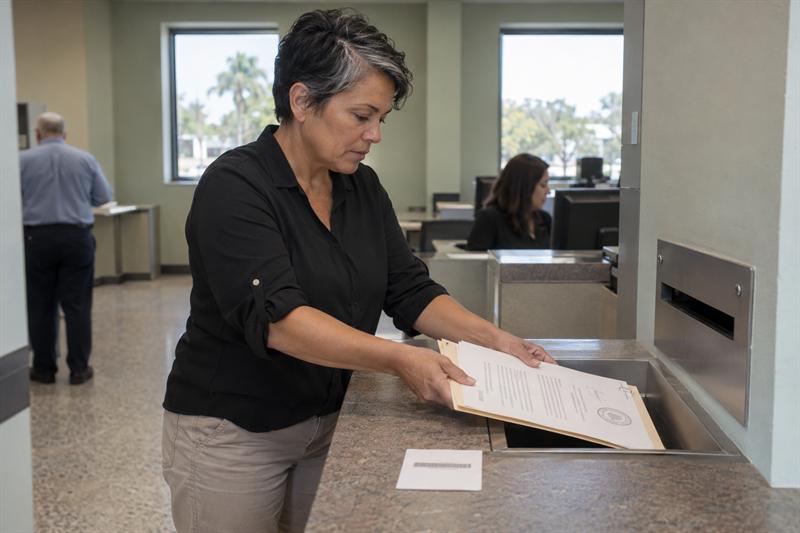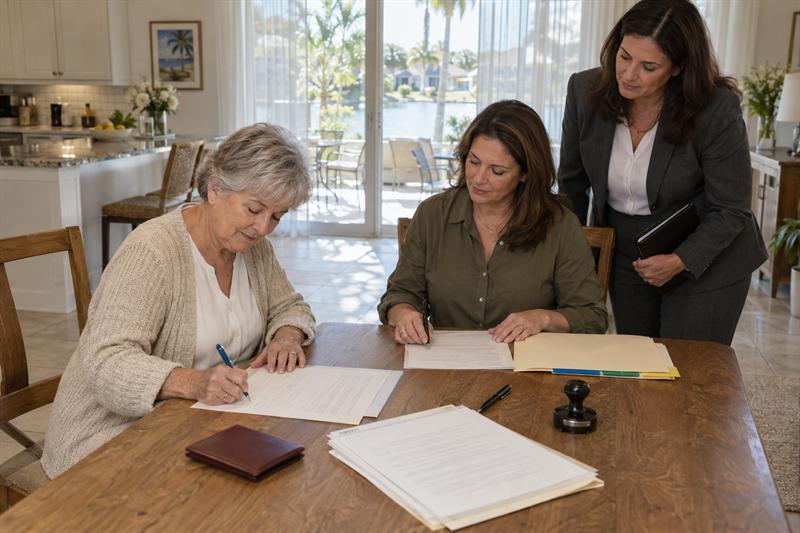

When people ask “do I need an original or notarized copy” a day before an appointment, the honest answer is that it depends on the receiving office, not on the notary. I have watched signings go smoothly and the paperwork still come back rejected, because the version that got signed was not the version that office would accept.
The signing is rarely the problem. The problem is a mismatch nobody caught in advance: an original was requested and a notarized copy went out, a certified copy was expected from the clerk and a photocopy arrived, or a document needed an apostille and nobody asked about the destination.
Here is how the versions differ, who produces each one, and how to pin down the right one before you book.
The Short Answer
Quick Answer: Before you book, ask the receiving office which version it needs and get the answer in writing. The choice is between the original, a certified copy, a notarized copy, an apostilled copy, and a translated copy. That office sets the requirement, not the notary and not habit.
Key Takeaways:
- The five versions are not interchangeable, and usually only one fits a given filing.
- A certified copy comes from the office that holds the original record.
- A notary can attest a copy of a private document, but not of a vital record or an available public record.
- An apostille is added by the state, and it requires an original rather than a photocopy.
Five Versions of the Same Document
The same document can exist in five versions, and each answers a different question. An original is the paper the signer actually signed, with the ink still on it. A certified copy is issued by the office that holds the original record, stamped and signed by that office. A notarized copy has been compared against the paper you handed over and attested by a notary. An apostilled copy has been certified by the state for use in another country. A translated copy is the document rendered into another language by a translator who attests to it.
The notarized copy is the one people ask about most, because the wording sounds broader than it is. Under s. 117.05(12), Florida Statutes, I may supervise the making of a copy and attest that it is a true, exact, complete and unaltered copy, using a set certificate form. That authority has two limits written into it: I may not attest a copy of a vital record, and I may not attest a copy of a public record when a copy can be obtained from the custodian.
None of these versions is a shortcut past the others. A private paper may be fine as a notarized copy; a birth certificate or a court file has to come from the office that holds it. If you are still working out which papers in your packet need a notarial act at all, What Documents Need Notarization in Florida walks through the categories.
Certified Copy vs. Notarized Copy: The Difference That Matters
The “certified copy vs notarized copy” question is really about who is allowed to make the copy, not about which one looks more official. A certified copy comes from the custodian of the original record: the Florida Bureau of Vital Statistics for a birth or death certificate, the Clerk of the Circuit Court for a court file, marriage record or divorce record, and the Florida Division of Corporations for a corporate record.
A notarized copy works the other way around. I am not the custodian of your document, so what I can attest is narrower: that the paper in front of me is a true, exact, complete and unaltered copy of what you handed over. That attestation covers the copy, not the truth or accuracy of what the document says.
That distinction is why a recipient can accept the notarization and still reject the document version, and why my part of the process has a firm edge. I cannot give legal advice, tell you whether to sign, or interpret a document. What I can do is confirm the copy matches and the certificate is complete. For what a recording office wants afterward, see county clerk recording in Lee, Collier, and Charlotte counties; for the boundary in more detail, what a notary can and cannot do during an appointment.
When the Recipient Needs the Original
Some recipients want the paper back with the wet ink on it. They are not asking for proof that a signature was witnessed; they are asking for the instrument itself. The state takes the same position at the apostille stage, where it asks for originals and states that a photocopy is not acceptable.
If the request names the original, treat that as the whole answer. Mail it in a way you can track, and do not assume a notarized copy will substitute once the original is in transit. Two documents can carry the same words and still not be the same document for a filing.
When an Apostille Changes the Answer
Sorting out the “document version for notarization and apostille” before you book saves the second trip. The Florida Department of State is the only authority in Florida that issues apostilles and notarial certifications, and the Division of Corporations issues them. It works from originals.
For a public document, the state requires an original certified copy or a certificate of status, and a photocopy is not acceptable. For a notarized document, it requires a full notarial statement and the original notary signature, stamp and seal. The fee is $10 per document, and $20 per document for documents certified by a Florida Clerk of the Court, which covers the $10 apostille and a $10 certificate of incumbency. The state asks for the name of the country where the document will be used, because that decides whether it issues an apostille or a Certificate of Notarial Authority.
A request needs the request form, the document, payment, and a self-addressed stamped envelope or a prepaid air bill. The state advises allowing at least five business days, completes requests in the order received, and does not offer expedited service. Federal documents such as a U.S. passport go to the U.S. Department of State instead, and a document notarized in another state goes to that state’s authority.
Documents must be correctly notarized in English for the state to certify them. Apostilles are for countries in the Hague Apostille Convention; other countries may need a Certificate of Notarial Authority and then consular legalization. The Department publishes a list of acceptable document types and asks you to contact it when a document is not on that list. For the fuller process, see apostille services in Florida.
What About a Translated Copy?
A certified translation is prepared by a translator who attests to the translation. A notary can notarize the translator’s signature, but that notarial act does not confirm that the translation is accurate. The notary is verifying the signature, not the Spanish, Portuguese or French on the page.
So a translated copy usually travels as two documents: the translation with the translator’s attestation, and a notarized signature on that attestation if the recipient asks for one. If an apostille is also required, the notarized signature is what the state certifies, so the translation has to be final before that notarization happens.
How to Match the Version to the Recipient, Step by Step
This is the order I would work in, and the first two steps cost nothing.
- Ask the recipient in writing which version it needs, using the words original, certified copy, notarized copy, apostilled copy or translated copy, and keep the reply.
- If the answer is a certified copy, identify the office that holds the record and request the copy from that office directly.
- If the answer is a notarized copy, confirm the document is a private paper rather than a vital record or an available public record before you book.
- If the answer includes an apostille, confirm the destination country and add the state’s processing time to your schedule.
- Bring a current government photo identification, and do not sign the document before I arrive, because the signature has to be witnessed.
The notarial act is capped by statute at $10, separate from anything the state charges for an apostille. If you are unsure the recipient will accept the format you have, confirm a recipient will accept your notarized document goes through the questions that prevent a repeat appointment.
Frequently Asked Questions About Document Versions
Can a notary certify a copy of a birth certificate in Florida?
A notary may not attest a copy of a vital record from Florida, another state, a U.S. territory or another country. Certified copies of vital records come from the Florida Bureau of Vital Statistics, and the state accepts records from that office rather than from local health departments.
Do I need the original or a notarized copy for a foreign university?
The university sets the rule. Ask it in writing which version it wants. An original is the paper the signer actually signed, and a notarized copy is not that paper. If the document also needs an apostille, the Florida Department of State requires an original and states that a photocopy is not acceptable.
Will an apostille work if the document was notarized online?
For a notarized document, the state requires a full notarial statement and the original notary signature, stamp and seal. The state publishes a list of acceptable document types and asks you to contact it when a document is not on that list. Confirm the specific document with the receiving office before you rely on it.
Can I use one notarized copy for two different recipients?
Each recipient sets its own requirement. A notarial certificate records the venue, the type of act, whether the signer appeared in person or online, the date, the signer’s name, the type of identification and the notary’s signature and seal, and it does not name a recipient. Ask each recipient in writing.
What if the recipient’s instructions are vague?
Ask for the version to be named explicitly, using the words original, certified copy, notarized copy, apostilled copy or translated copy, and keep the reply. A request to send the paperwork does not tell you which of the five it wants.
Conclusion: Confirm the Version Before You Book
The version comes first and the appointment comes second. Once the receiving office names one of the five, the rest is short: the right office for a certified copy, a notarial act for a notarized copy, the state for an apostille. When the wording is vague, ask again rather than guess.
I am Valerie Nation, and Sunshine Mobile Notary, LLC comes to you in Fort Myers, Cape Coral, Estero, Bonita Springs, Naples, North Fort Myers, Lehigh Acres, Marco Island, Port Charlotte and Punta Gorda. I meet clients at a home, office, hospital, assisted living facility or title office, and remote online notarization is available for documents that fit that process. Once you know which version you need, call 239-691-0885 or email [email protected], or read what to expect from an apostille notary in Fort Myers. The office is at 13300 S. Cleveland Avenue, Fort Myers, FL 33907.