Sunshine Mobile Notary, LLC offers Southwest Florida mobile notary services and remote online notarization. Choosing between them starts with the signing requirements, not simply which appointment looks faster.
You might be arranging your own signing, coordinating several people at an office, or helping someone at a care facility. In each situation, the practical question is the same: what needs to be ready for the appointment to proceed? Settling those details early helps prevent a scheduled visit from becoming an incomplete signing.
Key Takeaways
- Give the exact address. City-level coverage does not establish travel time, building access, or appointment availability.
- Identify everyone who must participate. Coordinate signers and any required witnesses.
- Choose the format around the requirements. Online notarization is not an automatic substitute for an in-person signing.
- Clarify the total estimate. Distinguish notarial-act charges from travel and other disclosed service charges.
Is a Mobile Notary Appointment Right for Your Signing?
A mobile appointment is practical when the signer needs an in-person notarization at an agreed location rather than traveling to a notary. The service addresses travel and coordination, but it does not remove identification, participation, or document requirements.
What a Mobile Notary Does and Does Not Do
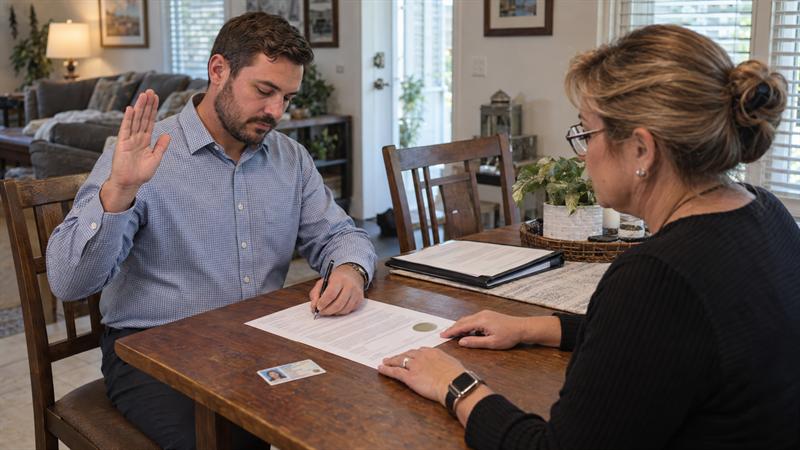
A mobile notary travels to an agreed location to perform authorized notarial acts, such as taking an acknowledgment or administering an oath for a jurat. The procedure depends on the act. Travel changes where the appointment happens, not the notary’s responsibilities under Florida law.
Notarization does not establish that a document is legally effective or appropriate for your situation. A notary acting solely in that role does not draft legal documents or provide legal advice. Questions about a document’s legal effect can be directed to an attorney; missing administrative instructions should come from the document issuer or receiving organization.
The Five Details That Make an Appointment Workable
Use these five checks to distinguish an available time slot from a signing that is ready to proceed:
- Location: Establish the address, service availability, and entry arrangements.
- People: Identify the signers and any required witnesses.
- Documents: Have the document and necessary instructions ready.
- Format: Determine whether mobile service or remote online notarization fits the requirements.
- Terms: Agree on timing, charges, and each participant’s responsibilities.
Reserving a time while leaving these details unresolved creates a coordination gap. As a submission deadline approaches, there is less time to replace a missing witness, obtain instructions, or arrange another appointment.
Southwest Florida Coverage and Travel Planning
Confirm coverage using the signing address, not just “Southwest Florida.” A regional service-area list provides orientation; the exact location and requested timing allow the provider to assess the visit.
Confirm the Signing Address, Not Just the City
Lee, Collier, and Charlotte counties form the geographic focus of this guide. Review the mobile notary service areas in Lee, Collier, and Charlotte counties for locality details, then provide the specific signing address.
- Street address, city, and ZIP code.
- Building name, unit number, or facility department.
- Preferred appointment time and any submission deadline.
- Entry instructions or restrictions affecting arrival.
Account for Access and Travel Logistics
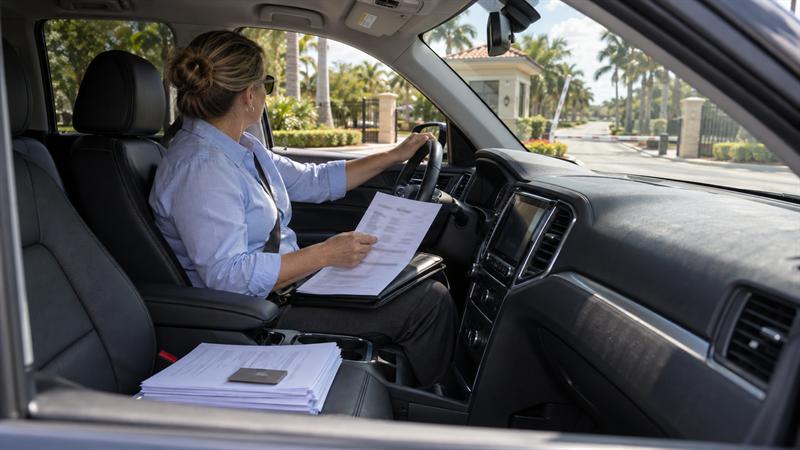
Reaching the property is not always the same as reaching the signer. A locked entrance, visitor check-in, or unclear meeting location can add coordination after arrival.
- Gated properties: Provide entry instructions and arrange any required visitor authorization.
- Office buildings: Identify reception, parking, and security procedures.
- Island locations: Supply the exact address so the route and appointment timing can be assessed.
- Facilities: Identify the permitted meeting location and visitor process.
If entry requires someone else’s approval, arrange it before the visit. Otherwise, the notary could arrive on time but remain unable to reach the signer.
Home, Office, and Facility Signings: What Changes?
The setting changes how participants meet, enter the property, and prepare the signing space. The requirements for the notarial act still apply in each location.
Home Appointments
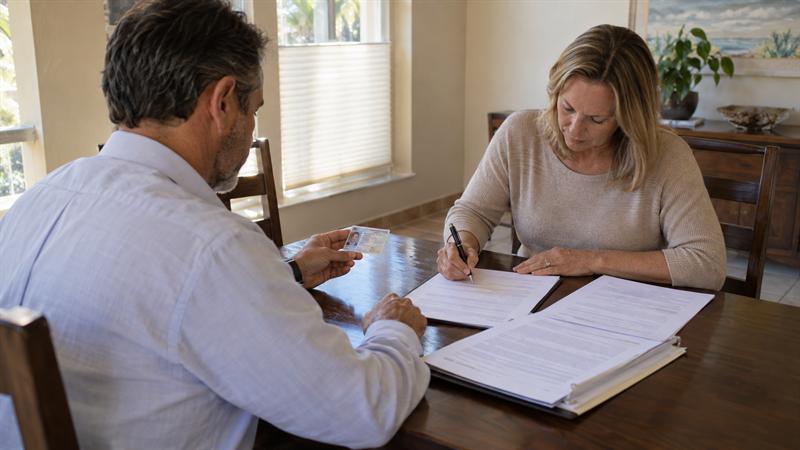
A home visit saves the signer a separate trip, but documents and participants still need to be ready. Prepare a usable signing area before the agreed arrival time.
- Set aside a clear surface with enough room for the documents.
- Keep identification and the complete document accessible.
- Coordinate signer attendance and provide entry instructions.
Office and Business Signings
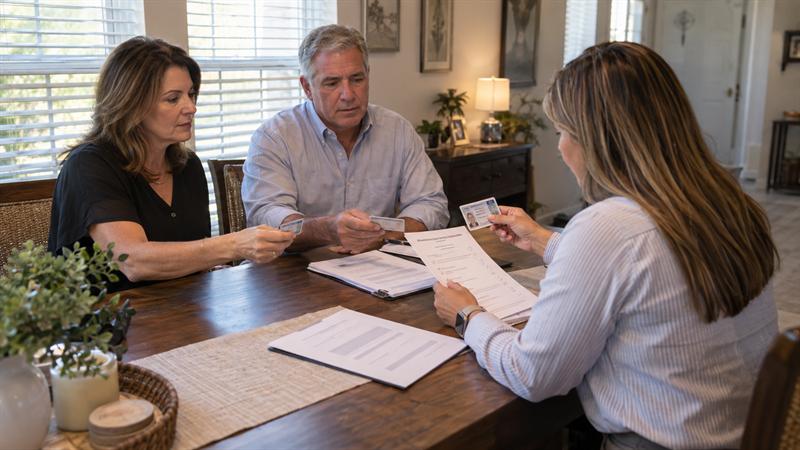
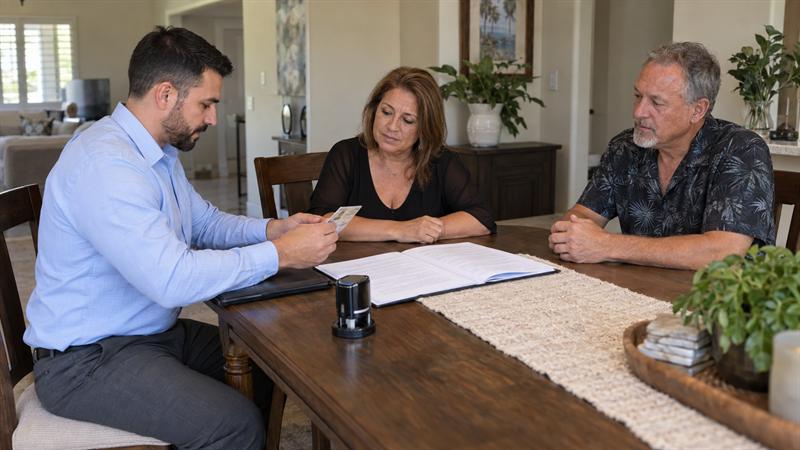
Coordinate office appointments around the people signing, not only the meeting room. If several signers are involved, identify who is needed and whether their schedules overlap.
- Arrange reception or security access.
- Reserve a suitable space that limits unnecessary exposure of documents.
- Obtain instructions about business titles or the capacity in which someone will sign.
Questions about who is authorized to sign should be directed to the appropriate business representative, document issuer, or legal adviser, rather than left for the notary to resolve at the signing table.
Hospital, Assisted-Living, and Nursing-Facility Appointments
A facility appointment requires access coordination and the signer’s required participation. Permission to visit does not by itself confirm that the signing can proceed.
- Coordinate an appropriate time and visitor procedures with the facility.
- Have identification available for assessment.
- Establish whether witnesses are required and who will arrange them.
- Choose a suitable meeting location within facility rules.
Relying on facility staff to witness a signing leaves an important detail unresolved. Staff should not be assumed available or suitable, and a relative’s request does not replace the signer’s required participation. Resolve these separate responsibilities before the visit.
Mobile Notary or Remote Online Notarization?
Choose in-person service when physical documents, participant needs, or receiving-party instructions make it the practical fit. Consider remote online notarization when the document is suitable, the recipient accepts the format, and participants can complete the required online process.
When an In-Person Appointment May Be More Practical
Mobile service is the clearer choice when the signing must happen at a physical location or online participation is not workable.
- The receiving party’s instructions call for a paper-based signing process.
- The signer lacks suitable technology or cannot use the required online process.
- Bringing participants together at one location is more practical.
Scanning a document does not change its signing requirements. Follow the instructions for the actual document and transaction.
What to Confirm Before Choosing an Online Session
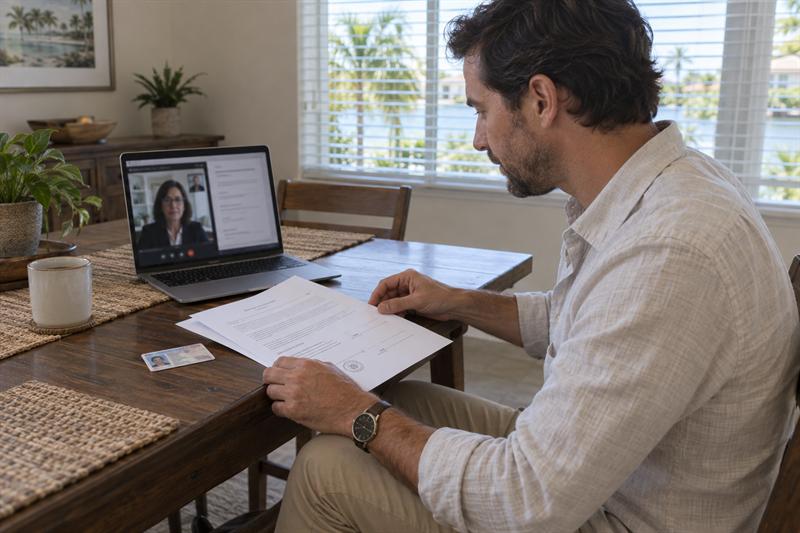
A mobile notary meets the signer in person; an online notary performs the act through an authorized audio-video process. Online notarization requires identity verification and applicable platform procedures, not simply an ordinary video call.
- Mobile may fit when: Paper instructions, technology limitations, or participant coordination favor an in-person meeting.
- Online may fit when: The document and recipient permit it, and participants can meet identity-verification, technology, and any witness requirements.
Sunshine Mobile Notary, LLC offers both service options. For a closer comparison, review the guide to choosing between a mobile notary and an online notary.
Resolve the format before reserving the appointment. Your request needs closer review if:
- The receiving organization has supplied paper-only or special signing instructions.
- The signer lacks the technology needed for an online session.
- Required witness arrangements remain unresolved.
Include those details in your availability request to Sunshine Mobile Notary, LLC. Addressing them now helps establish an appropriate appointment format before travel or online setup begins.
What to Prepare Before the Appointment
Prepare identification, the complete document, required signers and witnesses, and signing instructions. An unresolved requirement can interrupt the signing regardless of how convenient the location is.
Identification, Documents, and Signers
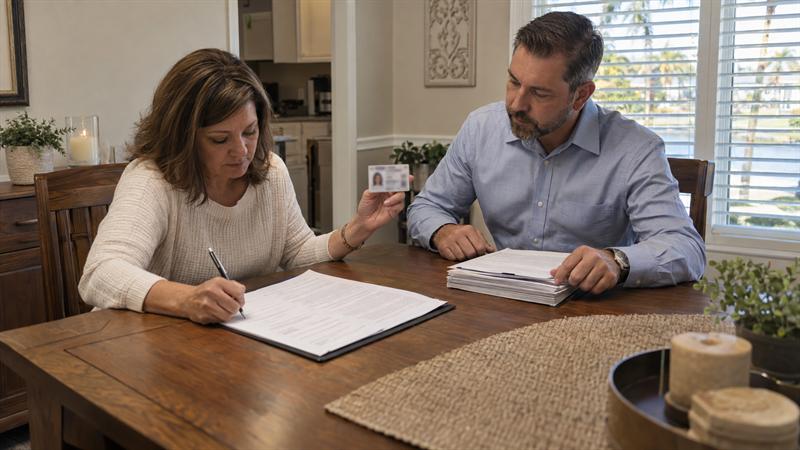
Have identification ready for assessment under Florida notary requirements, the document requiring notarization, and required signers and witnesses. Keep document-specific instructions available, including any directions about witnesses.
- Identification: Flag expired or unavailable identification before the visit.
- Documents: Have the full document ready and obtain any missing completion instructions.
- Signers: Arrange required attendance and participation.
- Instructions: Keep directions from the issuer or receiving party with the document.
If an identification issue first surfaces at the signing table, it must be addressed before the notarial act proceeds. Earlier disclosure allows time to assess the applicable requirements rather than using the signing appointment to investigate them.
Witnesses and Signing Instructions
Determine whether witnesses are required separately from whether the notary provides them. Wills, powers of attorney, and other documents may have different signature and witness requirements, so directions from a different signing are not a reliable substitute.
Advance signing also depends on the notarial act. An acknowledgment and a jurat involve different procedures, making blanket advice to sign everything beforehand or never sign beforehand unreliable. If the correct act or signing steps are unclear, request the missing instructions from the document issuer or receiving organization; legal questions can be directed to an attorney.
Fees, Scheduling, and Avoidable Delays
Assess an appointment using its agreed scope, not a single fee or an open time slot. The requested acts, travel, participants, and preparation all affect the arrangements.
What an Itemized Estimate Should Clarify
An itemized estimate separates notarial-act charges from travel and other disclosed service charges. Florida’s limits on notarial fees are not necessarily an all-inclusive price for a mobile appointment.
- Charges for the requested notarial acts.
- Travel charges associated with the signing location.
- Any additional services included in the request.
- The appointment details on which the estimate is based.
Provide the address, document category, number of signers, requested timing, and known witness needs. If the request changes, clarify the revised terms rather than assuming the original estimate includes the additional work.
Why a Signing May Need to Be Rescheduled
Rescheduling may be necessary when an unresolved requirement prevents the appointment from proceeding. Watch for these specific gaps:
- Identification concerns: Describe the identification available so the requirements can be assessed.
- Missing participants: Coordinate signers and required witnesses before settling the time.
- Blocked access: Arrange entry authorization with the property or facility.
- Incomplete instructions: Obtain missing direction from the appropriate document source.
- Participation: Confirm the signer can be present and available to participate.
Resolving these details before the visit makes it easier to correct problems without delaying a submission deadline. If a second appointment is needed, it also requires another round of coordinating people and travel, which can be harder to fit into a tight schedule.
Sunshine Mobile Notary, LLC offers mobile and remote online options so the service format can be considered alongside the requirements. Describe the document category, location, participants, and known constraints in the initial request. Start with scheduling details rather than sending unsolicited ID images or full copies of sensitive documents.
Frequently Asked Questions
Can a Mobile Notary Meet Someone at a Hospital or Nursing Home?
A facility appointment is possible when coverage, access, identification, and the signer’s participation can be arranged. Permission to enter the building does not by itself confirm that the signing can proceed. The signer’s availability, required witnesses, and identification remain separate responsibilities, even when a family member or facility representative arranges the visit.
Does a Mobile Notary Provide Witnesses?
Witnesses are not automatically included in a mobile notary appointment. A document’s witness requirement is separate from a provider’s witness arrangements. If witnesses are required, establish who will supply them; people already at a home, office, or facility should not be assumed available or suitable.
Should I Sign My Document Before the Notary Arrives?
Follow the procedure for the required notarial act and the document’s instructions. An acknowledgment can involve a signature made earlier, while a jurat requires an oath or affirmation and signing in the notary’s presence. In either case, signing beforehand does not eliminate the need for the signer to appear before the notary as required.
Can I Get a Same-Day Mobile Notary Appointment in Southwest Florida?
Same-day availability depends on the provider’s schedule, your location, and the signing requirements. Regional coverage alone does not establish an opening. Include the address, preferred time, number of signers, and known witness or access needs in an urgent request so the provider can assess the actual appointment.
What If My Identification Is Expired or Unavailable?
Expired or unavailable identification needs assessment under Florida’s identification requirements; an acceptable alternative cannot be assumed. Describe the identification you have, including its issue and expiration dates where available. Those details help establish whether it meets applicable requirements instead of leaving the issue unresolved until arrival.
How Much Does a Mobile Notary Appointment Cost?
The total reflects the requested notarial acts, travel, and agreed additional services. A statutory notarial-act fee limit is not necessarily the total price of a mobile visit. An itemized estimate shows what is included and separates notarization charges from travel and other disclosed charges.
Conclusion: Confirm the Details Before Booking
Request availability from Sunshine Mobile Notary, LLC to coordinate a Southwest Florida mobile or remote online appointment. Finding a notary is only part of the task: the location, participants, documents, format, and terms also need to align. Leaving those details unresolved risks an incomplete signing and another round of scheduling.
Provide your signing address, preferred timing, document category, number of signers, and known witness or access needs. Use the guide to information to have ready when scheduling a mobile notary appointment to prepare your request. Addressing these details before reserving a time leaves room to resolve problems before they disrupt the signing.