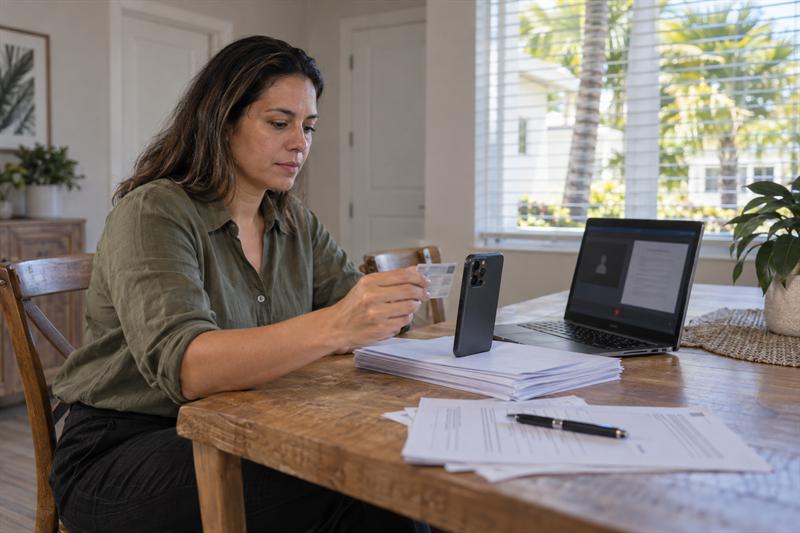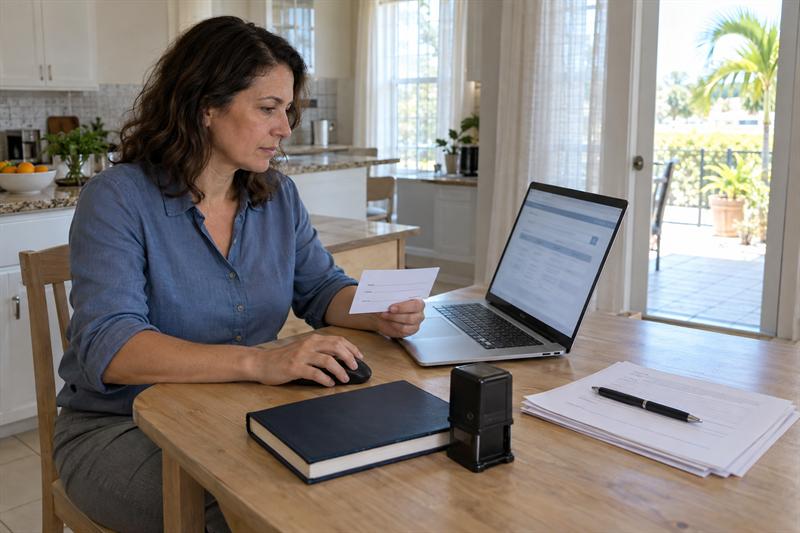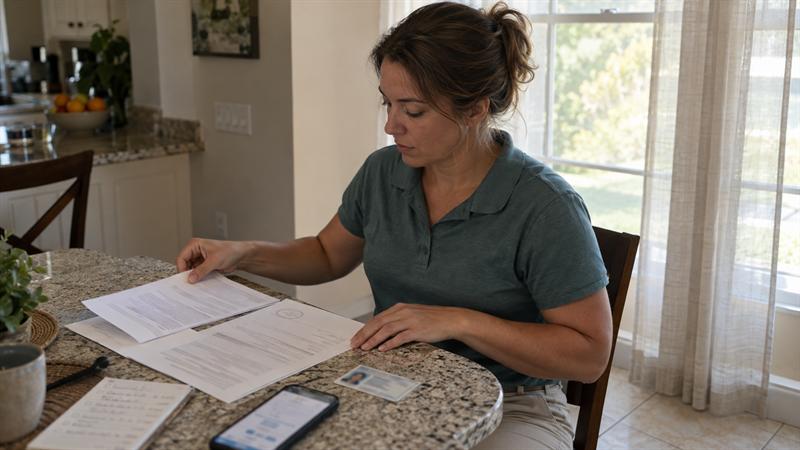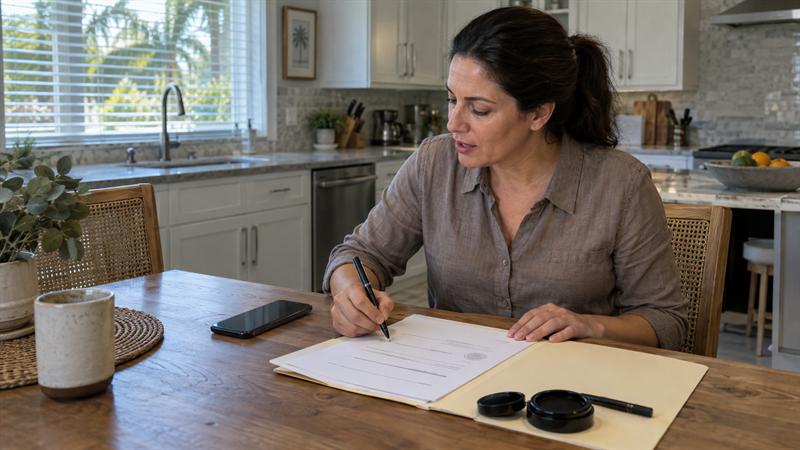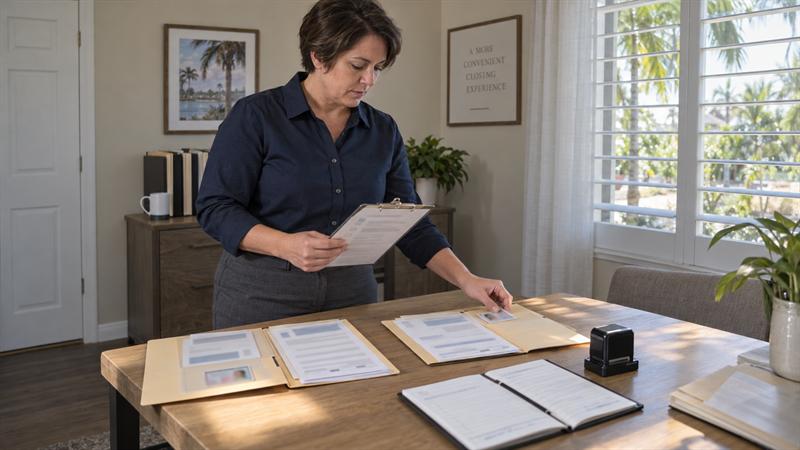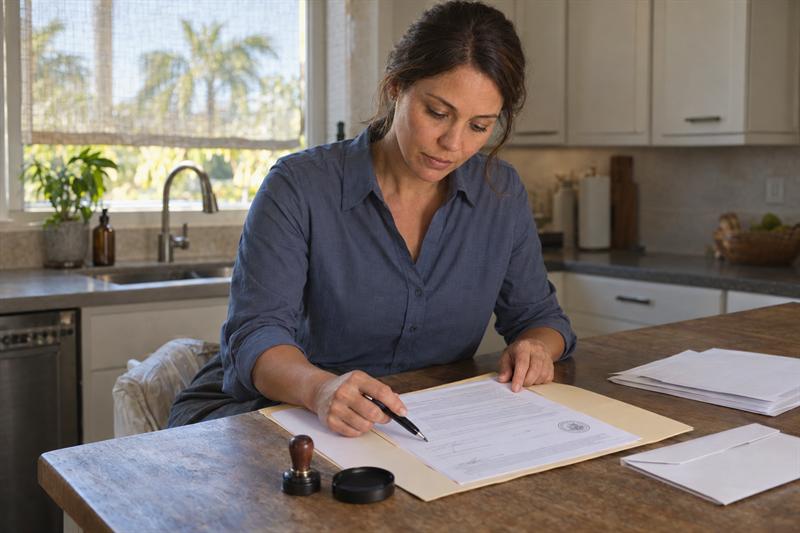
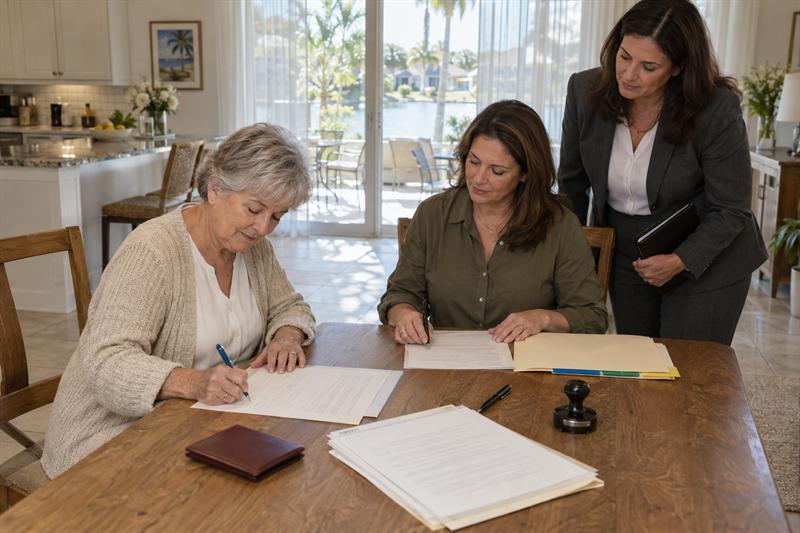
Quick Answer: The hard part of estate document signing at home is usually not the paperwork itself. It is coordinating the full document packet, the right signers, any required witnesses, and a setting that allows the signing to be completed without delays, confusion, or an incomplete appointment.
When families search for a notary for estate documents at home, they are usually dealing with more than one form and more than one moving part. At Sunshine Mobile Notary, LLC, this is often where the process gets difficult: the documents may be ready, but the people, timing, location, and witness setup are not.
When families need a coordination plan instead of another document explanation
Most estate-related content explains what a trust, healthcare directive, or power of attorney is. That is usually not the question families are trying to solve once the documents have already been prepared. The real issue is getting everything signed in the right setting, with the right people present, and with a plan that fits the signer’s situation.
A common pattern is that one family member ends up managing the entire process for a parent or spouse. That usually means juggling schedules, printed packets, ID readiness, witness questions, and location access all at once. Problems often start here, especially when multiple adult children are involved or the signer is moving between home and a care setting.
This article covers the logistics side of coordinating family document signing. It does not cover document selection, estate planning strategy, or legal interpretation. If the question is what the documents mean, that belongs with the attorney or document preparer. If the question is how to get the documents signed without the day becoming disorganized, that is the coordination problem this article addresses.
When several relatives are involved, the process usually goes more smoothly when someone maps out roles in advance. Sunshine Mobile Notary, LLC covers that challenge in more detail in Multi-Signer Coordination: How to Get Everyone Ready and in the Room for a Notary Appointment.
Which estate documents are often signed together
Families often receive more than one estate-related document at the same time. Instead of one simple signature event, they are coordinating a packet that may include several forms with different signing steps.
- Trust-related documents
- Durable power of attorney
- Designation of healthcare surrogate
- Living will
- Affidavits or supporting forms
The key issue is that documents in the same packet do not automatically follow the same execution pattern. A trust-related document and a healthcare directive may not need the same witness setup. A power of attorney may be one part of the plan, but not the whole plan. This is why families can get stuck when they treat the packet like one uniform task.
If one part of the packet includes a power of attorney, it can help to separate document-specific logistics from the broader family plan. A more detailed breakdown is available in Power of Attorney Notarization Logistics: What Signers Should Confirm Before the Appointment.
The 7-step checklist for coordinating multiple estate document signings
If the packet includes several estate documents, the most practical approach is to treat the signing like a small project. Build the plan around readiness, people, location, and timing instead of waiting until appointment day to sort it out.
1. Confirm the full document packet before booking
Make sure the family has the full packet, not partial drafts, mixed versions, or pages pulled from different emails. Many families run into the same problem: everyone believes the documents are ready, but the packet still contains an older version, a missing page, or an unfinished section.
That can lead to a stalled appointment or a second visit. If several documents are involved, packet accuracy needs to be settled first or every other step gets harder.
2. Identify every signer, witness, and coordinator involved
List every person connected to the signing, not just the main signer. That includes anyone who needs to sign, anyone expected to serve as a witness, and anyone acting as the family coordinator.
Families often focus on the parent or spouse signing the documents and overlook witness availability until late in the process. This gets harder when relatives are traveling in, helping remotely, or assuming someone else is handling the details. If there is still uncertainty about who needs to be in the room, the appointment plan is usually not complete.
3. Match the location to the signer’s comfort and access needs
A home appointment is often the simplest option when the signer is more comfortable at home and the needed participants can gather there. Privacy is easier to control, the setting is more familiar, and the session can usually be paced more comfortably.
Facility signings are different. Assisted living, rehab, and hospital locations can involve access procedures, room limitations, schedule windows, or interruptions from care routines. Families sometimes underestimate that difference and assume a facility signing works like a home visit. It often does not.
For home-based planning, Mobile Notary Appointment at Home: What to Prepare covers the basic setup. For facility-related logistics, Sunshine Mobile Notary, LLC also addresses common access issues in Assisted Living and Skilled Nursing Facility Notary Visit Planning in Southwest Florida.
4. Check ID readiness and signer preparation
The signer’s ID should be located and ready before the appointment begins. The documents, glasses if needed, and a workable signing space should also be in place. A rushed setup often causes delays at the start, and once the session loses momentum, the rest of the signing becomes harder to manage.
Families often run into simple setup issues here. The signer’s ID is in another room, the packet is split between folders, or the signing surface is not actually usable. The problem is usually not the paperwork itself. It is disorganization at the point of signing.
5. Plan witness requirements in advance
Witness planning is one of the most overlooked parts of coordinating estate documents. Families often assume that once a notary is scheduled, everything else will fall into place. Problems usually start when several documents are being signed together and the witness expectations are not the same across the packet.
If the witness setup is unclear, the appointment is not really ready. Sunshine Mobile Notary, LLC breaks this down further in Florida Notary Witness Requirements: When Witnesses Are Needed and How to Coordinate Them.
6. Decide whether one session or multiple sessions makes more sense
One long appointment is not always the best plan. Families often assume that completing everything in one sitting is more efficient, but that can break down when the signer gets tired, the witnesses have limited availability, or part of the packet needs a different setting.
Sometimes the family is aiming for convenience, but the signer needs a shorter, calmer session. In that situation, pushing through a long packet can lead to confusion, frustration, or an incomplete process. If the signer tires easily, several people need to participate, or part of the signing needs to happen remotely, separate sessions are often the more workable option.
If you are seeing these signs, the signing plan usually needs to be adjusted before the appointment goes forward:
- The family is still not sure who needs to attend
- The signer gets fatigued easily or cannot manage a long session
- Witnesses are not clearly identified yet
- Part of the packet may need a different location or format
When two or more of these issues are happening at the same time, the process usually needs a more structured plan before the appointment moves forward.
7. Build in time for follow-up or corrections
Not every packet moves straight from scheduling to completion. Sometimes a document needs clarification from the preparer. Sometimes the family discovers a missing page, a witness issue, or a version problem after the review begins.
Trying to force completion at that point often makes the process harder. A better plan leaves room for follow-up so the signing can be handled correctly instead of rushed through under pressure.
Home, care facility, or remote online notarization: choosing the right setup
The most practical setup depends on the signer’s situation, the location, and who needs to participate. Families often begin by asking what is fastest, but the better question is what setup will work cleanly for this packet and these people.
When a home appointment is the simplest option
Home is often the easiest choice when the signer is more comfortable in a familiar environment and the family can gather the needed participants there. This setup usually gives better control over privacy, pacing, and interruptions.
It is especially practical when the signer has mobility limitations or when moving between locations would add stress. In those cases, the home setting is not just convenient. It is often what keeps the process manageable.
When a care facility changes the plan
Facility signings require more planning because access and timing are often tighter. A room may not be immediately available, staff routines may affect timing, and visitor procedures can slow down arrival or limit who can be present.
This can lead to delays when the family assumes location is the only difference. In practice, facility access often changes the coordination plan because the signing has to work around the setting, not just the family’s schedule.
When remote online notarization may help
Remote online notarization can help in some multi-party or distance situations, especially when one participant cannot reasonably appear in person. It is often useful when the main difficulty is geography rather than access inside one physical location.
That said, not every document or signer situation fits the same remote process. In family estate coordination, remote notarization is often most useful as one part of the plan rather than the entire plan. One part of the signing may work well remotely while another still needs an in-person appointment.
Common problems that delay estate document signings
Many delayed signings follow the same patterns. Once those issues start, the process often becomes more stressful and more time-consuming than the family expected.
- Missing witnesses
- Outdated or mixed document versions
- Assuming all documents follow the same rules
- Signer fatigue during a long appointment
- Expecting the notary to answer legal questions about the documents
Families often run into this when everyone is trying to be helpful, but no one has separated legal questions from signing logistics. Once that happens, the appointment stops being about readiness and turns into a search for answers the notary is not there to provide.
If the family is also dealing with supporting forms such as sworn statements, it helps to review document readiness at a procedural level in advance. Affidavit Notarization in Florida: What the Signer Should Confirm Before the Appointment explains that kind of preparation in a focused way.
What a mobile notary can coordinate and what must go back to the attorney or document preparer
A mobile notary can coordinate the appointment side of the process. That includes travel to the home or facility, procedural readiness, signer presence, and the practical setup for the notarization itself.
A mobile notary does not choose documents, interpret legal language, advise on estate planning decisions, or resolve uncertainty about what a document is supposed to do. That distinction matters because families often reach the signing stage with unresolved legal questions and assume they can be handled in the room. Usually, they cannot.
- A mobile notary can help with: appointment logistics, travel, signer and witness coordination, and procedural signing readiness
- A mobile notary cannot help with: legal advice, document selection, legal interpretation, or changing estate planning instructions
This is where problems get worse when legal decisions and signing logistics have not been separated. If the documents are settled, the appointment can move forward. If the documents themselves are still in question, the process usually needs to pause before the signing goes any further.
Key Takeaways
- Coordinating multiple estate documents is usually a logistics problem, not a document-definition problem.
- The biggest friction points are packet completeness, participant readiness, witness setup, and location planning.
- One long session is not always the most practical option, especially when the signer tires easily or the setup is complex.
- Home, facility, and remote options each solve different coordination problems.
- A mobile notary helps move the signing process forward procedurally, while legal questions still belong with the attorney or document preparer.
Conclusion
The real challenge with family estate document signing is that once the paperwork exists, the process can still stall if the packet is incomplete, the participants are not aligned, or the setting does not support a clean signing. When that is not addressed early, delays build, follow-up appointments become more likely, and a stressful family task becomes even harder to manage.
Sunshine Mobile Notary, LLC can be a practical next step when the documents are ready but the coordination still needs to be organized. Home and facility signings usually go better when someone is thinking clearly about access, witness setup, signer readiness, and whether one session or multiple sessions is the better fit. When a family needs help turning a stack of estate documents into a workable signing plan, this is often the point where taking action makes the process easier to manage.
Company Approach
At Sunshine Mobile Notary, LLC, the approach is straightforward: separate legal questions from signing logistics, identify what is actually needed for the appointment, and make the plan fit the signer’s real situation. That matters in Southwest Florida because the same family may be coordinating across homes, gated communities, assisted living, rehab, or remote participants, and those are not interchangeable scenarios.
The goal is not to make the process sound simpler than it is. The goal is to reduce the avoidable problems that slow families down: incomplete packets, unclear witness planning, access issues, and appointments scheduled before everyone is actually ready.
FAQ
Can multiple estate documents be notarized in one home appointment?
Yes, they often can, as long as the packet is complete and the full signing setup is ready. The real limitation is not the number of documents by itself. It is whether the right signers, witnesses, identification, and conditions are in place for the whole session.
For example, a family may have trust-related documents, a healthcare directive, and a power of attorney ready for one signer. That can work in one visit if the signer is comfortable, the documents are final, and the witness setup has already been thought through. The process usually breaks down when families assume one appointment automatically solves everything without planning the details first.
What should a family prepare before scheduling a notary for estate documents at home?
The most important preparation is gathering the full packet, identifying every participant, and making sure the signer’s ID is ready and accessible. That is what turns a document packet into a signing-ready appointment.
A useful distinction here is that having printed forms is not the same as having a workable plan. If the packet still includes older drafts, missing pages, or unclear witness needs, the appointment is not actually ready yet, even if the family feels close.
Do trusts, healthcare directives, and powers of attorney all need the same witnesses or notarization steps?
No. Documents in the same estate packet do not automatically follow the same execution pattern. That is one of the most common misunderstandings families bring into the coordination process.
The important implication is that the signing plan should be built around the actual packet, not around the assumption that all estate documents work the same way. Once families understand that distinction, they usually make better decisions about witnesses, timing, and whether the packet should be completed in one session or more than one.
Is it better to schedule one long estate signing or several shorter appointments?
Several shorter appointments are often more practical when the signer tires easily, the witnesses are hard to align, or the packet involves more than one setting. One long session sounds efficient, but it often stops working when comfort, focus, and participant timing start to slip.
A good example is an older signer who can manage a shorter appointment at home but not an extended packet review with multiple documents and people coming in and out. In that case, breaking the process up is not adding friction. It is often what keeps the signing realistic.
How do estate document signings work if the signer is in assisted living, rehab, or a hospital?
The core goal is the same, but the location changes the coordination completely. Facility access procedures, care schedules, privacy limits, and visitor rules often shape the timing more than the family expects.
That means the signing plan has to work with the facility environment, not just with the document list. The biggest misunderstanding is assuming the only difference is travel. In reality, facility signings usually require tighter coordination because the setting controls more of the process.
What can a mobile notary help with, and what needs to go back to the attorney?
A mobile notary helps with the logistics and procedural side of the appointment. That includes traveling to the location, coordinating the signing setup, and completing the notarial act properly.
Questions about what a trust provision means, whether a document should be changed, or whether one estate planning choice is better than another belong with the attorney or preparer. That distinction matters because many stalled signings are not caused by scheduling problems. They are caused by unresolved legal questions appearing too late in the process.