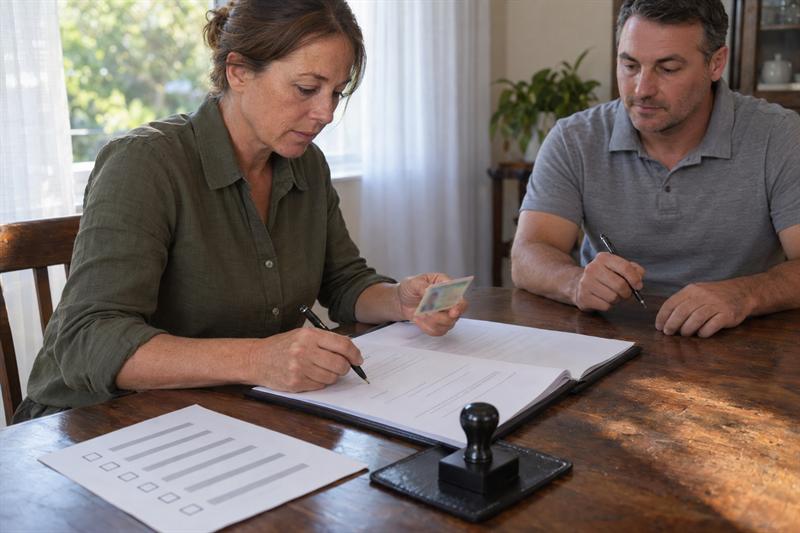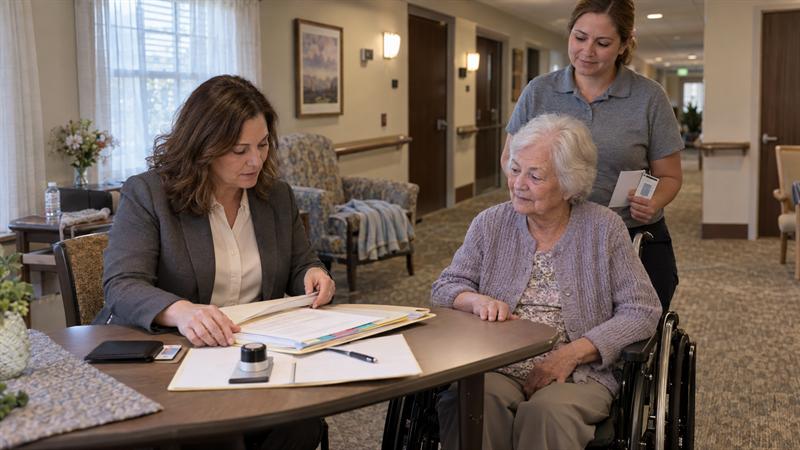
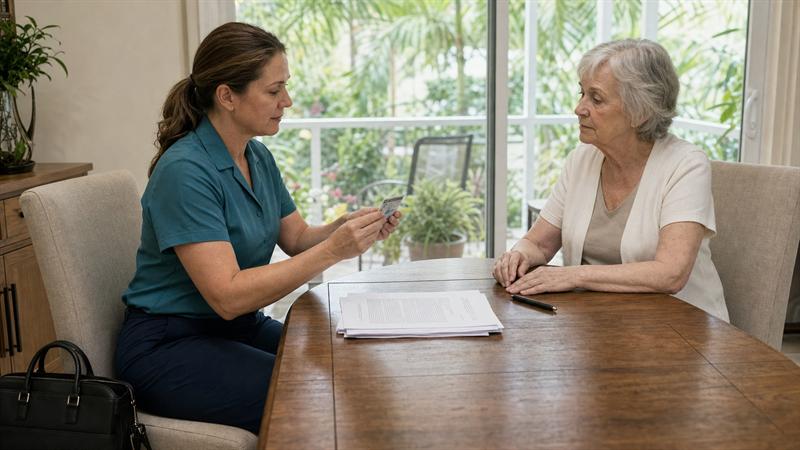
To schedule a mobile notary appointment, gather the details that affect the signing, not just the address and preferred time. A notary traveling to a home, office, hospital, or other location generally needs to know who will sign, whether everyone will be together, how to access the location, and whether the paperwork is ready.
Delays can begin when a request leaves out a gate code, witness requirement, deadline, or second signer. These details are usually much easier to address before the notary is traveling to the appointment.
What You Need to Schedule a Mobile Notary Appointment
To schedule a mobile notary, have these details ready before you call or submit a request:
- Your preferred appointment date and time window
- Any firm deadline, such as a closing, travel date, document-return cutoff, or facility-hours restriction
- The complete signing address, including unit, suite, room, or building information
- Gate, parking, visitor check-in, or other access instructions
- The general type of document being signed
- The number of people whose signatures need notarization
- Whether all signers will be at the same location
- Confirmation that each signer has acceptable identification available
- Whether witnesses are required and whether they are already arranged
- Whether an in-person mobile appointment or remote online notarization is being considered
- The best phone number or contact method for appointment coordination
This is not a legal checklist for every document. It is an appointment-readiness checklist that gives the notary the information needed to understand the travel logistics and signing setup.
Share the Appointment Details That Affect Mobile Notary Scheduling
A mobile appointment involves more coordination than an in-store visit. The notary generally needs to reach the right location, meet the people whose signatures require notarization, and complete the notarial act under the required conditions.
Preferred Date, Time, and Any Deadline
Provide a preferred time, but also state whether there is a hard deadline. These are different details. “Any time Tuesday afternoon” provides flexibility, while “the signed document must be returned before the title office closes” identifies a time-sensitive need.
State the deadline early so the appointment can be considered within the actual timeline. Travel, witnesses, identification, and document readiness may all affect whether the requested timing is workable.
Full Signing Location and Access Details
Provide the complete address and the details needed to reach the signing area. This may include a unit number, office suite, building name, room number, visitor entrance, parking instructions, gate procedure, or a reliable on-site contact.
These details are especially important at hospitals, rehabilitation centers, assisted-living communities, condominium buildings, workplaces, and gated communities. A street address alone may not explain how a visitor gets through security or reaches the signer. Missing access details can delay the appointment before the signing begins.
Number of Signers and Whether Everyone Will Be Together
State how many people need their signatures notarized and whether they will be present at the same place and time. When all required signers are together, an in-person mobile appointment is often easier to coordinate.
If signers are in separate locations, the plan changes. Separate appointments may be needed, or remote online notarization may be worth considering if it is permitted for the document and accepted by the receiving organization. Focus on the people whose signatures require notarization, not simply every name that appears in the paperwork.
Confirm Document Readiness Before Booking
Document readiness means the signer has reviewed the paperwork and followed the instructions provided with it. It does not mean the notary decides what document, certificate, or legal action is required.
Identify the Document Type and Follow the Receiving Organization’s Instructions
When requesting an appointment, provide a general description of the document. It may relate to a real estate transaction, affidavit, power of attorney, business matter, school form, or another personal document.
The document preparer or receiving organization provides the instructions that matter most. A title company, lender, attorney, court, employer, government agency, or financial institution may have requirements about notarization, witnesses, signing order, or document delivery. A notary can perform authorized notarial acts but cannot advise which form, document, or notarial certificate is appropriate for a signer’s situation.
Make Sure the Document Is Ready but Do Not Sign Too Early
Review the document before the appointment for missing pages, incomplete information, and signing instructions. This helps prevent a signing session from stopping because part of the paperwork was overlooked.
Do not sign a signature line that requires notarization before the appropriate notarial process occurs. Signing too early can create confusion during an appointment. For a closer look at preparation issues, read common mistakes to avoid before your notary appointment.
Have Acceptable Identification Ready for Every Signer
Each person whose signature is being notarized should have acceptable identification available for review. Identification should be ready before the appointment begins, rather than being located after the notary arrives.
If one signer does not have acceptable identification, the rest of the appointment may be ready while the notarization cannot proceed as planned. Review what to bring to a notary appointment for a broader preparation checklist.
Confirm Witness Requirements Before the Appointment
Witnesses are not required for every notarized document. When witnesses are required, they become part of the appointment logistics and should be planned before the signing begins.
Why Witnesses Can Change the Appointment Logistics
The document, document preparer, receiving organization, or applicable process determines whether witnesses are needed. The notary does not determine that requirement. If the paperwork calls for witnesses, the requester should know how many are needed and whether the document includes instructions about who may serve.
Witness planning becomes more difficult when it is left until the appointment. The signer and notary may be ready, but the document may still be unable to proceed if a required witness is absent. Resolve witness questions before finalizing the time and location.
What to Tell the Mobile Notary About Witnesses
Include these witness details in the initial appointment request:
- Whether the document requires witnesses
- How many witnesses are required
- Whether witnesses have already been arranged
- Whether witness availability needs to be discussed before the appointment is confirmed
Do not assume witness assistance is automatic. Identifying the need early gives everyone a clearer picture of what must be in place for the signing to proceed.
Choose Between an In-Person Mobile Notary and Remote Online Notarization
The more practical option depends on where the signers are, how the document will be used, and what the receiving organization accepts. In-person mobile notarization is often a practical choice when signers can meet in one location. Remote online notarization can be useful when distance is the main obstacle.
When an In-Person Mobile Appointment May Be the Better Fit
An in-person mobile appointment may be the better fit when:
- All required signers can meet at the same location
- A signer prefers to complete the process face to face
- Technology or internet access would make an online process difficult
- The receiving organization requires or prefers in-person notarization
- The signing needs to happen at a home, office, hospital, care community, or another agreed location
This option keeps the signing process in one physical place. It can be useful when the parties are already together or when traveling to the signer is more practical than visiting a retail location.
When Remote Online Notarization May Be Worth Exploring
Remote online notarization may be worth exploring when signers are in different locations, travel is difficult, or an online process better fits the schedule. It still requires the appropriate setup and acceptance for the document involved.
The key decision point is whether the receiving organization accepts remote online notarization. Distance alone does not answer that question. For a fuller comparison, see Mobile Notary vs Online Notary: Which Option Is Right for You?.
Special Situations to Mention When You Request a Mobile Notary
Some appointments need extra coordination because of the location or timeline. Mentioning those details at the start helps prevent the appointment from being planned around incomplete information.
Hospitals, Rehabilitation Centers, and Care Communities
For a hospital, rehabilitation center, or care community appointment, provide the facility name, room or unit details when appropriate, visitor check-in requirements, and instructions for reaching the signer. Facility rules may affect where visitors park, when they may enter, and whether staff coordination is needed.
At facility appointments, the document may be ready while access details are not. That can delay arrival or reduce the available signing window. A notarization can proceed only when the necessary appointment conditions are in place.
Workplaces, Gated Communities, Condominiums, and Public Meeting Locations
Workplaces and controlled-access properties require more than an address. Include visitor registration instructions, the correct entrance, parking guidance, building or suite details, and an on-site person who can assist if needed.
For public meeting locations, agree on the location in advance and choose a setting that supports an uninterrupted signing process. A meeting point may be easy to reach but still unsuitable for the people and paperwork involved.
Urgent or Same-Day Requests
For an urgent request, lead with the deadline and provide the critical details in the first message: location, access instructions, signer count, document type, identification readiness, and witness status. Urgency does not remove the need for proper identification, complete documents, required witnesses, or suitable signing conditions.
When these details arrive one at a time, scheduling becomes more difficult. Learn more about the practical side of urgent scheduling in how mobile notaries handle urgent requests.
Mobile Notary Scheduling Checklist
Use this checklist before requesting your appointment:
- Choose a preferred date and time window.
- State any deadline that affects the signing.
- Provide the complete signing address.
- Include gate, parking, building, unit, room, or check-in instructions.
- Identify how many signatures require notarization.
- State whether all signers will be together.
- Describe the general document type and any receiving-party instructions.
- Review the paperwork for completeness and signing directions.
- Make sure every signer has acceptable identification ready.
- Identify whether witnesses are required and whether they are arranged.
- State whether you are considering mobile or remote online notarization.
- Provide the best contact information for appointment coordination.
If your request includes a deadline, multiple signers, a controlled-access location, or witness requirements, additional planning may be needed before the appointment is set.
- The document must be returned by a specific time.
- Not all signers are in the same place.
- The signing will occur in a hospital, care community, gated property, or secured office.
- The document calls for witnesses and their attendance is not yet arranged.
These details usually require additional coordination. Waiting until the notary arrives can turn a scheduling issue into a signing problem, so the complete situation should be shared at the outset.
What a Mobile Notary Can and Cannot Help With
Understanding the limits of a notary’s role prevents confusion and keeps the appointment focused on the notarial act.
A mobile notary may help with:
- Traveling to an agreed signing location
- Reviewing identification as required for the notarial act
- Completing authorized notarial acts when applicable conditions are met
- Coordinating practical appointment details such as time, location, and access
A mobile notary cannot help with:
- Providing legal advice
- Drafting, revising, or completing legal documents for the signer
- Advising a signer on which document, form, or notarial certificate to use
- Explaining the legal effect of a document
- Guaranteeing that a lender, court, agency, title company, employer, or other recipient will accept a document
Document questions and notary questions are different. If the question is what a document means, what form should be used, or whether a witness is required, that guidance generally needs to come from the document preparer or receiving organization. For more detail, review what a notary can and cannot do during an appointment.
Schedule a Mobile Notary Appointment in Southwest Florida
Sunshine Mobile Notary, LLC provides mobile notary service for clients throughout Southwest Florida, including Fort Myers, Cape Coral, North Fort Myers, Lehigh Acres, Bonita Springs, Estero, Naples, and nearby communities. Mobile appointments are planned around the details that matter most: where the signing will happen, who needs to sign, what access is required, and whether the paperwork is ready.
The approach is straightforward: identify the logistics early, separate document questions from appointment questions, and determine whether an in-person mobile visit or remote online notarization is more practical. Availability depends on the location, timing, and appointment requirements, so a complete request is especially useful when the signing has a deadline.
Key Takeaways
- A complete mobile notary request includes more than a preferred date and address.
- Location access, signer count, identification, witness status, and document deadlines affect appointment planning.
- Witness requirements should be identified before the appointment, not during the signing.
- In-person mobile notarization is often most practical when signers can meet in one place.
- Remote online notarization can be useful when distance is the main issue, but acceptance by the receiving organization matters.
- A notary can perform authorized notarial acts but cannot give legal advice or determine document requirements.
Conclusion
The real challenge in scheduling a mobile notary is not simply finding a time on the calendar. It is avoiding missing access details, an absent signer, unavailable identification, unresolved witness needs, or paperwork signed too early. These gaps can delay the signing, tighten deadlines, or prevent the appointment from proceeding as expected.
For a mobile notary appointment in Southwest Florida or to explore remote online notarization, gather the checklist details and request an appointment with the location, timing, signer, identification, witness, and document information needed to move the process forward clearly.
Frequently Asked Questions About Scheduling a Mobile Notary
What information do I need to schedule a mobile notary?
Provide the preferred date and time, full signing location, access details, general document type, number of signers, identification readiness, witness status, deadline, and best contact information. The important distinction is between a basic address and a usable appointment location. For example, a condominium or hospital appointment may also need the details required to reach the signer without delays at a gate, lobby, or visitor desk.
Can a mobile notary come to my home, office, hospital, or assisted-living community?
A mobile notary appointment can be arranged at an agreed location when the location is accessible and the signing setup is workable. Homes and offices are often simpler, while hospitals and care communities commonly involve visitor procedures, room information, facility rules, and limited access windows. Access details help determine whether the appointment can run on schedule.
Do all signers need to be present for a mobile notary appointment?
Each person whose signature requires notarization must be available for the applicable notarial process and have acceptable identification ready. When all required signers are at one location, a mobile appointment is often easier to coordinate. When they are in separate places, separate appointments or a remote online option may be needed, depending on the document and receiving organization.
Do I need witnesses for a mobile notary appointment?
Witnesses are required only when the document instructions call for them. When witnesses are required, they become part of the signing group and their attendance must be coordinated with the signer and notary. A document that requires witnesses cannot be treated like a simple one-person appointment if the witnesses have not been arranged.
Can I sign the document before the mobile notary arrives?
A signature requiring notarization is typically signed during the applicable notarial process, subject to the document instructions and the notarial act being performed. Reviewing the document beforehand is helpful, but signing the notarized signature line too early can disrupt the process. Preparation means checking pages and instructions; execution means signing at the appropriate point in the appointment.
Should I choose a mobile notary or remote online notarization?
Choose a mobile notary when the required signers can meet in one place, an in-person process is preferred, or travel to the signer solves the main access issue. Consider remote online notarization when distance separates signers or travel is difficult. The deciding factor is usually document acceptance: the receiving organization’s requirements help determine whether online notarization is suitable for that transaction.