Quick Answer: A mobile notary can meet a board, a manager or a group of signers at the association’s own property — a clubhouse, a management office or a unit — and can also handle some signatures through a remote online session. What decides the appointment is rarely travel time. It is the document, the signer, the identification and the office that will receive the completed packet.
Searches for “mobile notary HOA Southwest Florida” usually start with a packet that already has a deadline attached. A director needs a signature before a lender will move a file forward, a manager is holding paperwork that has to reach a county clerk, and nobody is quite sure who is supposed to sign what.
Association paperwork is ordinary in most respects except one: the signers are volunteers with day jobs, and the property they sign on may sit behind a gatehouse. That combination is what makes a visiting notary worth arranging in advance instead of leaving it to the morning before a submission.
Key Takeaways:
- A visiting notary suits an association because directors and managers usually cannot leave the property during business hours.
- The receiving office, not the appointment type, decides whether a signature may be notarized in person or online.
- The notarial certificate records what that office reads: who appeared, how, on what date, and with which identification.
- A notary identifies signers and completes the certificate but does not rule on who is authorized to bind the association.
Why Association Paperwork Keeps Landing on a Notary’s Desk
Community associations tend to produce notarized paper at a handful of recurring moments. A contract or a vendor engagement needs a signature that carries official weight. A director signs a statement in an official capacity. A lender, title company or closing agent asks the association to complete a packet during a unit sale. Documents that will be recorded go on to a county clerk.
Each of those moments has the same two-part structure. Something has to be signed, and something else has to be able to show later that the signing happened the way it was supposed to. The notary handles the second part.
That second part is narrower than the word suggests. A notary confirms who appeared, witnesses the signature and completes a certificate. What the document says, whether it should be signed at all, and whether the association had the authority to approve it are separate questions that sit with other people.
Where a Mobile Notary Fits Into Association Work
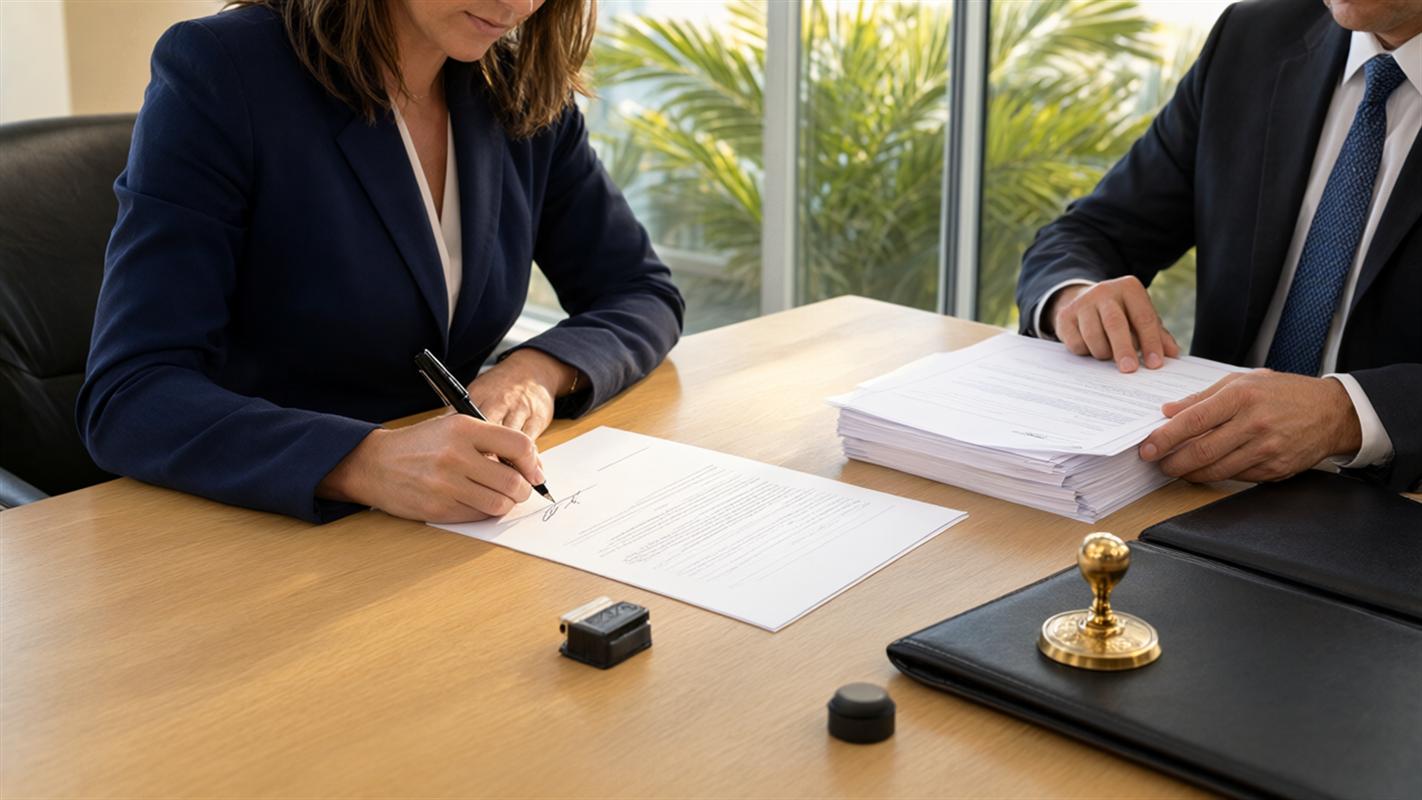
A volunteer board is not a company with a signing room down the hall. Meetings run in the evening, directors come from work, and a manager who is on site until six is not driving across town at seven. A notary who travels takes the trip out of the equation. The signing happens in the clubhouse or the management office, and the rest of the meeting carries on.
The background behind that approach is worth stating plainly. Sunshine Mobile Notary, LLC is owned by Valerie Nation, who served a community association in Estero directly in 2021 before opening the notary business in July 2023. Her notary work began with a Texas commission held for four years, and the 27 years before the business opened were spent working with small and large companies across agriculture, real estate, private and government settings. That is background rather than a specialty claim, and it shapes how a board packet gets handled: the questions get asked before the appointment, not during it.
An association behind a gatehouse, in a building with a front desk, or on a campus with visitor check-in should settle the arrival before the appointment is confirmed. These planning notes for gated community and facility visits cover the details worth answering in advance, from the name to leave at the gate to where the signing table will actually be.
For a board in Fort Myers or a neighboring city, the mobile notary service in Fort Myers sets out what a visit covers and how an estimate is built, including the mileage component that a same-city trip does not carry.
What to Confirm Before the Board’s Signing Appointment
Most of the friction in an association signing is settled before the notary arrives. The document should be complete and unsigned, since a jurat requires the signature to be made in the notary’s presence, and every signer needs identification that Florida accepts.
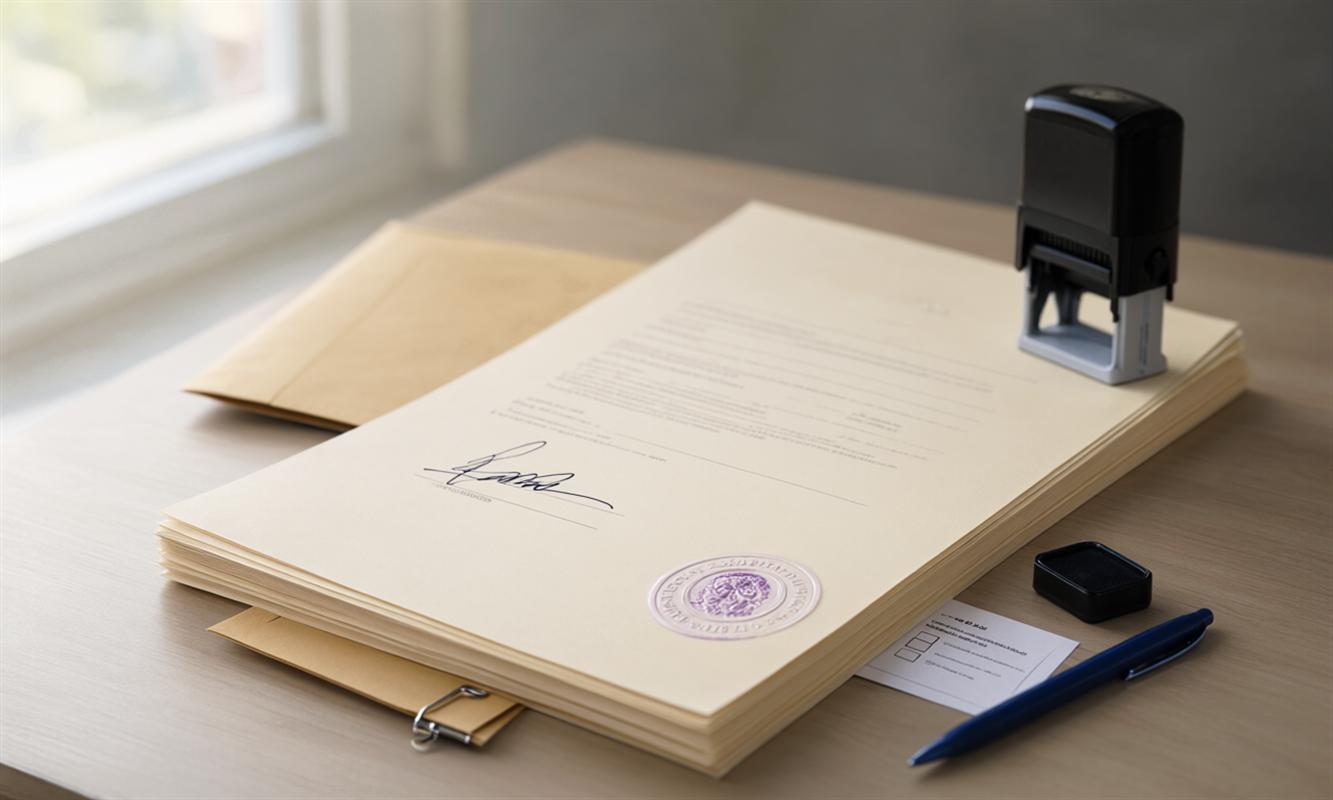
The certificate is where an appointment shows up later. Florida law sets out what it records: the venue, the type of notarial act, whether the signer appeared in person or by audio-video online notarization, the date, the signer’s name, the type of identification relied on, the notary’s signature and printed name, and the seal. An office that questions a signing usually reads that block first.
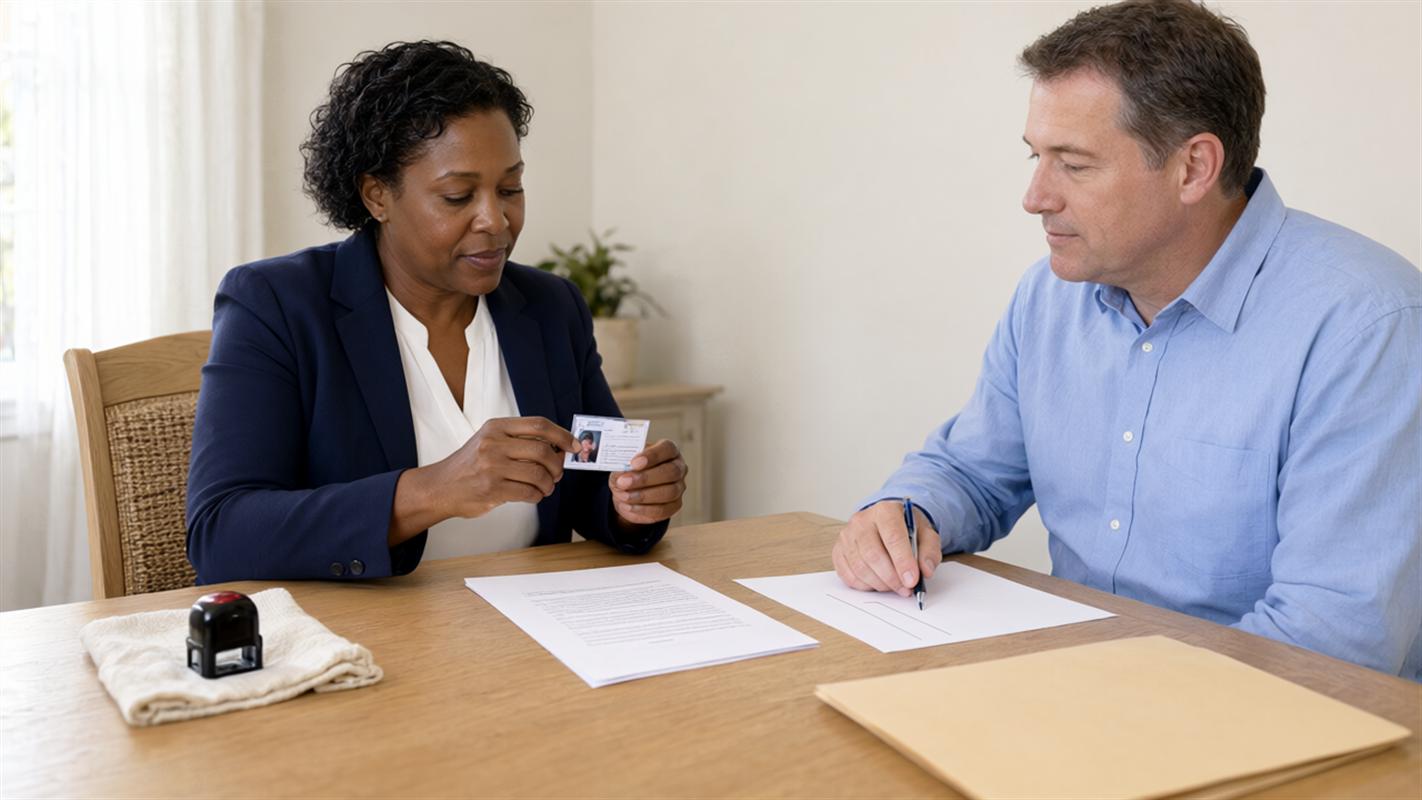
- Every signer has current photo identification with a name that reads as it does on the document.
- The document is printed in full and unsigned, unless the office that prepared it said otherwise.
- Every signer has confirmed the time and the location, and knows which entrance to use.
- Where a signer has no acceptable identification, two credible witnesses who know that person are arranged ahead of time; the witnesses themselves must be identified, and they cannot have a financial interest in the transaction.
- The office receiving the packet has been asked whether it wants wet ink or will accept an online notarization.
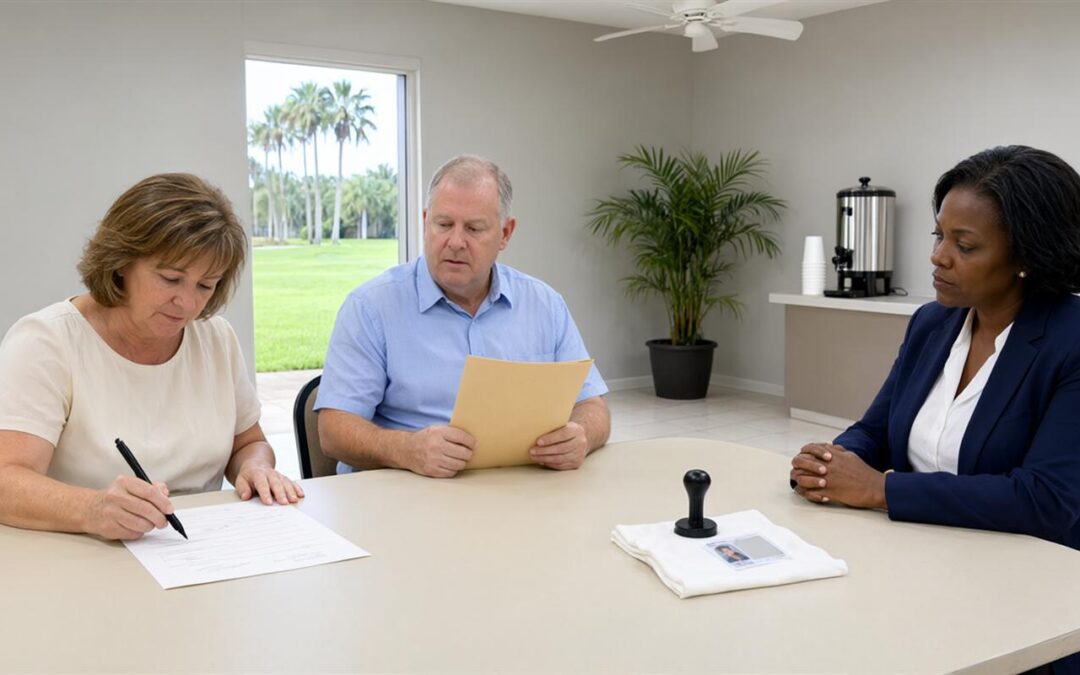
When several people sign in one sitting, the sequence matters as much as the paperwork: who goes first, whether a witness is needed for every signature or only some, and whether everyone can be in the room at once. The guide on coordinating several signers for one appointment walks through that list in order, and it is the part of an association signing most likely to run long.
In Person or Online: Choosing the Format for a Board Packet
Two formats are available, and they solve different problems. An in-person visit collects every signature on paper, in one room, with each signer identified face to face. That suits a document carrying several signatures, or a packet that has to leave the table with wet ink on it.
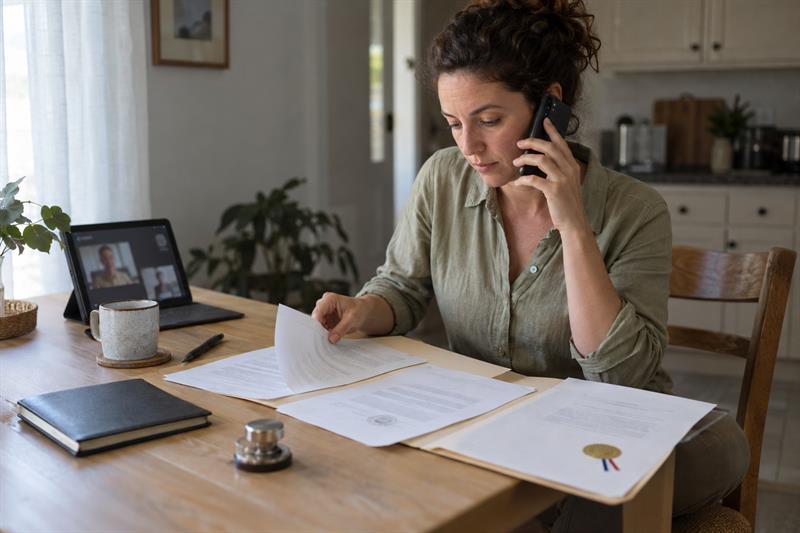
A remote session reaches the director who winters out of state or the manager who cannot step away from a desk. Remote online notarization is offered on two platforms, Notarize by PROOF and NotaryHUB, and the signer joins from a device with a camera and a steady connection.
The choice is not entirely the association’s to make. The office receiving the document decides what it will accept, and that answer is better in hand before the appointment is booked than after. Where the remote route looks like the fit, the remote online notary option for Fort Myers covers what a session involves and what the signer needs ready.
Who Signs, and in What Capacity
A notary’s part is smaller than the word “notarized” implies. The role is to identify the person who appears, watch the signature and complete the certificate. It is not to decide whether that person is authorized to act for the association, whether the board approved the document properly, or whether signing is a good idea.
That boundary is written into how the practice works. A notary may not explain or interpret a document, instruct anyone on how to complete it, or advise on whether to sign it. Those questions belong with the association manager, the association attorney, the lender, the title company or the office that asked for the document. An appointment that opens with an authority question unresolved tends to stall, because the one person who can answer it is not in the room.
Boards that arrive through a search for “mobile notary HOA Southwest Florida” often have that authority question still open. Settling it first is what keeps an appointment to the signing itself.
How an Association Checks the Notary It Hires
For a board spending association funds, three questions are worth asking before anything is booked. Is the commission current? What does the estimate cover? Who is arriving, and when?
The commission is a check anyone can run. Florida’s notary records are public, and a notary should be able to explain how to look a name up rather than simply asserting a status. A current commission tells a board that the person is authorized to perform notarial acts in Florida. It does not describe experience, and it does not speak to how a signing will be run.
The fee is easier to approve when it is understood as a structure rather than a total. Florida places a $10 ceiling on the charge for any one notarial act under F.S. 117.05(2)(a), and that ceiling is applied per act rather than per visit, with travel priced separately. An estimate that separates the two is simpler to compare and simpler to put in front of a board.
The client guide on how to verify a Florida notary’s commission sets out those checks in order, including what an active commission does and does not tell a client.
Frequently Asked Questions
What happens if a director cannot attend in person?
Remote online notarization can reach a director who is traveling or out of state, provided the office receiving the document accepts that format. Availability runs Monday through Saturday from 8 AM to 8 PM, and Sunday from 1 PM to 5 PM. A remote session is booked like any other appointment, and the format question is the one to settle first.
Does the notary need to see every page of the packet?
The notary witnesses the signature and completes the certificate rather than reading the packet for content. What matters is that the pages needing a signature are present and complete, and that instructions from the receiving office travel with the packet. Questions about what a page means go to that office, not to the notary.
Can the notary tell the board which documents need notarizing?
That question sits outside the notary’s role, and the reason is the boundary rather than a preference. Answering it would be document interpretation, which a Florida notary is not permitted to provide. The office requesting the document, the association manager or the association attorney is the right source for that decision.
Conclusion: Bringing the Notary to the Association
Sunshine Mobile Notary, LLC covers Lee County (Fort Myers, Cape Coral, North Fort Myers, Lehigh Acres, Bonita Springs, Estero, Sanibel and Captiva), Collier County (North Naples, Naples, Ave Maria, Immokalee, Marco Island) and Charlotte County (Port Charlotte, Punta Gorda, Rotonda West).
A board, a manager or a single director can ask a question or check availability by phone at (239) 691-0885 or by email at [email protected]. Alongside notarization, the practice handles county clerk recording and courier delivery of signed originals, both of which tend to follow a signing rather than replace it.
None of this has to be decided under pressure. Send the document type, the number of signers and the property address, and the answer will say whether a visit or a remote session fits.