Quick Answer: A multiple-signers notary appointment usually runs into trouble when one person is not actually ready, even if everyone else is. The most reliable way to keep the appointment on track is to confirm each signer’s role, timing, ID, witness needs, document status, and location access before the appointment is booked.
At Sunshine Mobile Notary, LLC, this comes up in family, real estate, business, and facility-based signings. The notarization itself is often the straightforward part. Delays usually start when several people are involved and one missing detail affects the whole group.
Why a Multiple-Signers Notary Appointment Is More Complex Than It Looks
A multiple-signers notary appointment is more complex because each added signer creates another point where the process can stall. One person is late. One person brings the wrong ID. One witness was never confirmed. One location has an access issue. That is where delays usually begin.
That pattern shows up in many multi-party signings. A group may sound ready when the appointment is discussed, but the plan can still break down when readiness was only confirmed at a group level instead of signer by signer.
- One signer is available, but another is not
- One signer has valid ID, but another does not
- Witnesses were assumed, not planned
- The document is present, but pages or names are inconsistent
- The location is known, but entry instructions were never clarified
If those issues are missed, the appointment can turn into a reschedule, a split signing, or a last-minute scramble that creates more confusion than the document required in the first place.
Start Here: Will Everyone Sign in the Same Place or Not?
The first decision is not time. It is location. If everyone will not sign in the same place, the rest of the plan changes right away.
This is where people often lose time. A single group appointment sounds simpler, but the plan gets harder when one signer is in a hospital, another is at work, and a third is in a gated community across town. In many cases, the cleaner option is either one shared signing location or a deliberately split approach.
When One Appointment at One Location Makes Sense
One appointment at one location works best when all required signers are truly available at the same time and can reach the same place without difficulty. It also works best when any required witnesses can be present during that same window.
This setup is usually the most efficient when:
- all signers are already together at home or in one office
- the document set is ready for review
- the location is easy to access
- witnesses, if needed, are already accounted for
When those pieces are in place, the signing usually moves more smoothly because the notarial steps, witness timing, and document flow stay in one setting.
When Separate Appointments May Be More Realistic
Separate appointments are often the better option when one signer is in a different city, in a facility, or simply cannot match the rest of the group’s schedule. Trying to force one shared appointment in that situation often creates delays for everyone.
A common pattern is that families or coordinators wait too long, hoping one person’s schedule will open up. That can lead to deadline pressure, rushed communication, and avoidable mistakes.
If you are dealing with a gated property, office check-in, or facility restrictions, mobile notary access planning becomes just as important as the document itself.
When Remote Online Notarization May Help
Remote online notarization can help when signers are in different places and the document is suitable for that format. It reduces travel coordination, but it does not remove readiness issues. ID, technology, document setup, and signer participation still need to be handled properly.
That is where people sometimes confuse convenience with simplicity. If the signers are spread out, remote may be the cleaner option. If the real problem is document confusion, missing ID, or witness planning, remote alone does not fix it. Sunshine Mobile Notary, LLC approaches this as a logistics decision, not just a platform decision.
The Multi-Signer Coordination Checklist Before You Book
This is the core idea: before a multiple-signers notary appointment is scheduled, each signer should be checked individually. Group readiness is not enough.
This is where problems usually start when the planning stays too general. “Everyone is ready” often means no one verified the details person by person.
Confirm Each Signer’s Legal Name and Role on the Document
Start by confirming who actually needs to sign and what role each person has on the document. That sounds basic, but it is a frequent source of confusion in family and business signings.
For example, a relative may be helping coordinate a power of attorney signing without being one of the required signers. In a business setting, several people may be involved in the transaction, but only specific representatives need to sign. In estate-related matters, confusion can grow when multiple relatives are part of the planning conversation. For a closer look at those situations, see Power of Attorney notarization logistics.
Confirm Each Signer’s Availability Before Choosing a Time
Do not book around one signer and assume everyone else will adjust. A multi-signer appointment works best when there is one confirmed time window and one person acting as the point of contact.
This often goes wrong in urgent signings. One person says “afternoon is fine,” another means after work, and another is only available around a facility’s access schedule. The result is a booking that sounded settled but never truly lined up. A more reliable approach is outlined in How to Schedule a Mobile Notary Appointment.
Confirm That Every Signer Has Acceptable ID
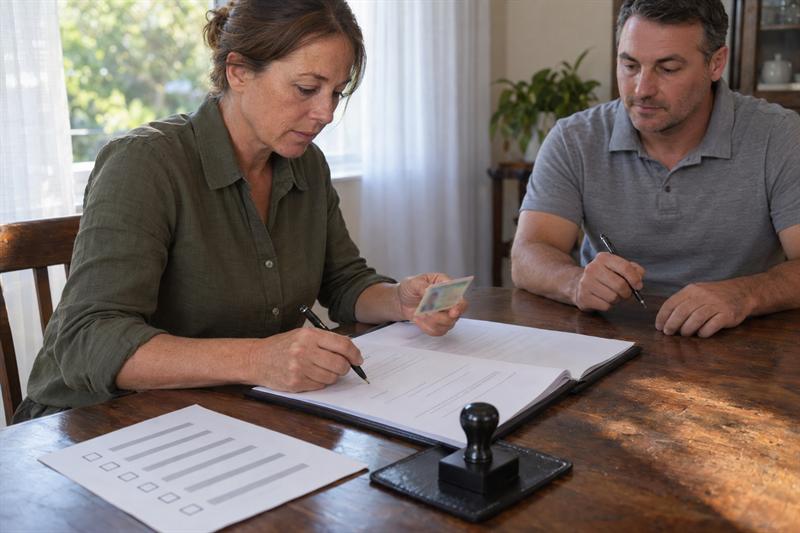
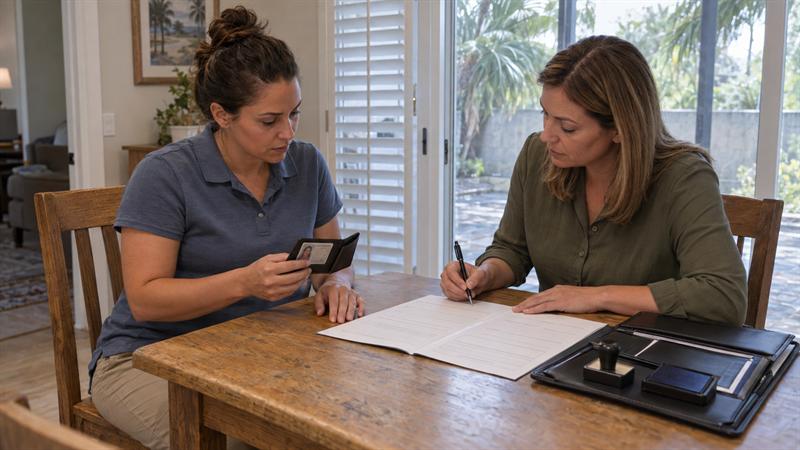
Each signer needs to be checked separately for identification. One valid ID does not help another signer, and one ID problem is enough to disrupt the appointment.
This usually becomes a problem when the group assumes “everyone has ID” without checking whether each ID is current and acceptable for notarization. That is one of the most common reasons a group appointment has to change course. For a clearer breakdown, review acceptable forms of ID for a notary appointment in Florida.
Confirm Whether Witnesses Are Required
Witness planning should happen at the same time as signer planning. If witnesses are treated as an afterthought, the appointment can stall even when the signers are otherwise ready.
A common pattern is that everyone focuses on the notary and the document, then realizes too late that witnesses also need to be present and coordinated. That changes headcount, timing, and sometimes location flow. For more detail, see Florida notary witness requirements.
Confirm the Document Is Complete but Not Prematurely Signed
The document should be reviewed for missing pages, blank sections, and inconsistent signer names before the appointment begins. Multi-signer appointments can slow down quickly when the document itself is not ready.
Another issue is signing too early. When a notarial act requires the signature to be witnessed as part of the appointment, signing in advance can create a problem that leads to corrections or delay. This is not just a paperwork issue. It affects whether the signing can move forward as planned.
Confirm Access Instructions for Everyone Involved
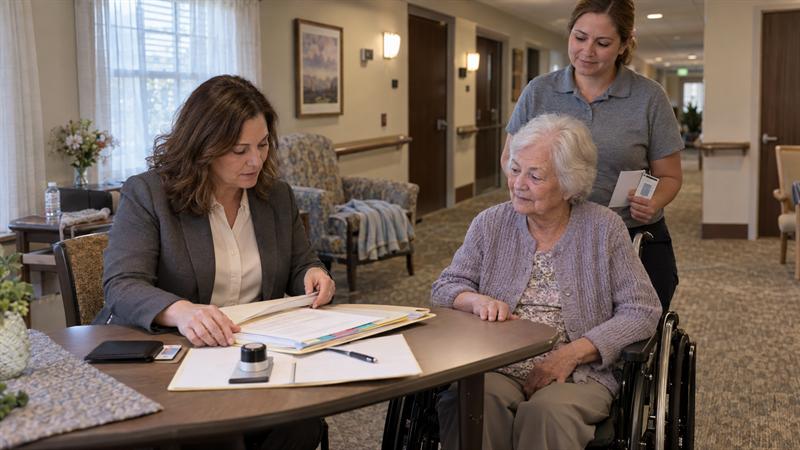
Access problems multiply when more people are involved. A single-signer home visit is one thing. A multi-party appointment in a gated community, office tower, assisted living location, or hospital requires tighter coordination.
Everyone should know the exact address, entry instructions, room or suite details, and any check-in requirements. This is where problems often begin when the location sounds familiar but the access process was never confirmed. In facility settings, that can lead to delays at the door while the rest of the group waits.
- If you are seeing these signs, the appointment likely needs tighter coordination before it moves forward:
- One signer is still “trying to make it” instead of fully confirmed
- Someone says they have ID but has not checked whether it is acceptable
- Witnesses are expected but no one has confirmed who they are
- The signing location has staff check-in, gate access, or restricted entry
At that point, the plan is already unstable and usually needs to be tightened before the appointment is finalized.
How to Coordinate Signing Order Without Slowing the Appointment Down
Signing order matters more than most people expect. When several signatures, initials, and notarial acts are involved, an unclear sequence slows the appointment and increases the chance of missed steps.
The goal is not just to gather everyone in one place. The goal is to keep the document moving in a clear order so the appointment does not become disorganized once it starts.
Assign One Point of Contact
One person should manage timing, arrival updates, and access details for the group. Without that point of contact, communication often breaks into separate side conversations, and small changes stop reaching everyone who needs them.
That usually leads to duplicate instructions, delayed arrivals, and confusion about where each signer is supposed to be. One contact person helps keep the appointment from splintering before it begins.
Keep the Document Flow Clear
Before the appointment starts, the group should already understand who signs where, who needs extra time to review, and when witnesses need to be present. That reduces stopping and restarting during the signing.
- separate document review time from signing time when possible
- know which signer goes first if order matters for the document set
- align witness timing with the signer sequence
If this is not handled early, the appointment can slow to a page-by-page decision process. That is where errors and missed signatures become more likely.
Witness Coordination Is the Step People Often Miss
Witness coordination is one of the most overlooked parts of a multi-signer appointment. People remember the signers and the document, but they do not always plan for everyone else who must be present at the right time.
This can become a bigger problem in real estate, family, and healthcare-related matters because the document already feels urgent. When witnesses are left unresolved until the last minute, the whole signing window becomes harder to control.
Signers and Witnesses Are Not Always Interchangeable
One common misunderstanding is assuming that anyone in the room can simply fill the witness role. In practice, signer roles and witness roles should be understood before the appointment begins.
That distinction matters because witness planning affects who needs to be there, when they need to be there, and whether the appointment can stay in one location or has to be reworked.
Timing Matters More When the Group Gets Larger
The more people involved, the more tightly the timing needs to be managed. One late witness or one delayed signer can hold up the entire process.
This usually gets harder in split-location signings or facility settings, where access and timing are already constrained. If the witness plan is loose, the appointment can become fragile even when the document and signers are otherwise prepared.
Special Multi-Signer Situations That Need Extra Planning
Some multi-signer appointments need more planning because the setting, document type, or family dynamics create extra friction. These are the situations where broad advice is usually not enough.
Family Estate or Power of Attorney Signings
Family signings often involve more people in the conversation than on the document. That is where confusion starts. A son, daughter, sibling, or caregiver may be coordinating everything without being one of the actual signers.
That can lead to crossed assumptions about who needs ID, who needs to attend, and who is responsible for witnesses or document review. In these situations, clarity about signer roles matters early, not after everyone has arrived.
Real Estate and Loan Signing Scenarios
Real estate signings become more complex when there are multiple borrowers, sellers, or owners. The document set is larger, the review time is longer, and the cost of a missed signature is higher because the paperwork usually moves to another party after signing.
This is where signing order and readiness matter most. If one signer is not prepared, the delay affects more than the appointment itself. It can also affect the larger transaction timeline. Related property document issues are covered in deed and property-related document notarization prep in Florida.
Hospitals, Senior Communities, Jails, and Other Controlled-Access Locations
Controlled-access settings need more planning because entry is part of the appointment. The signing does not begin when the notary arrives. It begins when the participants can actually reach the signing area.
This is a common issue in assisted living and skilled nursing environments. Family members may think the main challenge is getting everyone there, but the real delay is often building access, room coordination, resident readiness, or staff timing. For those settings, see assisted living and skilled nursing facility notary visit planning in Southwest Florida.
Business Documents With Multiple Representatives
Business signings can look simpler because everyone is in one office, but that does not remove the coordination issues. Authority, room access, office timing, and signer availability still need to be confirmed before the appointment is set.
In practice, these appointments run best when one office contact handles the logistics and the signer list is settled early. Otherwise, the appointment can turn into a moving target as schedules shift during the workday.
What to Do if One Signer Cannot Attend or Does Not Have Valid ID
If one signer cannot attend or does not have acceptable ID, the original plan is no longer the best plan. At that point, the issue needs to be addressed directly rather than worked around at the last minute.
The most practical path depends on what failed. A schedule conflict points toward a split appointment. An ID problem points toward resolving identification before the signing proceeds. A location problem points toward a different access plan or a different format if the document allows it.
If this is ignored, the group may arrive assuming the problem can be solved on the spot. That is where the appointment often breaks down. The better decision is the one that matches the actual failure point, not the one that preserves the original plan on paper.
Key Takeaways
- A multiple-signers notary appointment often fails because one signer was not truly ready.
- The main checkpoints are signer role, availability, ID, witness needs, document readiness, and access instructions.
- One shared location is not always the best plan. Split signings or remote options are sometimes the cleaner solution.
- Witness planning should happen alongside signer planning, not after it.
- One point of contact usually keeps multi-party communication from becoming disorganized.
Conclusion
The real problem in a multiple-signers notary appointment is not the number of people. It is the number of ways the appointment can break down when one person’s readiness, ID, witness role, or access issue is left unresolved. When that is not handled early, the signing often turns into a delay, a reschedule, or a document problem that affects everyone involved.
Sunshine Mobile Notary, LLC is a practical next step when the signing involves multiple people, different locations, facility access, or timing pressure. These are the situations where clearer coordination matters most. If the appointment needs to be organized correctly from the start, Sunshine Mobile Notary, LLC can help structure the signing plan in a way that reduces missed details and helps keep the process moving.
Company Approach
Sunshine Mobile Notary, LLC approaches multi-signer appointments as a coordination problem first and a signing event second. That means looking at where each signer will be, whether witnesses are part of the plan, how access works at the location, and whether mobile or remote service is the better fit for the situation.
This is different from treating every appointment as if all signers will arrive ready at one table. In real scheduling, that is rarely where the friction is. The friction is usually one missing piece for one person, and that single issue is what holds up the entire signing.
FAQ
Do all signers need to be present at the same notary appointment?
No. A single shared appointment is usually the simplest option when everyone is available, in one location, and ready with the right identification and any required witnesses. But that is not the only workable setup.
If one signer is in a hospital, office, facility, or another city, trying to force everyone into one appointment often creates more delay than it prevents. The main distinction is whether the group is truly ready to sign together or whether the logistics already point toward a split or remote approach.
What should be checked before scheduling a notary appointment for multiple signers?
The key items are who actually needs to sign, each signer’s role, each person’s availability, acceptable ID, witness needs, document readiness, and location access. Those details need to be confirmed signer by signer, not assumed for the group as a whole.
A common example is a family that has the document ready and the location chosen, but one signer is missing valid ID or one witness was never actually confirmed. In a multi-signer appointment, one missing detail is enough to destabilize the entire plan.
Can a mobile notary meet different signers at different locations?
Yes, that can be the more practical solution when the signers are spread out. But it changes the appointment from one group session into a location-based coordination plan.
The important difference is that separate locations introduce travel timing, access rules, and document handoff issues that do not exist in a same-room signing. What matters most is not whether multiple stops are possible in theory. It is whether splitting the appointment solves the actual problem better than trying to gather everyone in one place.
Does each signer need their own valid ID?
Yes. Each signer’s identity must be checked individually, so one person’s identification does not cover anyone else involved in the appointment.
This gets misunderstood in group signings because people think of ID as a shared preparation step. It is not. It is a separate readiness requirement for each signer, and one identification problem is enough to interrupt the entire appointment.
How do witnesses affect a multiple-signers notary appointment?
Witnesses affect headcount, timing, and the order of the signing. In a multi-signer appointment, that means witness planning needs to happen at the same time as signer planning.
The main mistake is assuming the witnesses can be figured out once everyone arrives. By that point, the appointment is already at risk. Witness timing becomes even more important when the signers are spread across locations or the setting has access restrictions.
What if one signer cannot attend or is not ready?
If one signer cannot attend or is missing something essential, the original signing plan usually needs to change. That does not always mean the entire matter stops, but it does mean the original appointment setup is no longer reliable.
The next step depends on what failed. A schedule issue points toward a different timing structure. An ID issue points toward resolving identification first. A facility or access issue points toward a different location plan or different appointment structure. What changes the decision is the specific failure point, not just the fact that one signer is delayed.