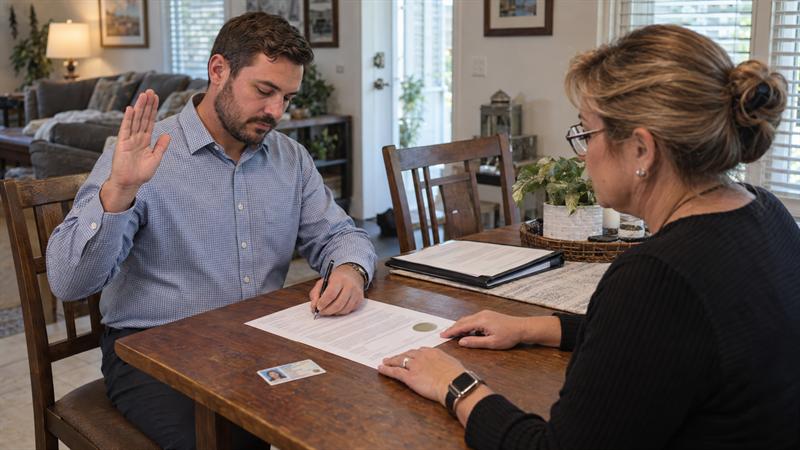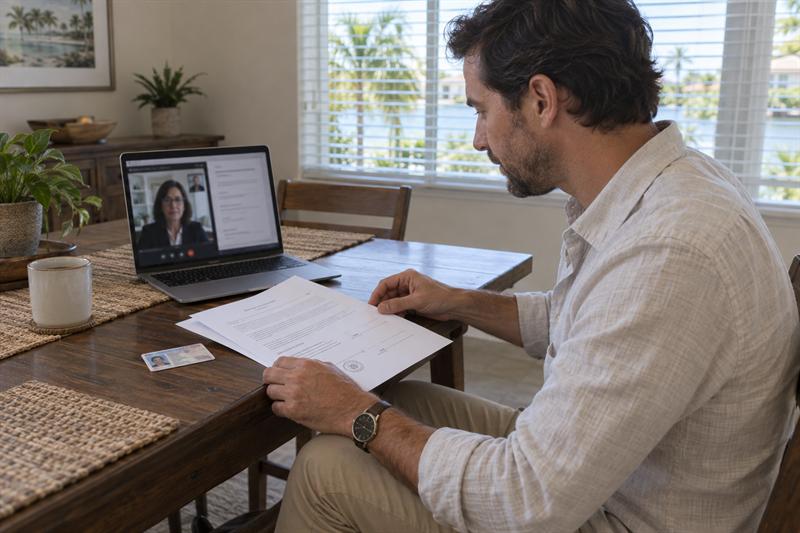

A closing appointment can involve several parties, even when only the signer and notary are present. The lender, title company, escrow professional, settlement agent, or attorney manages the transaction details. The loan signing agent helps the documents get signed and notarized according to the instructions provided.
Sunshine Mobile Notary, LLC provides mobile notary and remote online notarization services for signers throughout Southwest Florida. Understanding the signing process before the appointment can help avoid last-minute issues, including identification that does not match the documents, missing witnesses, unresolved closing questions, or a location that has not been fully coordinated.
What Is a Loan Signing Agent?
A loan signing agent is a notary public who helps facilitate the signing and notarization of loan or real estate transaction documents. The appointment may be arranged by a title company, lender, signing service, escrow professional, attorney, or settlement agent.
The signing agent helps organize the appointment by identifying document titles, directing signers to signature, initial, date, and notarization areas, and completing authorized notarial acts. The signing agent does not represent the lender, buyer, seller, title company, or attorney.
How a Loan Signing Agent Differs From a Traditional Notary Public
A traditional notary public performs authorized notarial acts, such as reviewing identification and completing the appropriate notarial certificate. A loan signing agent performs those duties when required and also helps manage the execution of a larger loan document package.
- A traditional notary appointment may involve one document or a small group of documents.
- A loan signing appointment generally involves multiple signature, initial, date, and notarization points.
- A loan signing agent follows the provided signing and return instructions but does not interpret the transaction.
This distinction matters because signers sometimes expect the notary to answer questions about rates, fees, title, or legal obligations. Those questions belong with the lender, title company, escrow professional, or attorney. Unresolved questions during the appointment can slow the process and require additional coordination.
How a Loan Signing Agent Fits Into a Florida Real Estate Closing
A real estate closing generally includes several professionals with separate responsibilities. The lender handles loan details. The title company or settlement agent coordinates title and closing requirements. An attorney may handle legal matters. The signing agent facilitates document execution and notarization.
A signer may notice a figure or term that was not expected and ask the signing agent for an explanation. The signing agent can identify the document, but questions about loan amounts, payment terms, closing costs, vesting, title, or legal consequences need to go to the professional responsible for the transaction.
For broader document guidance, readers can review which documents need notarization in Florida.
What Happens During a Loan Signing Appointment?
A loan signing appointment generally follows a clear sequence: the appointment is confirmed, identification is reviewed, documents are signed and notarized where required, and the completed package is returned according to closing instructions. The document order and package contents vary by transaction, but preparation remains important for every signing.
1. The Appointment Is Confirmed
The appointment details should be confirmed before the signing begins, including the date, time, location, signer contact information, and access instructions. For mobile appointments, this can include parking, gate codes, building entry, table space, and whether all required signers will be present.
Location details are easy to overlook, but they can affect the entire appointment. A gated community without a gate code, a care facility with restricted visitor access, or a workplace without a private signing area can delay the appointment before the documents are opened.
2. The Signer Prepares Valid Identification
Documents requiring notarization generally require satisfactory evidence of the signer’s identity, often through an acceptable, unexpired government-issued photo ID. The name on the ID should match the transaction documents, or any difference should be addressed with the title company, lender, or document provider before the appointment.
If the name on the ID differs from the documents, the transaction team may need to provide instructions before signing can continue. Trying to resolve a name issue at the table can pause the appointment and require further direction.
- Have an acceptable, unexpired government-issued photo ID ready.
- Check the name on the ID against the transaction documents before the appointment.
- Report name discrepancies to the title company, lender, or scheduling contact early.
- Do not assume a nickname, missing middle name, married name, or other variation will be accepted automatically.
3. The Document Package Is Reviewed for Signing Locations
The signing agent guides the signer to the areas that require signatures, initials, dates, or notarization. The agent may identify documents by title, such as a promissory note, mortgage, deed, affidavit, or disclosure.
The signing agent should not interpret loan terms, explain whether a fee is correct, or advise whether the signer should proceed. If a signer needs clarification about a rate, payment, title detail, vesting term, or closing cost, the next step is to contact the lender, title company, escrow officer, or attorney.
4. Documents Are Signed and Notarized Where Required
Some closing documents require only a signature, while others require notarization. Depending on the package, a notarial certificate may involve an acknowledgment or jurat, and certain documents may require witnesses.
Witness requirements vary by document and transaction. Confirming any witness requirement before the appointment helps prevent delays in completing or returning the package.
5. The Package Is Checked for Completeness
After signing, the signing agent may review the package for missed signatures, initials, dates, and notarization fields based on the instructions provided. This review helps identify obvious omissions before the documents are returned.
A completeness check does not replace review by the lender, title company, attorney, or settlement professional. The receiving party determines whether the package meets the transaction requirements.
6. Documents Are Returned According to Closing Instructions
Completed documents are returned or delivered according to instructions from the title company, lender, signing service, or other transaction coordinator. The signing agent’s role centers on document execution and handling instructions.
Funding, recording, possession, and final closing confirmation fall outside the signing agent’s role. If a signer needs to know when funds will be released or when a deed will be recorded, the title company, lender, escrow professional, or attorney is the appropriate contact.
Common Documents Signed at a Real Estate Closing
Real estate closing packages are not identical. A purchase, refinance, sale, home equity transaction, commercial transaction, or other property matter can involve different forms, notarizations, and signing instructions.
Purchase and Borrower Documents
Purchase and borrower packages often include documents connected to financing, title, and property use. Common examples include:
- Promissory note: A document reflecting the borrower’s promise to repay the loan.
- Mortgage or deed of trust: A security document connected to the property and loan.
- Closing disclosure: A document outlining transaction figures provided through the closing process.
- Occupancy-related documents: Forms concerning how the property will be used.
- Lender affidavits: Statements requested by the lender.
- Title-related forms: Documents related to ownership, title requirements, or settlement processing.
- Tax or compliance forms: Documents requested as part of the transaction file.
Questions about loan amounts, interest rates, payment terms, fees, title, or ownership should go directly to the lender or title company. A signing appointment is not the place to rely on a notary for transaction interpretation.
Refinance Documents
A refinance package often includes a new promissory note, mortgage, disclosures, and affidavits. Some refinance transactions also include a notice of the right to cancel, depending on the transaction.
Questions about refinance terms, deadlines, cancellation rights, or financial consequences should go to the lender or attorney. This is particularly important when the signer is unsure whether the documents match what was discussed earlier in the loan process.
Seller Documents
Seller documents may include a deed, seller affidavit, title affidavit, settlement-related forms, and transfer documentation. The exact package depends on the property, ownership structure, title requirements, and transaction terms.
A seller who sees an unfamiliar ownership or transfer detail should contact the title company or attorney for direction before signing. Addressing the question before execution is usually easier than correcting an issue afterward.
What a Loan Signing Agent Can and Cannot Do
A loan signing agent can guide the signing process and complete authorized notarial acts. A loan signing agent cannot provide legal, lending, financial, title, or real estate advice.
What the Signing Agent Can Help With
A loan signing agent may help with the practical parts of the appointment, including:
- Reviewing the signer’s identification for authorized notarial purposes.
- Guiding signers to signature, initial, and date fields.
- Performing authorized notarizations.
- Identifying documents by title.
- Following appointment and document-return instructions provided by the requesting party.
- Helping coordinate the practical flow of the signing appointment.
Questions That Should Go to the Lender, Title Company, or Attorney
The following questions require direction from the professional responsible for that part of the transaction:
- Interest rates and payment amounts.
- Loan terms and closing costs.
- Title, ownership, and vesting details.
- Legal consequences of signing.
- Whether the signer should proceed.
- Changes to the agreement or closing figures.
- Funding, recording, possession, or final closing timing.
Resolve potential signing issues before the appointment. If any of the following applies, coordination may be needed before the notary arrives:
- The name on the signer’s ID does not match the transaction documents.
- The signer has unanswered questions about rates, fees, title, ownership, or loan terms.
- The transaction may require witnesses, but no witness plan has been confirmed.
- The signing location has access restrictions, limited privacy, or no workable space for the documents.
These issues can lead to delays, additional coordination, or new instructions from the title or lender side. Confirming them early keeps the appointment focused on proper document execution and notarization.
How to Prepare for a Smooth Signing Appointment
The most practical way to prepare is to resolve identification, location, witness, and transaction questions before the appointment. When those details are settled, the signing agent can focus on the document package and required notarial acts.
- Have an acceptable, unexpired government-issued photo ID available.
- Check whether the name on the ID matches the transaction documents.
- Do not pre-sign documents unless the document provider specifically instructs you to do so.
- Confirm the appointment location, entry instructions, parking, and contact information.
- Ask in advance whether witnesses are required and who will provide them.
- Allow enough time to complete the signing without rushing.
- Keep lender, title company, escrow, or attorney contact information available for transaction-specific questions.
- Confirm whether documents will be printed, delivered to the location, supplied by a title office, or completed through an approved remote process.
If the appointment needs to take place outside a title office, it helps to understand whether a mobile notary or online notary option is right for the situation. The most practical choice is generally the one accepted by the transaction parties and suited to the signer’s location and document requirements.
When Mobile Loan Signing Services Can Be Helpful
Mobile loan signing services can be useful when a signer cannot easily travel to a title office or another designated location. Mobile service supports the signing appointment. It does not replace the lender, title company, or attorney’s role in the transaction.
Mobile service can be especially helpful when work schedules, travel, caregiving responsibilities, distance, or mobility concerns make an office appointment difficult. The transaction coordinator should remain informed about the signing arrangement so the location and timing align with the document instructions.
Signing at Home, Work, a Care Facility, or Another Agreed Location
A mobile appointment may take place at a home, workplace, care facility, hospital, office, or another agreed location when appropriate and permitted. The location should provide enough privacy and space to review identification and complete the documents.
Not every location is suitable for every transaction. A rushed public setting, a missing signer, an inaccessible building, or a lack of suitable signing space can create delays that are easier to avoid through advance coordination.
Coordinating Signings for Busy, Traveling, or Mobility-Limited Signers
Mobile signing support can help when travel or scheduling creates a barrier to completing documents in a title office. It can be useful for signers balancing work commitments, caregiving, recovery, travel, or limited mobility.
Sunshine Mobile Notary, LLC offers mobile loan signing services in Southwest Florida for appointments coordinated with the appropriate transaction professionals. Confirm the document instructions, signer availability, location details, and any witness requirements before scheduling.
Can Loan Documents Be Signed Online in Florida?
Some loan documents can be completed through remote online notarization in Florida, but remote signing is not automatically available for every transaction. The lender, title company, document provider, and transaction requirements determine whether an online process is accepted.
When Remote Online Notarization May Be an Option
Remote online notarization may be appropriate when the transaction parties allow it and the signer can complete the required identity-verification and technology steps. The process generally requires access to a compliant remote notarization platform and a suitable internet-connected device.
If the lender or title company has not approved a remote process, an online option does not resolve the issue. Confirming acceptance first helps prevent a signer from completing a process the receiving party will not accept.
For a more detailed explanation, review how remote online notarization works in Florida.
Why the Lender, Title Company, and Document Requirements Matter
Transaction requirements can affect the signing method, witness needs, document format, and acceptance process. The signing agent does not independently decide whether a loan closing can be completed through remote online notarization.
If an in-person appointment is difficult, ask the lender, title company, or document provider whether remote notarization is approved for that specific transaction. That answer determines the appropriate path forward.
Is a Loan Signing Appointment the Same as an Apostille?
No. A loan signing appointment focuses on executing and notarizing real estate or loan transaction documents. An apostille is a separate form of authentication for qualifying public or notarized documents intended for use in another country.
- Loan signing: Supports the execution and notarization of closing documents.
- Apostille: Authenticates qualifying documents for international use.
These services have different purposes and procedures. Confusing them can lead to the wrong request and delay the correct document process.
Key Takeaways
- A Florida loan signing agent helps facilitate the signing and notarization of closing documents.
- The exact documents depend on the purchase, refinance, seller, or other transaction type.
- Identification, name consistency, witnesses, and location details should be confirmed before the appointment.
- A signing agent can guide the signing process but cannot interpret loan terms or provide legal advice.
- Questions about loan figures, title, ownership, or legal consequences should go to the lender, title company, escrow professional, or attorney.
- Mobile and remote notarization options may be available depending on transaction requirements and acceptance by the appropriate parties.
Sunshine Mobile Notary, LLC’s Approach to Loan Signing Appointments
Sunshine Mobile Notary, LLC approaches loan signing appointments as a coordination process with clear boundaries. The purpose is not to rush a signer through a package or replace the professionals who handle loan, title, and legal questions.
The focus is on the details that can create problems when overlooked: confirming identification, verifying location access, understanding witness requirements, keeping the right transaction contact available, and following the provided signing instructions. When those details are addressed before the appointment, the signing is generally more organized and easier to complete.
Need a Mobile Loan Signing Agent in Southwest Florida?
A closing appointment involves more than having documents ready to sign. Identification mismatches, unanswered lender or title questions, missing witnesses, and poorly coordinated locations can delay the appointment and require additional direction from the transaction team.
Sunshine Mobile Notary, LLC offers mobile notary and loan signing appointment support in Fort Myers, Cape Coral, North Fort Myers, Lehigh Acres, Bonita Springs, Estero, Naples, North Naples, Marco Island, Port Charlotte, Punta Gorda, and surrounding Southwest Florida communities. Confirm the transaction instructions with the lender, title company, escrow professional, or attorney, then schedule a mobile loan signing appointment that fits the signing location and document requirements.
Frequently Asked Questions About Loan Signing Agents in Florida
What does a loan signing agent do at a closing?
A loan signing agent helps facilitate the signing and notarization of loan or real estate closing documents according to the appointment instructions. The signing agent may guide signers to required signature, initial, date, and notarization areas, review identification for authorized notarial acts, and return completed documents as directed.
Questions about the loan, title, fees, ownership, or legal consequences should go to the lender, title company, escrow professional, or attorney. Before the appointment, confirm the location, identification requirements, witness needs, and transaction contact information.
Can a loan signing agent explain my loan documents?
No. A loan signing agent may identify documents and guide the signing process, but should not interpret loan terms, provide legal advice, give financial guidance, or advise whether to sign.
Questions about interest rates, payment amounts, fees, title, vesting, ownership, or changes to the agreement require direction from the lender, title company, escrow officer, or attorney. Keep the appropriate transaction contact available during the appointment so questions are handled by the right person.
What should I bring to a loan signing appointment?
Bring an acceptable, unexpired government-issued photo ID and have the contact information for the lender, title company, escrow professional, or attorney available. The name on the ID should match the transaction documents or be addressed with the appropriate contact before signing.
Also confirm witness requirements, location access instructions, and how the documents will be delivered or presented. Addressing these details before the appointment can prevent avoidable delays.
How long does a loan signing appointment take?
The length of a loan signing appointment depends on the document package, transaction type, number of signers, required notarizations, witness requirements, and whether questions need to be directed to the lender or title company.
Allow enough time to complete the appointment without rushing. A signer who has already confirmed identification, location details, witness needs, and transaction contacts is generally better prepared for an organized signing.
Can a loan signing agent come to my home in Florida?
A mobile loan signing appointment may be arranged at a home, workplace, care facility, or another agreed location when transaction requirements, scheduling details, and service availability support it. The location should allow for privacy, identification review, and document signing.
Confirm parking, gate codes, building access, signer availability, and witness arrangements before scheduling. Those details help determine whether the mobile appointment can proceed smoothly.
Is remote online notarization available for Florida loan documents?
Remote online notarization may be available for some Florida loan document transactions, but it is not accepted for every closing. The lender, title company, document provider, transaction requirements, identity-verification process, and approved technology determine whether it can be used.
Ask the lender, title company, or document provider to confirm remote eligibility before arranging an online appointment. That step helps prevent the wrong signing method from creating a delay later in the closing process.