Quick Answer: An apostille is generally required when a Florida document will be used in a country that participates in the Hague Apostille Convention. Notarization, certified copies, authentication, and apostilles are separate steps, and using the wrong document version or missing a required step can lead to delays and repeat paperwork.
Sunshine Mobile Notary, LLC helps Southwest Florida residents complete eligible notarization appointments when a private document needs to be prepared before Florida apostille submission. A notary does not issue apostilles or provide legal advice, but notarization may be part of the preparation process for certain private documents.
Key Takeaways:
- An apostille is different from notarization.
- The destination country and receiving organization determine the correct process.
- Public records, private documents, corporate records, and school records can require different preparation steps.
- Submitting the wrong document version can cause delays, added costs, and repeat work.
- A mobile notary can assist with eligible notarization appointments before the state apostille stage.
What Is an Apostille in Florida?
An apostille is a certificate issued by the Florida Department of State that authenticates a qualifying public official’s signature, capacity, or seal for use in another participating country. An individual notary public does not issue apostilles.
An apostille generally helps confirm:
- The signature belongs to an authorized public official.
- The official held the stated position when the document was signed.
- The seal or stamp on the document is authentic.
An apostille does not confirm that every statement in a document is true. It also does not guarantee acceptance by an overseas school, employer, court, bank, or government office. The receiving organization still decides whether it requires a certified copy, translation, recently issued record, or specific delivery method.
A document may need to be apostilled, but that does not mean any notarized copy will meet the recipient’s requirements. Confirming the required document type before starting can help avoid submitting paperwork the recipient cannot use.
Do You Need an Apostille? Start With These Three Questions
Start by confirming where the document is going and what the recipient has requested. An apostille is not automatically needed simply because a document is leaving Florida.
Is the Document Being Used Outside the United States?
An apostille is generally used when a U.S. document will be presented in another country. Documents used only in Florida or elsewhere in the United States generally do not need an apostille.
If an overseas recipient requests authentication, legalization, or an apostille, request instructions in writing before moving forward. Written instructions can clarify the document type, translation needs, and whether the recipient requires an original or certified copy.
Is the Receiving Country Part of the Hague Apostille Convention?
Countries that participate in the Hague Apostille Convention generally use apostilles for qualifying foreign public documents. If the destination country is not a participating country, the document may need a different authentication or consular legalization process.
- If the country uses the Hague process: an apostille may be the required authentication step.
- If the country does not use the Hague process: additional authentication and consular steps may be required.
Confirm the destination-country process before submitting the document. Choosing the wrong route can create delays and may require a new record, a new notarization, or further authentication.
What Does the Receiving Organization Require?
The receiving organization usually decides what it will accept. A university may request a certified transcript, while an overseas employer may request a notarized affidavit and translation. A foreign government office may require a recently issued vital record instead of an older copy.
Before proceeding, ask the receiving organization:
- Do you require an apostille, legalization, or another form of authentication?
- Do you need an original document, a certified copy, or a notarized document?
- Does the document need a translation?
- Does the document need to be issued within a specific period?
- Are there country-specific formatting or delivery requirements?
Instructions such as “provide an apostilled certificate” may not identify the exact record or preparation steps required. Confirming those details first can help prevent a rejected submission later.
Apostille vs. Notarization vs. Authentication: What Is the Difference?
Notarization, apostilles, and authentication can all appear in the same document process, but they are not interchangeable. Knowing the difference helps prevent incomplete paperwork and unnecessary appointments.
Notarization
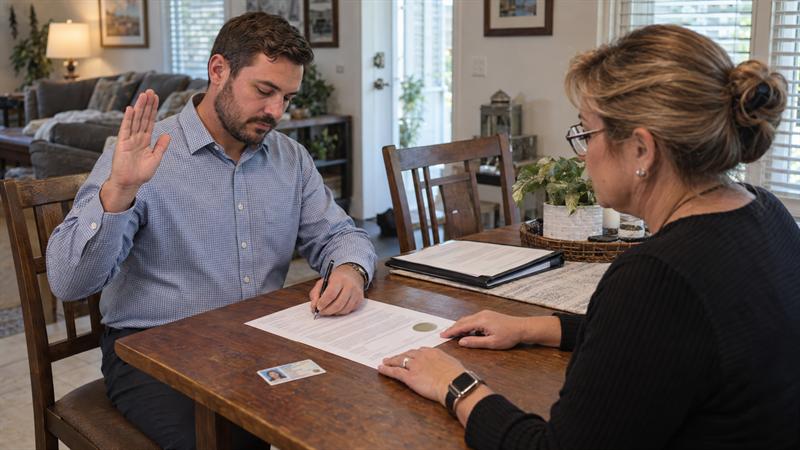
A notarization is a notarial act performed by a commissioned notary public. Depending on the document and notarial certificate, the notary verifies identity, confirms the signer is acting willingly, or administers an oath or affirmation.
Notarization does not make a document valid in another country by itself. It may be a preparation step for private documents such as affidavits, consent letters, declarations, and powers of attorney. For a closer look at common appointment requirements, review what documents need notarization in Florida.
Apostille
An apostille authenticates a qualifying public official’s signature or seal for use in a Hague Convention country. It is issued through the designated state authority, not by a mobile notary, online notary, or office-based notary.
For private documents, the apostille process may depend on proper notarization and any required certification. For public records, the state may require a certified record from the issuing office rather than a notarized photocopy.
Authentication or Consular Legalization
When a document is going to a country outside the Hague Apostille Convention, a different authentication process may apply. That process can involve additional state, federal, embassy, or consular requirements.
The recipient, embassy, consulate, or appropriate official authority should confirm the correct process before the document is prepared. Using an apostille for a country that requires legalization can result in a document the recipient cannot use.
Common Florida Documents That May Need an Apostille
The document type matters because preparation requirements depend on who issued the document and where it originated. A certified public record does not follow the same path as a private affidavit signed before a notary.
Florida Vital Records and Other Public Records
Common examples include birth certificates, marriage certificates, death certificates, court records, and other official Florida records. The receiving organization may require a certified copy from the proper issuing agency.
A marriage license and a certified marriage certificate are not always interchangeable. If a foreign recipient asks for proof of marriage, confirm the exact record it needs before ordering documents or submitting paperwork.
Notarized Personal Documents
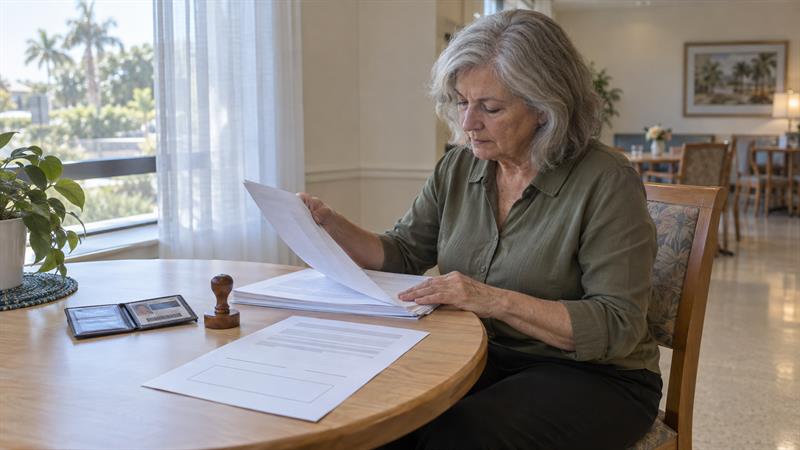
Private documents often include powers of attorney, affidavits, permission letters, consent forms, and declarations. These documents may need notarization before they are submitted for apostille processing.
The notary’s role is limited to the requested notarial act. A notary cannot choose document wording, explain legal consequences, revise a document, or determine whether a recipient will accept it. If a document is incomplete, contains blanks, or lacks the required notarial certificate, it may need to be corrected before submission.
Business and Corporate Documents
Business documents can include corporate resolutions, business agreements, articles, certificates, and records requested for an overseas transaction. These documents may require a specific certification from the appropriate agency or records custodian before apostille submission.
Using an internal copy when a foreign recipient requires a certified filing or official record can add time to the process. Confirm the required document source before arranging notarization or state submission.
Educational, Professional, and Identity-Related Documents
Diplomas, transcripts, professional credentials, background-related records, and identity documents may be requested for employment, study, licensing, or residency abroad. The school, licensing body, employer, or receiving institution should identify the required format.
If instructions mention a sealed transcript, certified record, notarized copy, or apostille, the document may need to follow a specific preparation sequence. Do not open, alter, or replace documents without confirming the recipient’s instructions.
How the Florida Apostille Process Typically Works
The most practical approach is to confirm requirements before scheduling a notary appointment or mailing documents. This sequence can reduce repeat work and keeps each party responsible for the correct part of the process.
Step 1: Confirm the Destination Country and Recipient Requirements
Confirm whether the country participates in the Hague Apostille Convention and ask the receiving organization what it requires. Verify whether the document needs an apostille, translation, certified copy, original record, or additional legalization.
A document can be authenticated correctly and still be rejected if it is the wrong version or lacks another required item.
Step 2: Obtain the Correct Version of the Document
Obtain the document from the proper source. Some public records require certified copies from the issuing authority, while private documents need to be complete and ready for notarization.
A photocopy, online printout, or outdated record may not satisfy the recipient’s requirements. Confirm the required version before arranging the next step.
Step 3: Complete Notarization When Required
Private documents that require notarization should be complete before the appointment, with required attachments available. The signer should bring valid government-issued identification and should not sign in advance when the notarial act requires signing in the notary’s presence.
Sunshine Mobile Notary, LLC provides mobile appointments for eligible notarization needs throughout Fort Myers, Cape Coral, North Fort Myers, Lehigh Acres, Bonita Springs, Estero, Naples, and nearby Southwest Florida communities. For eligible documents, mobile notary appointments in Fort Myers can make the preparation step more convenient when travel, multiple signers, or scheduling constraints are involved.
Step 4: Submit the Document to the Appropriate Florida State Office
After the document is correctly prepared, submit it through the appropriate Florida apostille process. Confirm current forms, fees, payment methods, mailing instructions, and processing details through official Florida guidance before submission.
Checking current instructions before mailing can help prevent issues with payment, forms, document type, or return delivery.
Step 5: Send the Apostilled Document to the Receiving Organization
Once the apostille has been issued, review the document package and keep copies for your records where appropriate. The receiving organization may still require translation, a specific delivery method, or supporting documents.
An apostille completes the applicable authentication step. It does not replace the recipient’s own submission rules.
When a Mobile Notary Can Help With Apostille Preparation
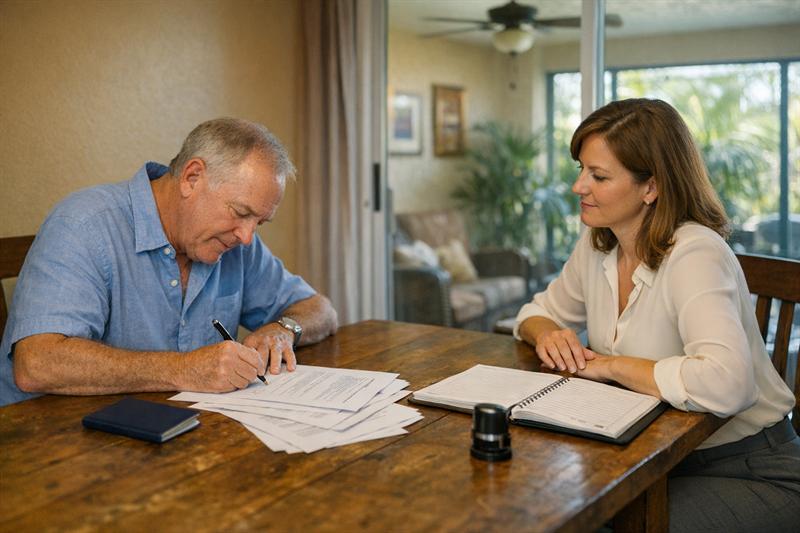
A mobile notary is most useful when notarization is a required step before state submission. Sunshine Mobile Notary, LLC brings eligible notarial services to the signer, which can help when getting every signer to an office is the main obstacle.
A mobile notary appointment can be useful when:
- Several people need to sign the same document.
- A signer has limited transportation or mobility.
- The appointment needs to happen at a home, workplace, healthcare setting, or other agreed location.
- A work schedule makes traditional business-hour appointments difficult.
Sunshine Mobile Notary, LLC’s Role in Apostille Preparation
Sunshine Mobile Notary, LLC focuses on the step that may need to be completed before a document reaches the state apostille process: eligible notarization. This includes checking identification, completing the requested notarial act, and confirming that the document is complete enough to notarize.
Before scheduling, confirm whether the recipient needs a certified public record, a notarized private document, or a different authentication route. A completed notarization does not change the recipient’s document requirements.
Consider a mobile notarization appointment when your document requires notarization before apostille submission and:
- You have written instructions requiring a notarized affidavit, consent form, declaration, or power of attorney.
- Multiple signers need to appear for the same document.
- You have confirmed the destination country and understand the document must be prepared in Florida.
- You need a mobile appointment because travel, work, health, or location makes an office visit impractical.
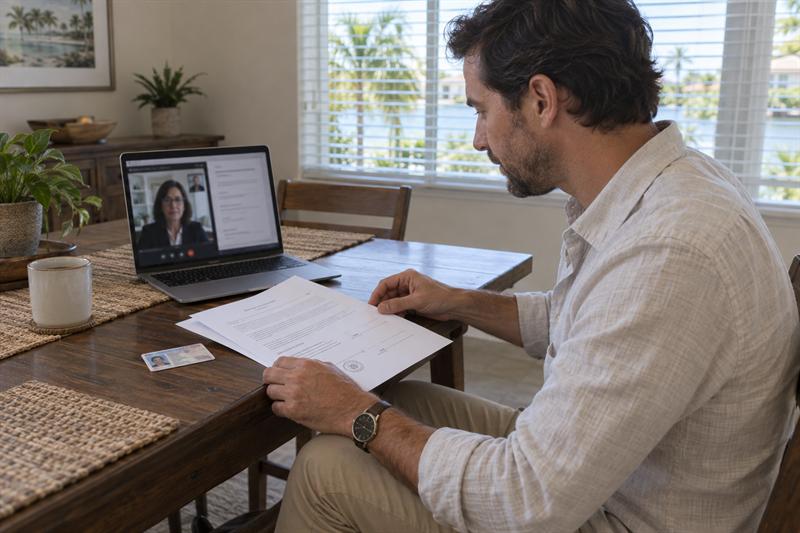
For eligible documents, readers can also compare mobile notary and online notary options before choosing the appointment format that fits their situation.
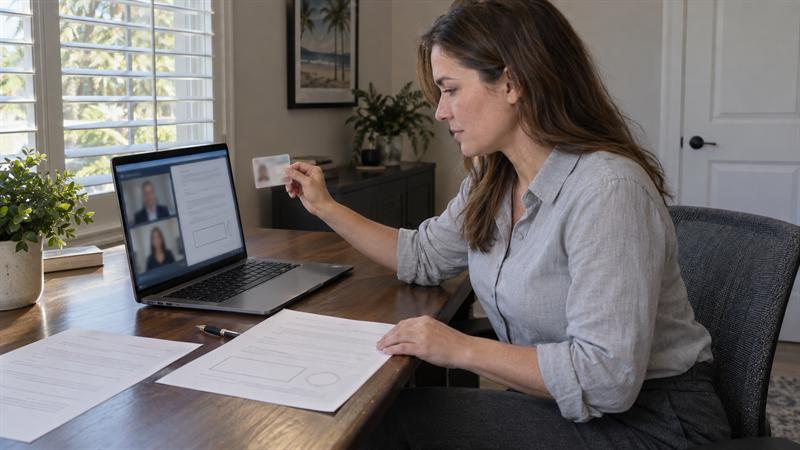
Remote online notarization may be available for eligible documents, but overseas acceptance should be confirmed first. A remote notarization accepted in Florida does not automatically satisfy a foreign recipient’s document rules.
Common Apostille Mistakes That Can Delay Your Documents
Many apostille problems begin with document preparation. They can become more time-consuming after paperwork has already been mailed, notarized, translated, or sent overseas.
- Assuming an apostille is required without checking the destination country: This can lead to the wrong authentication route when the country requires consular legalization instead.
- Confusing notarization with apostille issuance: A notarized document is not automatically apostilled, and a notary cannot issue the apostille.
- Using a photocopy when a certified record is required: The receiving organization may reject the document even when other steps were completed correctly.
- Obtaining the wrong version of a vital record: A marriage license, for example, may not meet the same requirement as a certified marriage certificate.
- Signing too early: When a notarial certificate requires the signer to appear and sign before the notary, an advance signature can create a problem that needs correction.
- Leaving blanks or missing attachments: Incomplete documents may not move forward until missing information is resolved.
- Using Florida for documents issued elsewhere: Records issued by another state or the federal government generally follow the issuing jurisdiction’s authentication process.
- Ignoring translation or legalization instructions: An apostille does not eliminate a foreign recipient’s translation or formatting requirements.
- Assuming remote notarization is accepted internationally: Acceptance should be confirmed with the recipient before relying on an online appointment.
When an overseas request arrives, it can be tempting to focus on the fastest available appointment. Confirming the correct document path before anything is signed, notarized, or submitted is usually the more efficient approach.
Frequently Asked Questions About Apostilles in Florida
Can a Notary Public Issue an Apostille in Florida?
No. A Florida notary public does not issue apostilles. Apostilles are issued through the appropriate Florida state authority.
A notary may perform an eligible notarization when a private document requires one before state submission, but notarization and apostille issuance are separate steps. Confirm the receiving organization’s requirements before scheduling notarization.
Do All Documents Need To Be Notarized Before Getting an Apostille?
No. Not every document needs notarization before an apostille.
Public records, private documents, business records, and educational documents can follow different preparation paths. A certified public record may need to come directly from the issuing authority, while a private affidavit may require notarization first. Identify the document category and obtain written instructions from the recipient before arranging an appointment.
Can a Florida Birth Certificate or Marriage Certificate Be Apostilled?
A Florida birth certificate or marriage certificate may be eligible for an apostille when it meets applicable state and recipient requirements.
The recipient may require a certified copy from the appropriate issuing agency. A marriage license and a certified marriage certificate do not always serve the same purpose, so confirm the exact record type before ordering a copy or submitting documents for authentication.
What if the Destination Country Is Not Part of the Hague Apostille Convention?
A different authentication or consular legalization process may apply when the destination country is not part of the Hague Apostille Convention.
The receiving organization, embassy, consulate, or other appropriate official authority may require steps beyond a Florida apostille. Verify the country’s current requirements before preparing the document or submitting anything to the Florida state office.
Can Remote Online Notarization Be Used for Documents Going Overseas?
Remote online notarization may be available for eligible documents, but the foreign recipient must accept it for the intended use.
Acceptance depends on the recipient, destination jurisdiction, document type, and applicable requirements. Get recipient confirmation before relying on an online notarization appointment for international documents.
Can a Mobile Notary Help Prepare Documents for Apostille Submission?
Yes. A mobile notary can assist with eligible notarization appointments, identification procedures, and document readiness before the Florida apostille submission step.
Mobile service can be especially practical when several signers are involved or when travel, mobility, work schedules, or healthcare settings make an office visit difficult. After confirming your document and recipient requirements, contact Sunshine Mobile Notary, LLC to request a mobile notarization appointment for an eligible document.
Conclusion: Prepare the Right Document Before Starting the Apostille Process
The key is not simply finding an apostille service. It is making sure the document is the correct version, follows the right destination-country process, and receives notarization only when that step is required. Missing those details can lead to rejected paperwork, repeat appointments, replacement records, and missed submission windows.
Sunshine Mobile Notary, LLC is a practical next step for Southwest Florida residents who have confirmed that an eligible document needs notarization before apostille submission. Mobile service and remote online notarization options for qualifying documents can help complete the notarization step while keeping it separate from state-issued apostille services and legal advice.