Quick Answer: For Sunshine Mobile Notary, LLC, mobile notary service areas in Southwest Florida are best treated as routing-based service windows across Lee, Collier, and Charlotte Counties. A city or county name does not confirm practical availability, because the exact street address, requested appointment time, route conditions, and document type can determine whether the window works.
What “Service Area” Means for a Mobile Notary in Southwest Florida
A mobile notary service area works as a routing decision, not a static map label. A county name tells a signer where the service is generally available, but it does not show whether the street address fits the notary’s route for the requested time. Practical delays often begin when a signer first confirms a city and then later checks the exact route.
That can become a problem when a signer receives a general county-level confirmation and then learns that the address requires a longer route, extra access time, or a separate travel window. A main-road address in Fort Myers, Cape Coral, Lehigh Acres, or Estero is usually easier to place into a day’s route than a barrier-road address in Marco Island, the Gasparilla, or Pine Island. The difference is not the county. It is travel time, access complexity, and appointment length.
The practical test is whether the signing location fits the route, the time, and the document workload. If it fits, the appointment window can be set with confidence. If it does not, the signer needs an alternate window or a different signing method before relying on the original date.
Why County Boundaries Alone Do Not Determine Coverage
A single county can contain several routing patterns. An address near a county line can behave differently from an address on a main corridor because the route may add distance, require alternate corridors, or create extra access time. A general county statement is useful, but it is not the same as confirming that the signer’s exact street address fits the appointment window. An address-level check helps prevent a last-minute scheduling mismatch.
How Exact Address, Traffic, and Appointment Timing Influence Availability
Availability changes once a signer moves from a neighborhood name to a specific street address. Main corridors such as I-75, US 41, and coastal roads move differently by hour of day, and barrier roads add routing time that does not show up in straight-line distance. Document length also changes the appointment, because a short acknowledgment is handled differently from a closing or multi-party signing.
- The exact street address sets the route, not the city name.
- The requested date and time set whether the route fits the day’s schedule.
- Traffic and weather set the travel buffer around the route.
- The document type sets the amount of time the signer and witnesses need at the signing table.
What “Southwest Florida” Really Means for Mobile Notary Routing
Southwest Florida is a wide routing area, not a single block of uniform travel time. The practical pattern spans the central Fort Myers area, the long Collier corridor toward Naples and Immokalee, and the northern Charlotte area around Port Charlotte, Punta Gorda, and Rotonda West, with some southern Sarasota fringe addresses treated as a separate routing check. The service area for a given day is shaped by the route, the available appointment window, and whether the signer’s address fits without putting other commitments at risk.
Coverage by County and Community
The core Southwest Florida mobile notary service area is built around Lee, Collier, and Charlotte Counties. The communities below are common signing locations. The useful test remains the exact address, not the community name alone, because each location may sit on a different route and need a different appointment window.
Lee County: Fort Myers, Cape Coral, North Fort Myers, Lehigh Acres, Estero, and Bonita Springs
Lee County forms the central part of the Southwest Florida service area and includes many commonly requested signing locations. Fort Myers and Cape Coral are common signing locations within that corridor, while North Fort Myers, Lehigh Acres, and Estero are common mainland locations. Bonita Springs sits near the Collier County transition and often appears in routes that continue toward Naples. For addresses in the core Fort Myers corridor, the Fort Myers mobile notary appointment guide gives a practical reference for what to expect and how to book.
- Mainland Lee County addresses are often easier to fit into standard daytime routes.
- Eastern Lee County corridors can need a larger traffic buffer during peak periods.
- Bonita Springs should be checked against the Collier-side route because the county line can change the travel path.
- Multi-signer closings usually need a longer appointment block than a single-signer acknowledgment.
Collier County: Naples, North Naples, Immokalee, Marco Island, and Nearby Communities
Collier County is a long north-south corridor, so the community matters as much as the county name. Naples and North Naples are common signing locations, while Immokalee sits farther west and often requires a longer routing plan. Marco Island, the Gasparilla, and other barrier-road locations often need access details that are not usually part of a standard mainland route. For Naples-area requests, the Naples mobile notary scheduling guide covers how scheduling can differ from a standard mainland route.
- Naples and North Naples requests often work best when the exact address and arrival window are confirmed first.
- Immokalee and western Collier addresses often extend the route and benefit from earlier confirmation.
- Marco Island and barrier-road locations often need a dedicated window because access can limit scheduling flexibility.
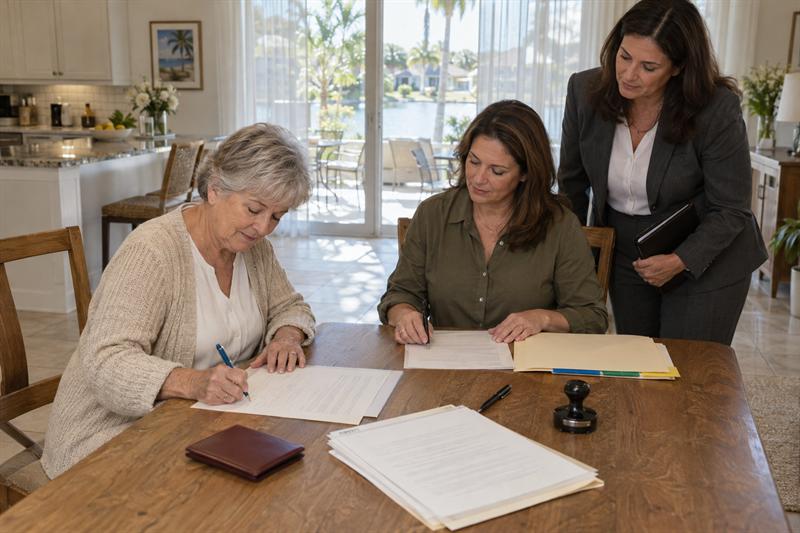
- Trust signings and property closings are common document types in this region, and they often require more appointment time than a standard notarization.
Charlotte County: Port Charlotte, Punta Gorda, Rotonda West, and Sarasota Key
Charlotte County forms the northern part of the Southwest Florida service area. Port Charlotte and Punta Gorda are common signing locations in this section, while Rotonda West and the Punta Gorda waterfront area can add causeway, barrier-road, or waterfront access complexity. Sarasota Key and the southern Sarasota fringe can sit farther from the core route and may benefit from confirmed scheduling with enough lead time. Property management documents, estate planning forms, and healthcare proxy signings are common document types in this area.
- Port Charlotte and Punta Gorda can work well as Charlotte County signing locations when the street address is checked.
- Rotonda West and waterfront addresses often need an access-based routing plan.
- Sarasota Key and southern Sarasota fringe locations often need earlier confirmation because they can extend the route.
- Multi-signer family or estate signings benefit from confirming the signer count and location details before the window is set.
Border, Barrier Island, and Special Location Considerations
- Addresses near county lines can be serviceable when the street address is checked, not just the postal city.
- Barrier island, causeway, and waterfront locations often need a dedicated appointment window.
- Hospitals, assisted living facilities, gated communities, and offices can add access time because of doors, parking, and escort rules.
- Airport and courthouse-area signings often need a tighter arrival window.
- Rural addresses in western Collier or northern Charlotte generally benefit from a route check before the signer treats the date as confirmed.
How to Confirm Availability Before Requesting a Mobile Notary
Confirming availability is a routing conversation, not a formality. The signer or signing organizer needs to give enough detail for the notary to place the address into the route, and the signer needs a specific time window in return. A clear address-based confirmation can reduce the chance that the signing gets pushed to a later slot when the route is checked too late.
Information to Prepare Before Requesting an Appointment
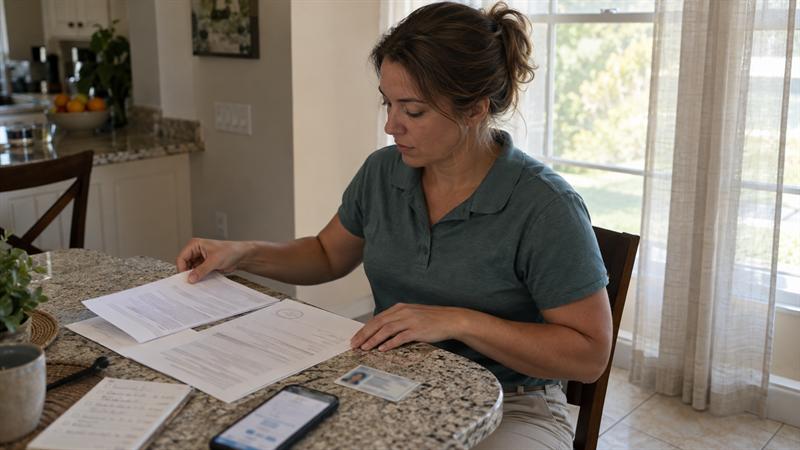
- Exact street address. Include the unit, suite, building, or property name when one appears.
- Requested date and time window. Include at least one alternate window if possible.
- Document type. State whether the signing is an acknowledgment, jurat, closing, trust form, power of attorney, healthcare proxy, or another document needing notarization.
- Number of signers and witnesses. More signers usually mean a longer appointment and a tighter coordination requirement.
- Printed status. State whether the final pages are already printed or still need to be prepared for signing.
- Access and parking details. Include door codes, gate instructions, elevator access, parking restrictions, or escort needs.
How to Determine Whether the Signing Location Is Practical
An address is practical when it fits into the route, the signing time, and the document workload without putting another commitment at risk. A confirmed time window is more reliable than a general city-level yes. If the address or time is outside the standard routing pattern, the signer should evaluate an alternate day, a different time window, or a remote online path if the document qualifies. This can help keep the signing from becoming a last-minute title, lender, or family delay.
When to Ask About Scheduling Flexibility
- Ask about flexibility when the document is tied to a closing, title, lender, or court deadline.
- Ask about early or late windows for longer-drive locations such as eastern Lee County, western Collier County, or the Punta Gorda corridor.
- Ask about weather and traffic adjustments before the appointment is locked, not after the notary is already en route.
If your signing has any of the following, the address and route should be checked before the date is treated as confirmed. These are the details that can turn a simple address check into a scheduling issue.
- The signing location is on a barrier island, causeway, gated community, or waterfront access point.
- The document is a closing, trust signing, or multi-party legal form with several signers.
- The requested time is early morning, late afternoon, or tied to a title, lender, or court deadline.
- The signer expects same-day service during a peak traffic period.
When those factors appear, the signing usually needs an address-based appointment window before the signer, title company, or family can rely on the date. The risk increases when the signer or title company treats the date as set before the route, access, and document workload are checked.
Travel, Fees, and Scheduling Considerations
Travel and fee planning is easier when the signer understands what creates the estimate. A mobile notary appointment is built around distance, document length, timing, and access, not a single county label. Requesting an address-based estimate helps the signer compare cost and timing before the signing is locked.
Factors That Can Affect Travel Time in Southwest Florida
- Corridor routing on I-75, US 41, and coastal roads can change the travel buffer by time of day.
- Barrier roads, causeways, and waterfront access points can add routing time that straight-line maps do not show.
- Peak traffic periods and weather events can shorten the useful scheduling window for the same address.
- Longer drives to western Collier County or the northern Charlotte fringe usually need earlier confirmation than a nearby Fort Myers address.
How Document Type May Influence Appointment Planning
- A standard acknowledgment or jurat usually uses a shorter appointment block than a closing package.
- A real estate closing with multiple signers and witnesses often needs more time because each signer may need to be present for the required pages.
- Multi-party legal documents may require all signers to arrive at the same time, which changes the scheduling plan.
- Power-of-attorney and healthcare-proxy signings often need witness and document details clarified before the appointment.
What to Confirm Before Finalizing a Mobile Notary Visit
- Confirm the total appointment window, including travel time and signing time.
- Confirm whether an urgent, after-hours, or longer-distance request may need a separate estimate or deposit.
- Confirm the reschedule policy if weather or traffic changes the route before arrival.
- Confirm a direct contact method for the appointment day if the location, parking, or arrival time changes.
Mobile Notary vs. Remote Online Notarization
Quick comparison: A mobile notary comes to the signer’s physical location, while a remote online notary conducts the signing through a secure video platform. The practical option depends on the document type, the signer arrangement, and whether the signing requires original inspection, in-person presence, or a tighter same-day window.
When In-Person Mobile Service Is Usually the Better Fit
- Documents that require physical presence or in-person verification and do not qualify for remote online handling usually need a mobile notary visit.
- A signer without reliable internet access, or a signer who is not comfortable with a video session, is better served by an in-person visit.
- Multi-signer events where all parties are already in one location often work better as a single on-site signing.
- Packages that require original documents, seals, or page-level coordination usually need the documents in the room.
When Remote Online Notarization May Be the Practical Option
- Documents that qualify for remote online notarization under current Florida requirements can support a secure video session.
- A remote session can help when the signer is in a different part of the service area and travel routing creates a conflict.
- Urgent requests that need a faster path can fit a remote online session better when the document qualifies. The scheduling pressure behind those cases is covered in how same-day mobile notary requests are handled.
- Recurring document needs become easier to manage through a remote session when the signer and document setup support it.
- Eligibility is set by the document and signer requirements, not by the signer’s preference alone.
How Sunshine Mobile Notary, LLC approaches this: The intake review considers the signing location, signer count, document type, and requested time together before the date is treated as set. If the in-person path fits, the appointment should start with an address-based window. If the document supports remote online use and timing is tighter, a remote online session can be reviewed as an alternative. This helps the signer avoid choosing a method late and discovering that the chosen path does not fit the signing conditions.
Common Questions About Mobile Notary Service Areas
These are the questions that often come up when a signer is trying to confirm a Southwest Florida signing without wasting time.
Does a Mobile Notary Cover a Specific Southwest Florida Address?
Coverage depends on the exact street address, requested time, and route conditions for that day. A main-road address near I-75 or US 41 is usually easier to place into a standard route than a barrier-road address on Marco Island, the Gasparilla, or Pine Island. The useful confirmation is a specific time window tied to the street address, not a general answer that the nearby city is served.
Can a Mobile Notary Serve an Address Outside the Standard County Area?
Sometimes, when the address is near the existing corridor, the document workload is manageable, and there is schedule capacity for that day. Southern Sarasota fringe addresses and western Collier rural addresses can extend the route beyond the core Lee, Collier, and Charlotte County pattern. That is where added routing time or access complexity changes the decision. The signer should compare the requested date with the actual route, not just the county label.
How Do Traffic and Weather Affect Appointment Timing?
Traffic and weather can add a travel buffer, especially on major corridors and coastal routes. A practical Southwest Florida appointment builds that buffer into the arrival window so the signing starts on time at the signer’s location, not just on the notary’s departure schedule. The key measure is arrival at the signing location, because straight-line distance does not show barrier roads, causeways, or peak corridor conditions.
Can a Remote Online Notary Replace a Mobile Notary for Every Document?
No. Current Florida remote online notarization requirements generally set eligibility based on document type, signer participation, and verification requirements. If the document requires original inspection, a specific in-person witness configuration, or all signers physically present, it remains an in-person matter. If it qualifies, a secure video session can reduce scheduling friction, especially when travel routing creates a conflict. The deciding factor is the document’s notarization requirements, not the convenience of choosing one method over the other.
What Is the Best Way to Confirm a Mobile Notary’s Availability for My Location?
The best confirmation method is to provide the exact street address, document type, number of signers and witnesses, requested date and time, printed document status, and access details at the signing location. A gated community, multi-signer closing, or barrier-island route changes the routing answer because each detail affects how much time the appointment needs. A useful response gives a specific appointment window tied to that street address and document setup, and clearly marks when an alternate time or remote path is the safer option.
Key Takeaways for Southwest Florida Document Signing
The practical rule is that a Southwest Florida mobile notary service area is a routing decision, not a list of county names. The details below give the signer a clear way to confirm the signing before the date becomes fixed.
- Check the exact street address, not just Fort Myers, Naples, Cape Coral, Port Charlotte, Punta Gorda, Rotonda West, or Sarasota Key.
- Treat barrier island, causeway, waterfront, gated community, and multi-signer closings as details that can change the appointment window.
- Compare travel, access, document length, and timing before accepting a general availability answer.
- Use remote online notarization only when the document and signer setup qualify, and use an in-person mobile visit when original presence or inspection requires it.
- Keep the preparation list ready, including address, document type, signer count, printed status, access details, and requested time window.
Conclusion: The real problem is that many signers assume a county or city name confirms coverage, and that assumption can lead to missed windows, delayed closings, and last-minute rebooking. When routing, access, document length, and timing are checked early, the signer protects the date instead of reacting to it. The practical next step is to request an address-based availability check with Sunshine Mobile Notary, LLC, with the exact street address, document type, signer count, and requested time. That check identifies whether the requested window can be protected before the deadline moves closer.