At Sunshine Mobile Notary, LLC, one of the most common issues with affidavit appointments is that the signer has the document, but not the details that determine whether the notarization can move forward. That can lead to delays, repeat visits, or a document that still does not meet the recipient’s requirements.
If the goal is to complete the affidavit without losing time, preparation matters more than speed. The document title does not answer the key questions. The wording on the affidavit, the recipient’s instructions, the signer’s ID, and the appointment setup are what shape whether the signing goes smoothly.
What affidavit notarization usually involves in Florida
An affidavit is typically a sworn written statement. Because of that, notarizing an affidavit is not always the same as notarizing a basic signature form.
In a typical affidavit appointment, the notary verifies identity, confirms the signer is appearing for the required act, and completes the notarial certificate that matches the document. The notary does not decide the legal purpose of the affidavit or choose what the recipient should accept. For broader context on where affidavits fit, see what documents need notarization in Florida.
A common problem is that people treat affidavits like any other form that needs a seal. That is where avoidable issues begin. If the affidavit is set up as a sworn statement, the signing process often involves more than showing ID and placing a stamp.
First, confirm whether the affidavit requires a jurat or an acknowledgment
What a jurat usually means for the signer
A jurat usually means the signer appears before the notary and makes a sworn statement. With affidavits, that distinction matters because many are built around the signer swearing or affirming that the contents are true.
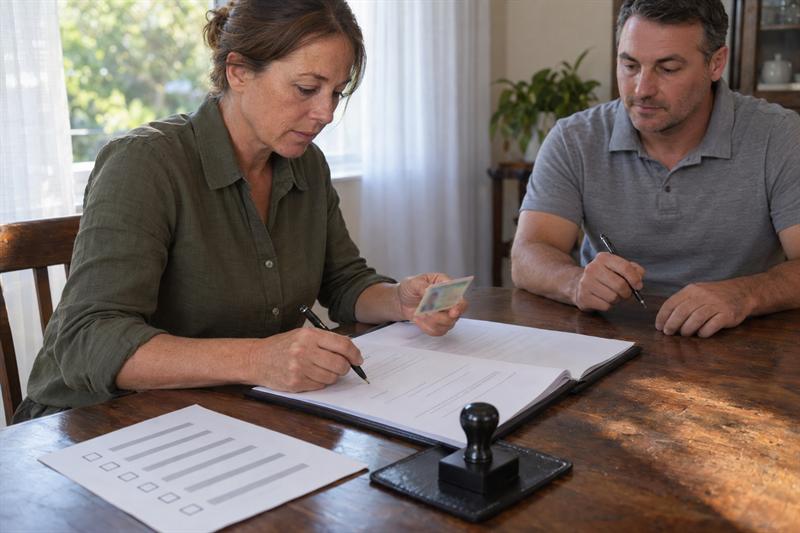
In practical terms, that generally means the signer should be ready to sign in front of the notary and respond to an oath or affirmation. Sunshine Mobile Notary, LLC regularly handles affidavits sent by attorneys, agencies, and institutions where the signer expects a routine stamp, but the certificate wording calls for a sworn act instead.
If you want a clearer breakdown of those notarial act differences, review Florida notarial acts explained: acknowledgment, jurat, oath, and affirmation.
What an acknowledgment usually means for the signer
An acknowledgment generally focuses on confirming identity and confirming that the signer executed the document voluntarily. That is different from a sworn statement, and it changes what happens during the appointment.
This is where many signers get off track. They see the word affidavit and assume it always requires the same type of notarization. It does not. The certificate wording matters more than the title at the top of the page.
What to do if the affidavit does not make this clear
If the affidavit does not clearly show the required notarial act, that issue should be resolved before the appointment moves forward. A notary cannot choose the act for the signer when the document and instructions do not make it clear.
This becomes harder when the signer waits until the appointment to sort it out. At that point, the document is ready, the signer is present, and the key issue is still unresolved. For a clearer explanation of that boundary, see what a notary can and cannot do during an appointment.
Does the affidavit need to be signed in front of the notary?
When signing ahead of time may create a problem
Yes, signing ahead of time can create a problem, especially when the affidavit is tied to jurat-style execution. If the act requires the signer to make a sworn statement before the notary, a pre-signed affidavit can slow the process because the act was meant to happen during the appointment.
This comes up in rushed appointments. The signer assumes signing early saves time, but it can create a mismatch between what the document requires and what has already happened. If the affidavit was supposed to be signed as part of the notarial act, that early signature becomes a procedural issue instead of a time-saver.
Why affidavit wording often points to a sworn signing
Affidavit wording often points to a sworn signing because the document is being used as a written statement supported by oath or affirmation. That is what separates many affidavits from documents that only require an acknowledgment.
If the wording refers to being sworn, affirmed, or subscribed before a notary, that usually means the affidavit should not be treated like a pre-signed form. In many cases, the appointment itself is part of how the document is properly completed.
Be ready for an oath or affirmation if the affidavit calls for one
What the signer should expect during the appointment
If the affidavit calls for a sworn act, the notary will ask the signer to swear or affirm that the statements are true. This is a normal part of affidavit notarization.
The key point is that this is not just an extra step added to the appointment. It is often central to the affidavit itself. Some signers arrive expecting only an ID check, then realize the wording requires a sworn statement. That changes how the appointment needs to be handled.
Stop here if any of these signs sound familiar.
- The affidavit is already signed, but the certificate wording mentions being sworn or affirmed.
- The document title says affidavit, but no one has confirmed whether it needs a jurat or acknowledgment.
- The recipient asked for notarization, but gave no instructions about witnesses or certificate wording.
- The signer has only the signature page or an incomplete document packet.
If one or more of these issues apply, the affidavit may not be ready for a clean appointment yet.
Check the affidavit before the appointment
Make sure all pages are included
Bring the full affidavit, not just the signature page. If the document refers to exhibits, attachments, or supporting pages, those should be included as well.
This is where many signers lose time. They focus on the page with the signature block and miss the pages that give the statement its context. If those pages are missing, the appointment may pause while the packet is corrected.
Review for blank spaces or incomplete sections
Major blanks and incomplete sections can create delay. The affidavit should be filled out as instructed before the appointment, except for signatures or dates that need to be completed in front of the notary.
One common issue is leaving open fields with the plan to finish them later. That can result in a document that still looks unfinished at the table. Once that happens, the appointment may need to pause until the document is completed appropriately.
Confirm the notarial certificate is present
The affidavit should include notarial wording or come with clear instructions showing what notarial act is required. If the certificate is missing and no one has specified the act, the appointment may stall because the document is not ready for execution.
This is one of the most common failure points with affidavit appointments. The signer may have the affidavit, the ID, and the location, but if the certificate issue was never resolved, the document is still not ready.
Bring acceptable identification
Why the name and photo matter
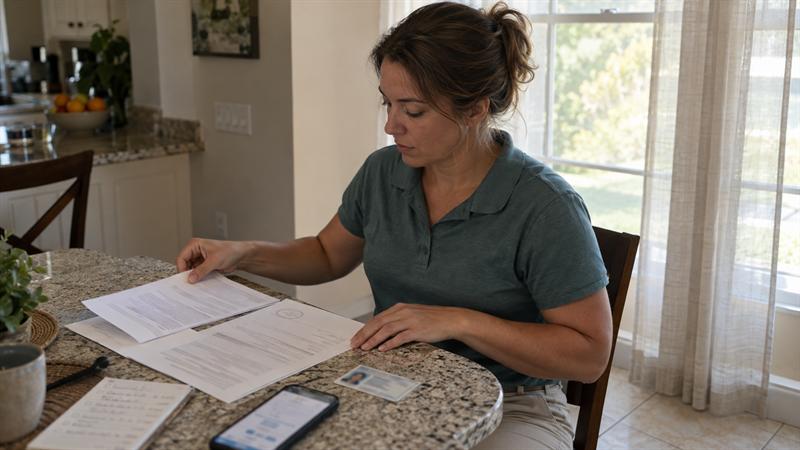
The notary needs acceptable identification that supports the signer’s identity. That means the ID has to do more than simply exist. It needs to allow the notary to identify the person appearing for the act.
This can become complicated when the signer assumes any photo ID will do, or when the name on the affidavit does not line up closely with the ID being presented. For a fuller breakdown, review acceptable forms of ID for notary in Florida.
What to do if the name on the ID and affidavit are not an exact match
If the name on the affidavit and the name on the ID do not align closely enough to support clear identification, the document may need to be reviewed before the notarization moves forward. The issue is not just clerical. It affects whether the signer can be properly identified for that document.
Name variation is not always harmless. If the affidavit is prepared under one version of the name and the signer appears with ID under another, that mismatch may need to be addressed before the appointment can proceed smoothly.
Find out whether witnesses are required
Why some affidavits need only notarization
Many affidavits need only the signer and the notary. That is why some affidavit appointments are straightforward once the act, ID, and document wording are in order.
But the word affidavit does not answer the witness question by itself. Sunshine Mobile Notary, LLC commonly handles forms connected to larger transactions or institutional requirements where the witness issue comes from the instructions tied to the document, not from the title alone.
Why others may involve separate witness instructions
Some affidavits involve separate witness instructions because the receiving organization, transaction, or related paperwork calls for witnesses in addition to notarization. That changes the logistics right away. The signer now has to coordinate not just the document and ID, but also the people who must be present.
This is where delays can grow quickly. If witnesses are required and no one planned for them, the affidavit is not actually ready even if everything else looks complete. For a deeper explanation, see Florida notary witness requirements: when witnesses are needed and how to coordinate them.
Know what a Florida notary can and cannot decide for you
What the notary may explain during the appointment
A notary may explain the difference between the notarial acts shown on the document and review whether the form appears complete enough to proceed. That helps the signer understand the mechanics of the appointment.
This kind of explanation is useful when the wording is already on the document and the question is procedural. It helps the signer understand what the certificate requires and what needs to happen at the table.
What the notary cannot do if you are unsure
A notary cannot choose the legal wording your affidavit needs, cannot select the notarial act when the document is unclear, and cannot advise which version of the document should be used. That boundary matters because affidavit problems are often document problems, not appointment problems.
Some signers expect the notary to solve missing instructions on the spot. That can lead to delay because the notary can perform the act that is properly indicated, but should not determine the legal form the signer needs.
Mobile notary or remote online notarization: which option may fit the affidavit?
When in-person mobile service may be more practical
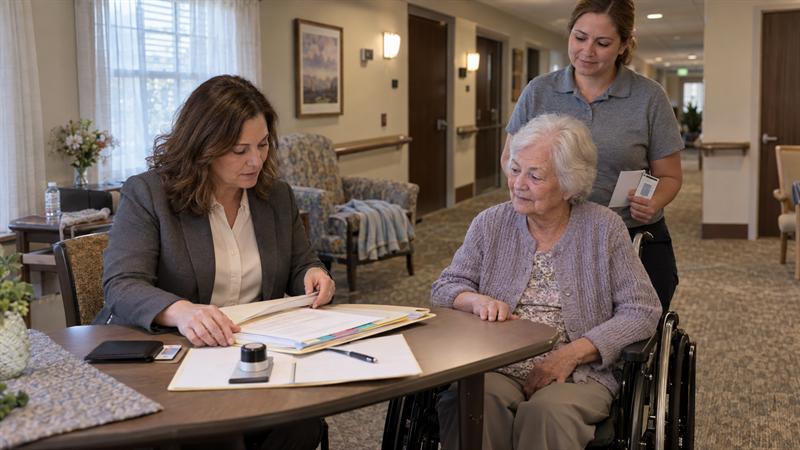
In-person mobile service is often the more practical option when the affidavit setup involves multiple signers, on-site witnesses, physical document handling, or a location where the signer needs the appointment brought to them. It can also be a better fit when access planning matters, such as homes, offices, healthcare settings, or gated communities.
This is where Sunshine Mobile Notary, LLC helps solve a real logistics issue rather than simply offering convenience. If the affidavit requires people, paper, and timing to come together in one place, mobile service is often easier to manage than trying to fit the document into a remote format that does not match the situation.
When remote online notarization may be worth considering
Remote online notarization may be worth considering when the affidavit and receiving party will accept it, the signer is ready with valid ID and technology, and the document does not depend on in-person logistics that make remote execution harder. In the right setup, remote notarization can reduce travel and simplify the timeline.
The key distinction is that remote is not automatically the best choice just because it is fast. It tends to work best when the document is already clean, the act is understood, and the signer is fully prepared for the online process. For more on that distinction, see remote online notarization in Florida: document eligibility, recipient acceptance, and common failure points.
Affidavit notarization checklist before your appointment
- Confirm whether the affidavit needs a jurat or an acknowledgment.
- Do not sign early unless the instructions clearly allow it.
- Be ready for an oath or affirmation if the wording calls for one.
- Bring the full document, including attachments or exhibits.
- Review the affidavit for major blanks or incomplete sections.
- Make sure the notarial certificate is present or clearly specified.
- Bring acceptable identification that supports the signer’s identity.
- Confirm whether witnesses are required.
- Have any recipient instructions ready at the appointment.
- Choose the appointment format that fits the affidavit’s actual logistics.
Key Takeaways
- Affidavit notarization in Florida often runs into problems because the document was not fully prepared, not because the signer forgot to find a notary.
- The biggest issues are jurat versus acknowledgment, pre-signing the affidavit, missing certificate wording, incomplete pages, ID mismatch, and unplanned witness requirements.
- If the affidavit is set up as a sworn statement, the appointment often involves more than a signature and seal.
- Mobile service is often the stronger option when the affidavit depends on people, paper, access, or witness coordination in one place.
- Remote online notarization works best when the affidavit is already clean, acceptable to the recipient, and ready for an online process.
Conclusion
The real problem with affidavit notarization is that signers often think they are booking a simple appointment when the document actually requires several details to be confirmed first. If those details are missed, the result can be delay, a failed appointment, or a notarized document that still does not meet the recipient’s requirements.
That is why early preparation is practical. Sunshine Mobile Notary, LLC helps signers move through affidavit appointments with the right format, the right preparation, and a clearer understanding of what the document requires before time is lost. If the affidavit needs mobile notary support in Southwest Florida or a remote online notarization option that fits the document, Sunshine Mobile Notary, LLC is a practical next step.
How Sunshine Mobile Notary, LLC approaches affidavit appointments
Sunshine Mobile Notary, LLC approaches affidavit appointments as a preparation-driven service, not a stamp-driven one. That means the focus stays on whether the document is ready to execute, whether the signer setup matches the required act, and whether the chosen appointment format fits the document.
This matters because affidavit issues usually develop before the appointment starts. Common problems include unclear notarial wording, incomplete packets, witness confusion, pre-signed sworn statements, or signer identification issues. Addressing those patterns early helps keep the notarization from turning into a second appointment.
FAQ
Can you notarize an affidavit in Florida if it is already signed?
Sometimes, but the answer depends on the notarial wording and how the affidavit is meant to be executed. Many affidavits function as sworn statements, so a pre-signed document can create a problem when the signing and oath were supposed to happen during the appointment.
The important distinction is that a completed signature does not always mean a completed notarial act. If the certificate wording points to a jurat, the signer’s appearance and sworn statement are usually part of what the notary is there to witness.
Does an affidavit in Florida need a jurat or an acknowledgment?
An affidavit often uses jurat-style wording because affidavits are commonly sworn statements, but the required act depends on the certificate wording and any instructions that came with the document. The title alone does not answer the question.
What matters most is what the certificate requires the signer to do. A jurat points to a sworn act before the notary. An acknowledgment points to confirming identity and voluntary execution. That difference changes the appointment flow.
Do you have to take an oath to notarize an affidavit in Florida?
If the affidavit is set up as a sworn statement, an oath or affirmation is usually part of the notarization. That is one of the clearest ways affidavit execution differs from a basic notarized signature document.
The practical implication is simple: the appointment is not just about identity verification. The signer is also formally affirming the truth of the statement, which is often central to why the affidavit exists in the first place.
What do you need to bring to notarize an affidavit in Florida?
You need the complete affidavit, acceptable ID, all pages and attachments referenced in the document, and any instructions tied to the notarization. If witnesses are required, their presence has to be built into the appointment as well.
A useful way to think about this is that having the affidavit is not the same as having a notarization-ready affidavit. Missing exhibits, incomplete fields, absent certificate wording, or unconfirmed witness requirements often stop the process even when the signer shows up on time.
Do affidavits need witnesses in Florida?
Some do, and many do not. The requirement usually depends on the document instructions or the broader transaction rather than the word affidavit by itself.
This is where people often get misled. A basic affidavit might need only the signer and the notary, while another affidavit tied to a larger legal or institutional process includes separate witness requirements that affect scheduling and execution.
Can a Florida notary tell you which notarial act your affidavit needs?
No, not when the document and instructions do not already make that clear. A notary may explain the difference between the acts shown on a document, but should not choose the legal act the signer needs.
That distinction matters because unclear affidavit wording is not a simple appointment issue. It usually means the document was never fully set up for execution, and that is why the problem keeps resurfacing at the notarization stage.