People often ask what is a notary public in Florida and get an answer built for a different question: a description of a stamp, or a list of documents that need one, rather than the role itself. The role is narrower than that, and more useful once it is clear. A notary public is a person the state commissions to witness a signing, confirm who is signing, and record what was done.
I’m Valerie Nation, a Florida notary public based in Fort Myers, and this is the explanation I would give before an appointment: what the role covers, where it stops, and what to have ready. It is written for anyone signing a deed, a healthcare directive, an affidavit, or a closing package, and for the family member or coordinator helping them get it done.
Key Takeaways
- A notary public is commissioned by the state as an individual, not by a bank, an agency, or the business where the signing happens.
- The notary is confirming identity and willingness, not the accuracy or the wisdom of the document.
- The notarial certificate is the part that travels with the paper, so keep it attached to the same pages.
- A Florida commission can be checked in official state records before the appointment.
- Whether an acknowledgment, a jurat, or a particular format is needed is decided by the office receiving the document.
What a Florida Notary Public Actually Is
The commission is the starting point. A notary public holds a personal appointment from the state, which means the authority belongs to the individual and does not transfer to an employer, a storefront, or a title company. That is why the name on the seal is a person’s name and not a business name. The term is set, the appointment has to be maintained, and the record of it is public.
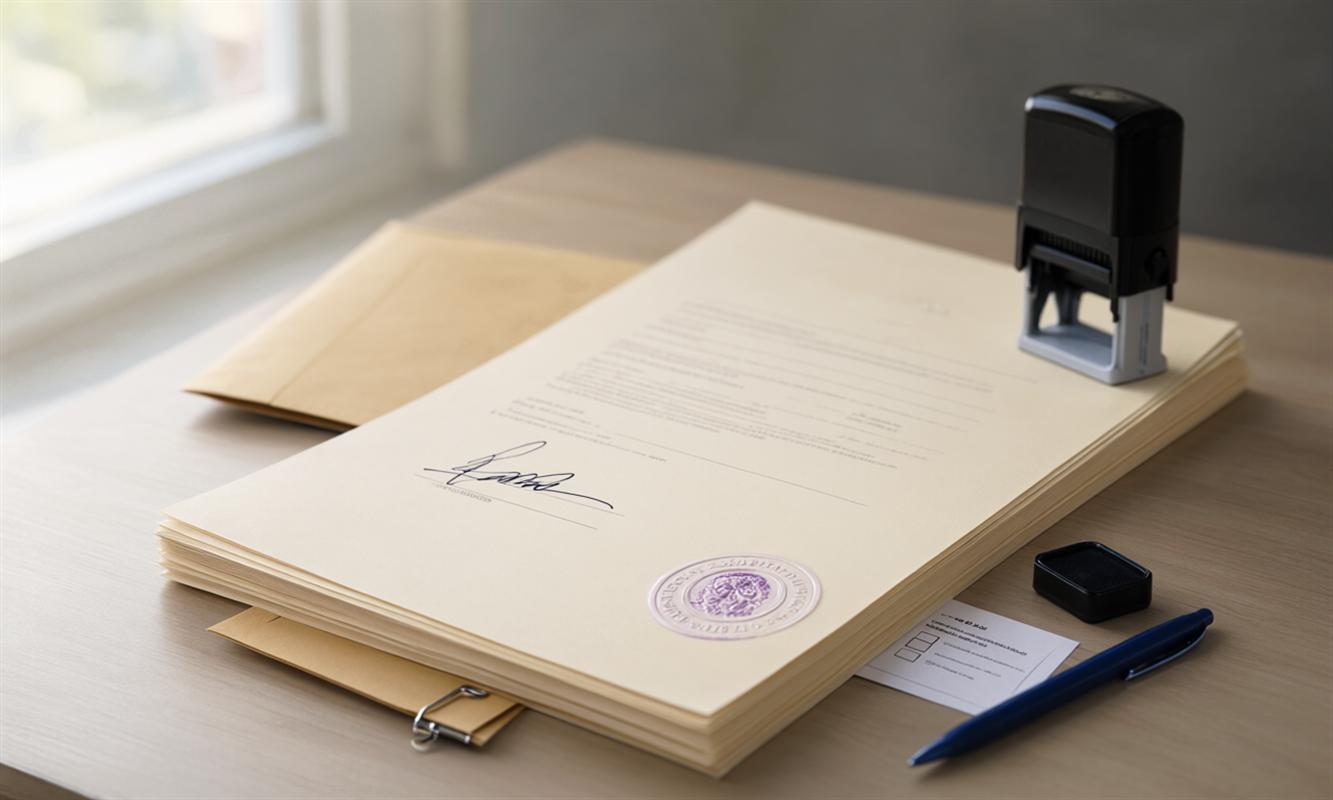
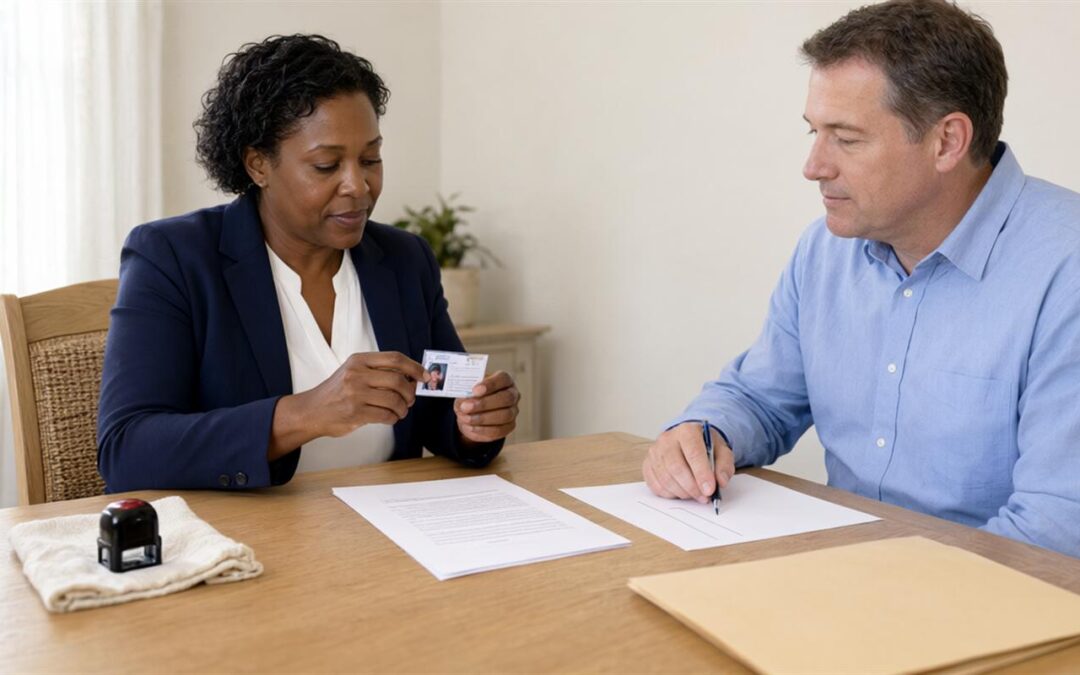
What the role asks of that person is specific: be present for the signing, confirm that the signer is who the paperwork says, and confirm that the signer is acting willingly rather than under pressure. It also asks for neutrality. A notary with a stake in the outcome of a document is not in a position to witness it impartially, which is one reason the work is arranged around the signer rather than around the document. In practice the role looks quiet. Someone checks a driver license against a printed name, watches a pen move across a page, writes a date, and applies a seal.
What Happens During a Notarization
The first step is identification. A Florida notary identifies a signer either from personal knowledge or from satisfactory evidence, using the forms of identification the state lists. When identification is not available, state law provides a two-witness alternative, which is worth arranging before the appointment instead of improvising at the table.
Then comes the signature, and the type of act decides how it works. For an acknowledgment, the signer confirms that they signed voluntarily, and the signature may already be on the page when they appear. For a jurat, the signer signs in the notary’s presence and swears or affirms that the statement is true; an oath carries a religious reference and an affirmation does not. The certificate the notary completes records the county, the type of act, whether the signer appeared in person or by audio-video online notarization, the date, the signer’s name, the identification relied on, and the notary’s signature, printed name, and seal. That certificate is the record of what was done, when, and by whom.
Notarization Is Not Legal Advice
The cleanest way to describe the boundary is this: the notary confirms the signing, not the document. Questions about what a clause means, whether a form is the right one, or whether signing is a sensible idea belong with whoever drafted the paper or with the office that will receive it. A notary who starts answering those questions has stepped out of the role.
The boundary protects the signer as much as the notary. Someone who is not permitted to interpret a document has no business steering a decision about it, so the choice stays where it belongs. The day-to-day version of this, including the situations that come up most often at the table, is set out in a guide to what a notary can and cannot do during an appointment, which is worth reading before the appointment rather than during it.
How to Confirm a Florida Notary Is in Good Standing
Because the commission is a state record with a term and an expiration date, it can be looked up. The check takes a few minutes: search the official Florida records for the notary’s name, then confirm that the record matches the person you plan to meet, including a middle initial or suffix if there is one. A name on a directory listing is not the same thing as a name in the state’s records.
It also helps to be clear about what an active commission tells you. It confirms that the person is currently authorized to perform notarial acts in Florida. It says nothing about the document itself, and it does not promise that the office receiving the paper will accept it. The steps, and what to have ready before the search, are laid out in how to verify a Florida notary’s commission.
Which Documents Usually Call for a Notary
The requirement comes from the office receiving the document, not from the notary. That said, the categories that call for a notarial act are fairly consistent: sworn statements and affidavits, powers of attorney, deeds and property records, loan and closing packages, estate and healthcare directives, consent letters for a minor who is traveling, and paperwork headed for use in another country.
The useful habit is to ask the receiving office what it wants before anything is booked: which version of the document, whether an acknowledgment or a jurat, whether witnesses are needed, and whether an online notarization is acceptable. Those answers decide the appointment. The categories are broken down in what documents need notarization in Florida, which separates the ones that usually need an act from the ones that usually do not.
The Same Role, Delivered in Person or Online
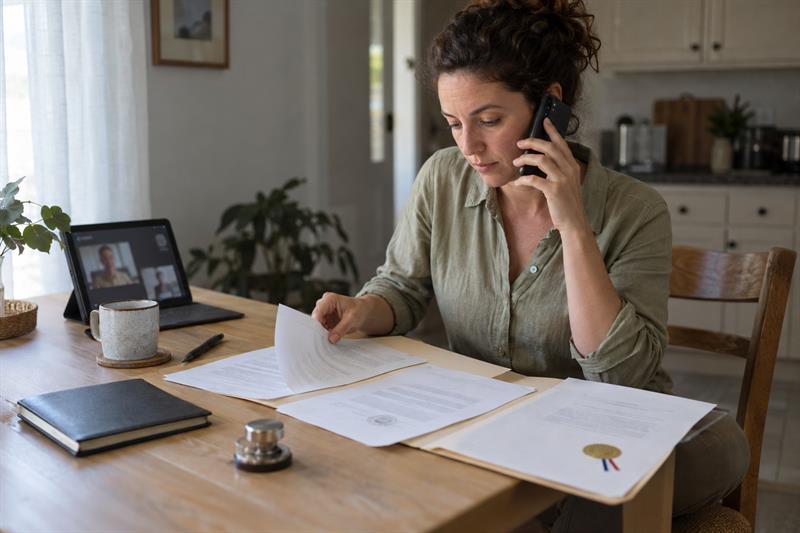
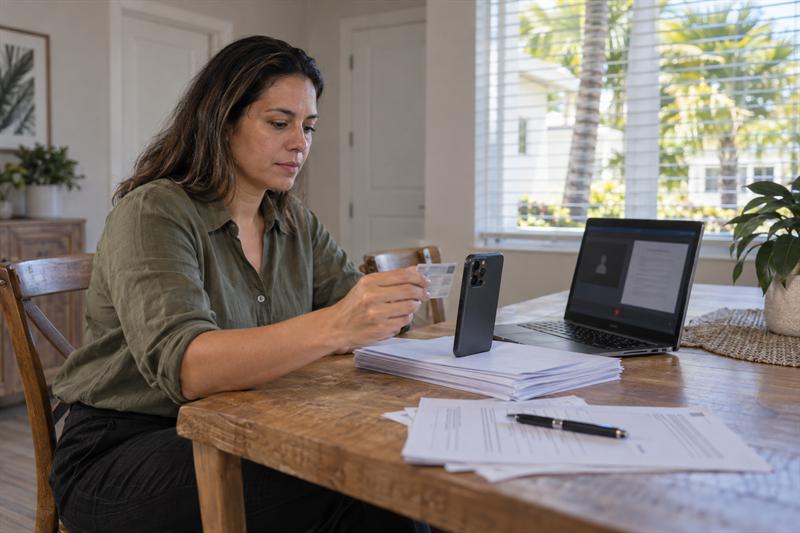
Remote online notarization performs the same notarial act through a live video session rather than across a table. Identity is verified on camera, the signer appears and signs during the session, and the certificate records that the appearance was by audio-video online notarization. The format changes; the checks do not.
Two practical points follow. First, the receiving office decides whether it will accept an online notarization, so that answer is worth having in hand before a session is booked. Second, documents handled during the work are kept in a secure, access-controlled setting, and file handling is reviewed on a regular schedule. The remote option, and how a session is arranged, is described on the online notary page for Fort Myers.
What to Have Ready Before the Appointment
Most problems at a notary appointment are preparation problems, and they are usually visible well before the notary arrives. Settling the following in advance turns a rushed visit into a short one.
- Acceptable photo identification that has not expired, with the name that appears on the document.
- The complete document, with every signature line still blank and no pages missing from the packet.
- Any witness the document requires, present and ready to sign in the notary’s presence.
- Clear arrival details for a home, office, facility, or title office visit, or a stable connection and a working camera for a remote session.
- The name of whoever drafted the document, so a question the notary cannot answer has somewhere to go.
One item deserves its own line for paperwork that will leave Florida: confirmation from the receiving office about the version it will accept, since an original, a certified copy, and a notarized copy are not interchangeable.
Mobile Appointments Across Southwest Florida
A mobile appointment makes the most sense when the obstacle is travel rather than the signing itself. Three situations come up often: a signer who cannot easily leave a bed in a care setting; a closing that has to happen at a title office with a full package; and a household with several signers and several documents that would otherwise need three separate trips.
Sunshine Mobile Notary, LLC meets signers at a home, an office, a hospital, an assisted living facility, or a title office, and covers Fort Myers, Cape Coral, North Fort Myers, Lehigh Acres, Bonita Springs, Estero, Naples, Marco Island, Port Charlotte, and Punta Gorda. Valerie Nation has worked with small and large companies across agriculture, real estate, and private and government agencies for over 27 years. She held a Texas commission for four years, received a Florida commission in 2021, and launched the notary business in July 2023. The in-person side of the work is described on the notary public page for Fort Myers, and the areas served are listed there as well. Availability depends on the address, the time, and the document involved, so it is worth confirming early rather than assuming.
Frequently Asked Questions
Does a notarization expire?
The notarization carries the date it was performed, and that date does not change. Whether an older notarization is still accepted is a separate question, and the office receiving the document is the one that answers it. Some offices want recent paperwork; others are indifferent to the date as long as the act itself was done properly.
What does a Florida notary cost?
Florida caps the fee for a single notarial act at $10. A mobile visit or a signing assignment can involve separate charges for travel, time, or multiple documents, which is why the total is worth settling in writing before the appointment rather than after it.
Can a notary tell me whether my document is valid?
That question goes to the person who drafted the document or to the office that will receive it. Confirming identity, witnessing the signature, and completing the certificate is a narrower job than reviewing the terms of a document. Answers about validity, enforceability, or whether to sign come from somewhere else.
Conclusion: Why the Role Is Worth Understanding
The plain answer to what is a notary public in Florida is a person who holds a state commission to watch a signature being made, confirm who is making it, and put the act on the record, and nothing more expansive than that. Most of the confusion around the role comes from expecting it to do more than it does. Once the boundary is clear, the preparation gets simpler and the appointment gets shorter.
If a signing is coming up, the practice can be reached at 239-691-0885 or [email protected], and the office is at 13300 S. Cleveland Avenue, Fort Myers, FL 33907. Mobile visits and remote sessions are both available, and a question about which one fits your document is a reasonable thing to ask first.