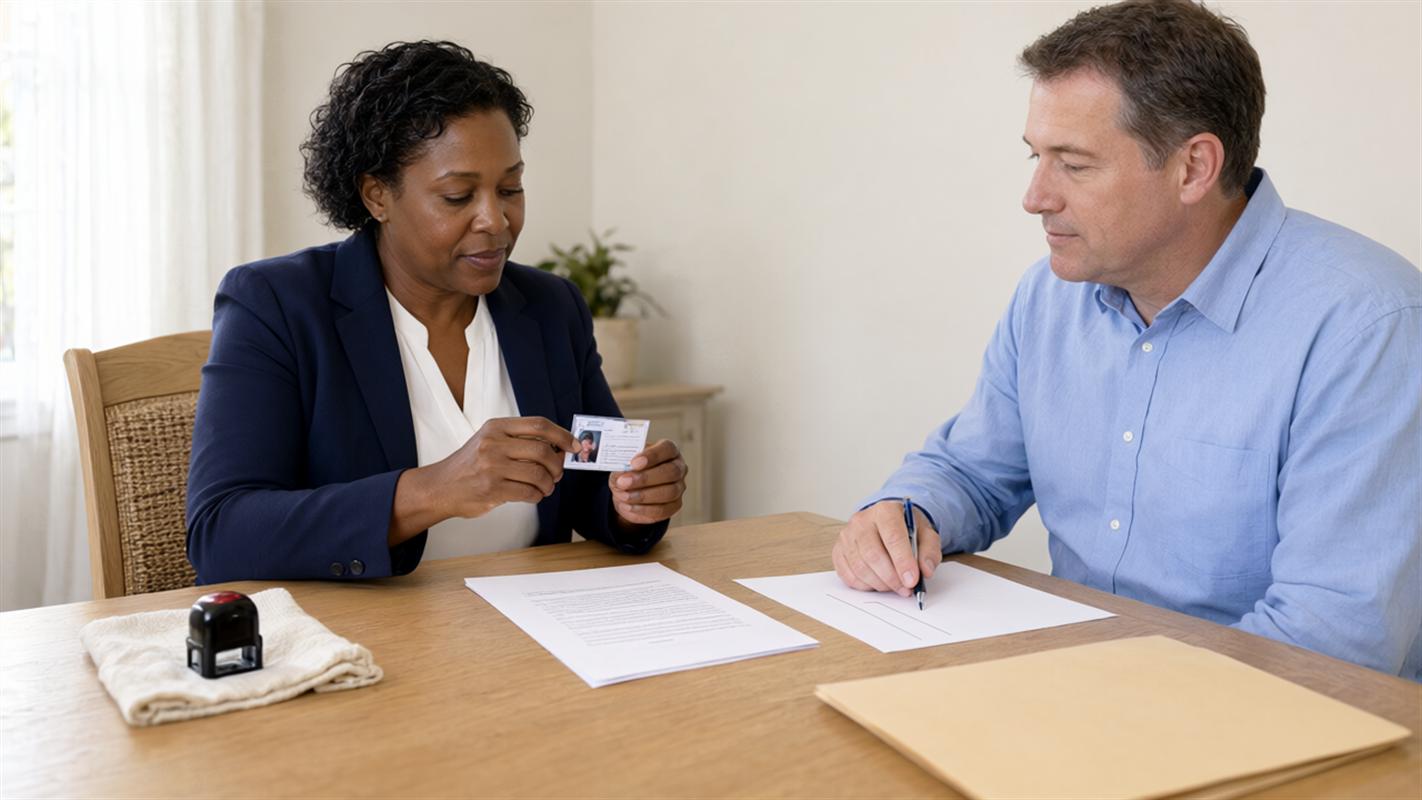

Quick Answer: A notarized document rarely settles everything at once. Once the seal is on the page, a second round of questions usually follows — about what the document says, how it should have been signed, whether the certificate matches what the office asked for, and where the paper has to go next. Those questions do not all belong to the same person, and deciding who to ask about a notarized document starts with naming the question rather than calling whoever happens to be nearest.
Key Takeaways:
- Sort the question first — content, procedure, verification, or delivery — before choosing who to call.
- Read the instructions from the party that requires the document as the working reference for how it must be signed.
- Keep whoever prepared the document reachable, because wording and version questions go back to them.
- Confirm the destination and its requirements before an appointment is booked; that one step is what keeps a signing from turning into a second appointment.
Start With the Question You Are Actually Asking
A signing appointment has a way of making the notary look like the front desk for everything attached to the document. The seal goes on, the signer looks up, and the questions begin. Some of them are about the appointment that just ended. Many more are about the document itself, the office waiting for it, or a step that has not happened yet.
Separating those questions is most of the work. A question usually arrives as a story about the whole transaction — the loan, the closing date, the relative who was supposed to be there — while the office on the other end needs only the single question inside it. Naming that question is what makes the route obvious. Wording, the effect a document is meant to have, which version or form applies, and whether to sign at all belong with the person or office that prepared or requires the document.
Four Kinds of Questions, Four Different Owners
Four families cover most of what comes up after a notarization. Each one has a different owner, and only one of them involves the notary at all.
- What the document says, or whether this is the right form or version — the party that prepared or requires it.
- How it has to be signed and notarized, including certificate wording and any witnesses — the written instructions from the recipient.
- Whether the signing happened the way those instructions asked — the recipient’s own review, with the notarial certificate as the record of the appointment.
- Where the document is now and whether it arrived — the receiving office, the carrier’s tracking, or the clerk’s index when the document is recorded.
The notary’s part sits inside the third family only. The notary records what happened at the appointment and does not decide whether the page is acceptable to anyone else; that call belongs to the office receiving it and to whatever internal rules that office applies. When a question does not seem to fit any of the four, it is usually a wording question in disguise, and it goes back to the author.
What the Notary’s Seat Can Settle
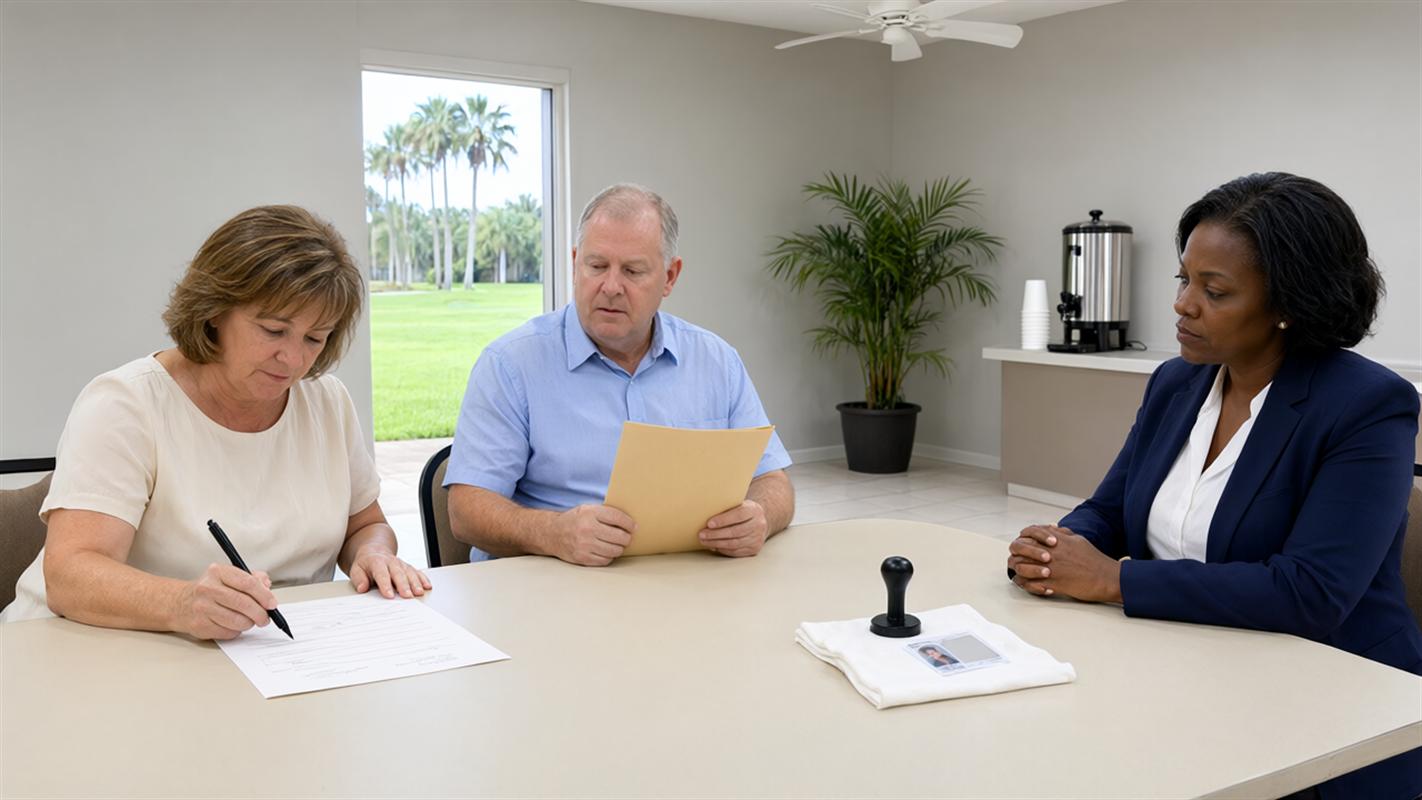
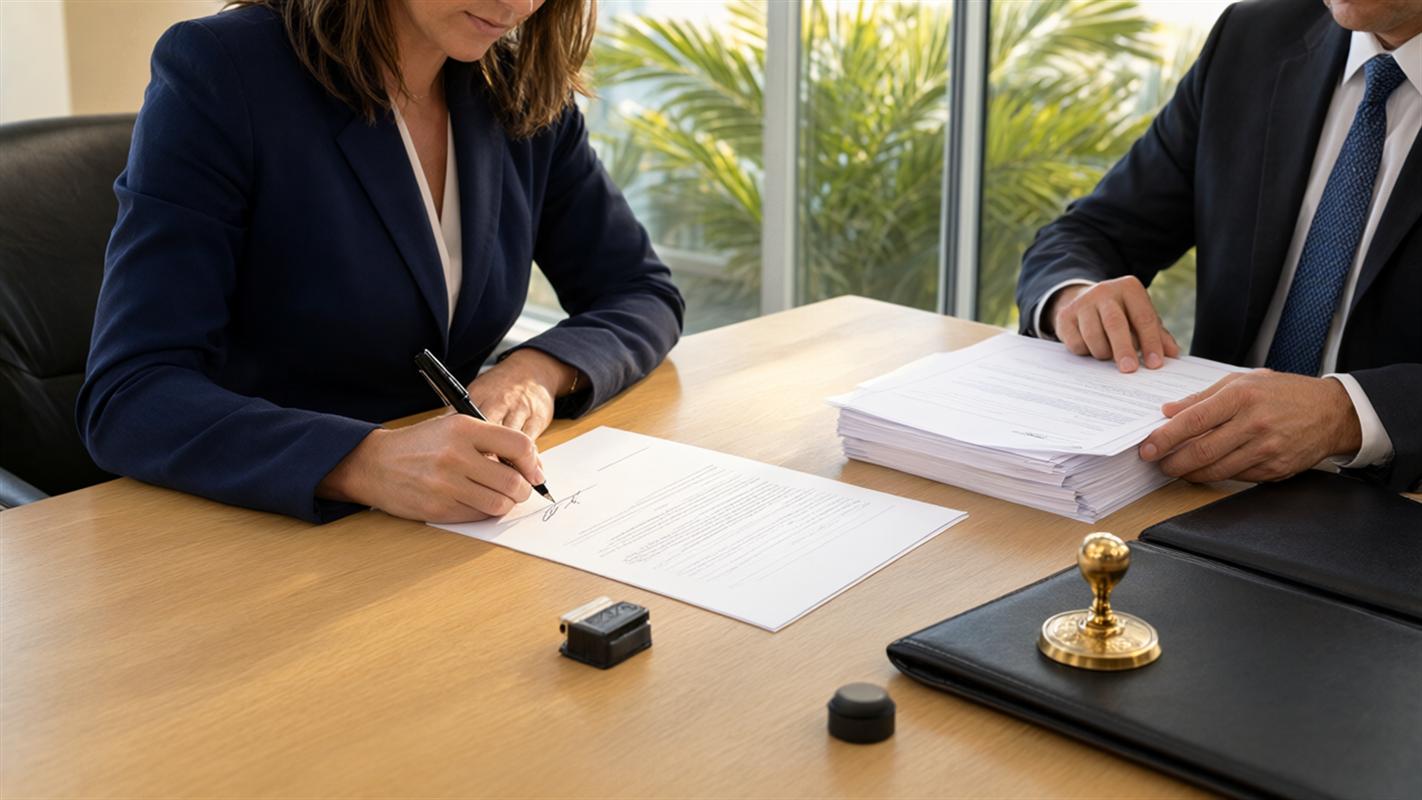
Some questions genuinely do belong at the signing table, and they are all about the appointment itself. At the appointment the notary verifies the signer’s identity, confirms that the signer is acting willingly and knows what is being signed, administers an oath or affirmation when the certificate calls for one, and completes the certificate. The practical questions around it are narrower still: which identification will be looked at, whether the session is in person or by remote online notarization, who is in the room and whether a required witness is present, and what the certificate will say.
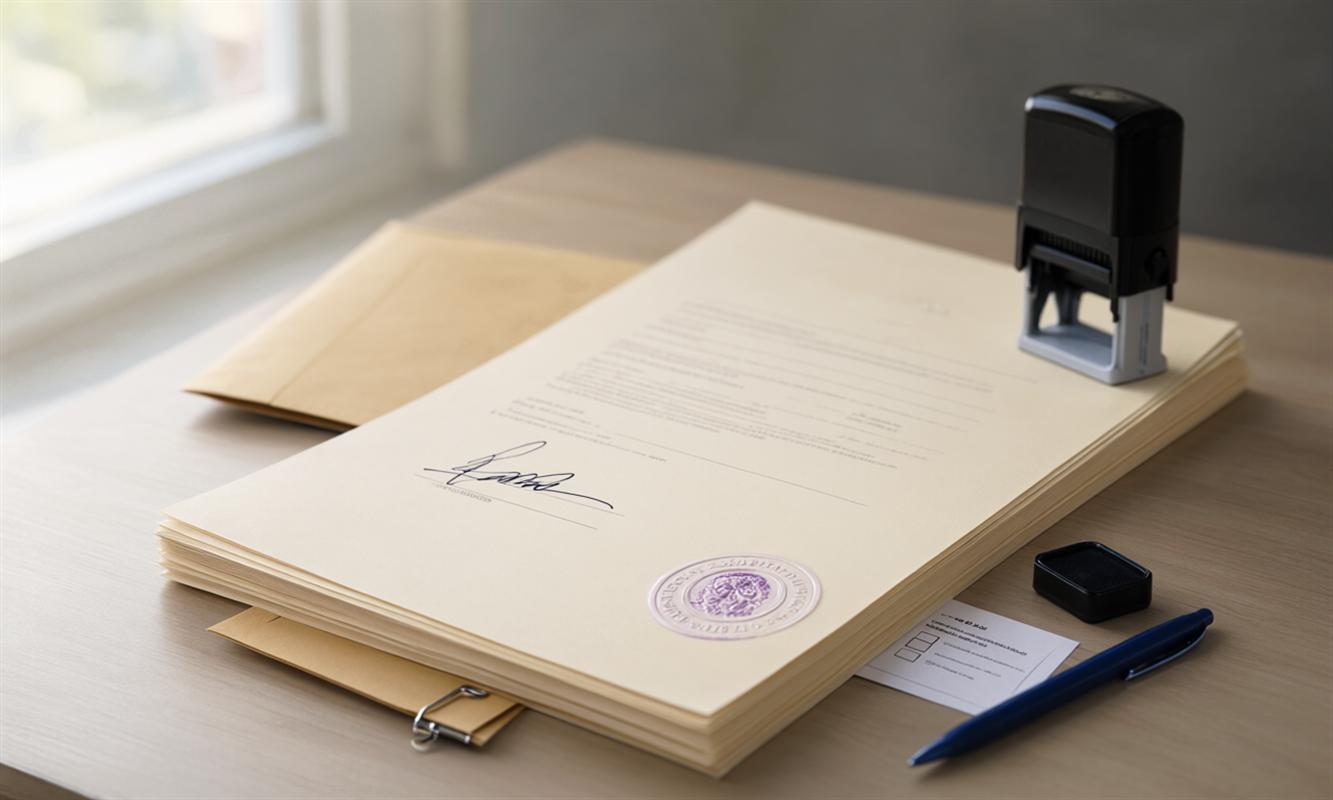
Florida law sets out the fields that certificate records: the venue, the type of notarial act, whether the signer appeared in person or by audio-video online notarization, the date, the signer’s name, the identification relied on, the notary’s signature and printed name, and the seal. That record is what a receiving office reads when it checks how the signing was documented, which is why the certificate fields are worth confirming before an appointment rather than after one. Questions about the edges of the role itself are a separate matter, and the limits of the notary’s role at the signing table covers them directly.
The Signer’s Route: Start With the Document’s Author
When you are the person signing, the first call goes to whoever prepared or requires the document. That may be an employer’s HR office, a lender, a title company, an attorney, or an agency that publishes the form. Ask what the form is for, whether it is the current version, and whether anything on it is meant to be completed before the signing rather than at the table.
The second call goes to the office that will receive the document, and that conversation is about requirements rather than wording: which version it will accept, whether it wants an original or a copy, whether it accepts remote online notarization, whether witnesses are required, and how it wants attachments handled. Having those answers in writing before booking is the difference between one appointment and three. Confirming a recipient’s requirements before the appointment is booked walks through the questions worth putting in that message.
The Employer’s Route: Start Inside the Company
For an employer, routing starts internally. Employment eligibility verification is a company process with a company owner — usually HR or whoever is accountable for hiring compliance — and that person, rather than the notary or the new hire, decides how the review is arranged. Form I-9 is not a notarized document at all, which is where a good deal of the confusion begins.
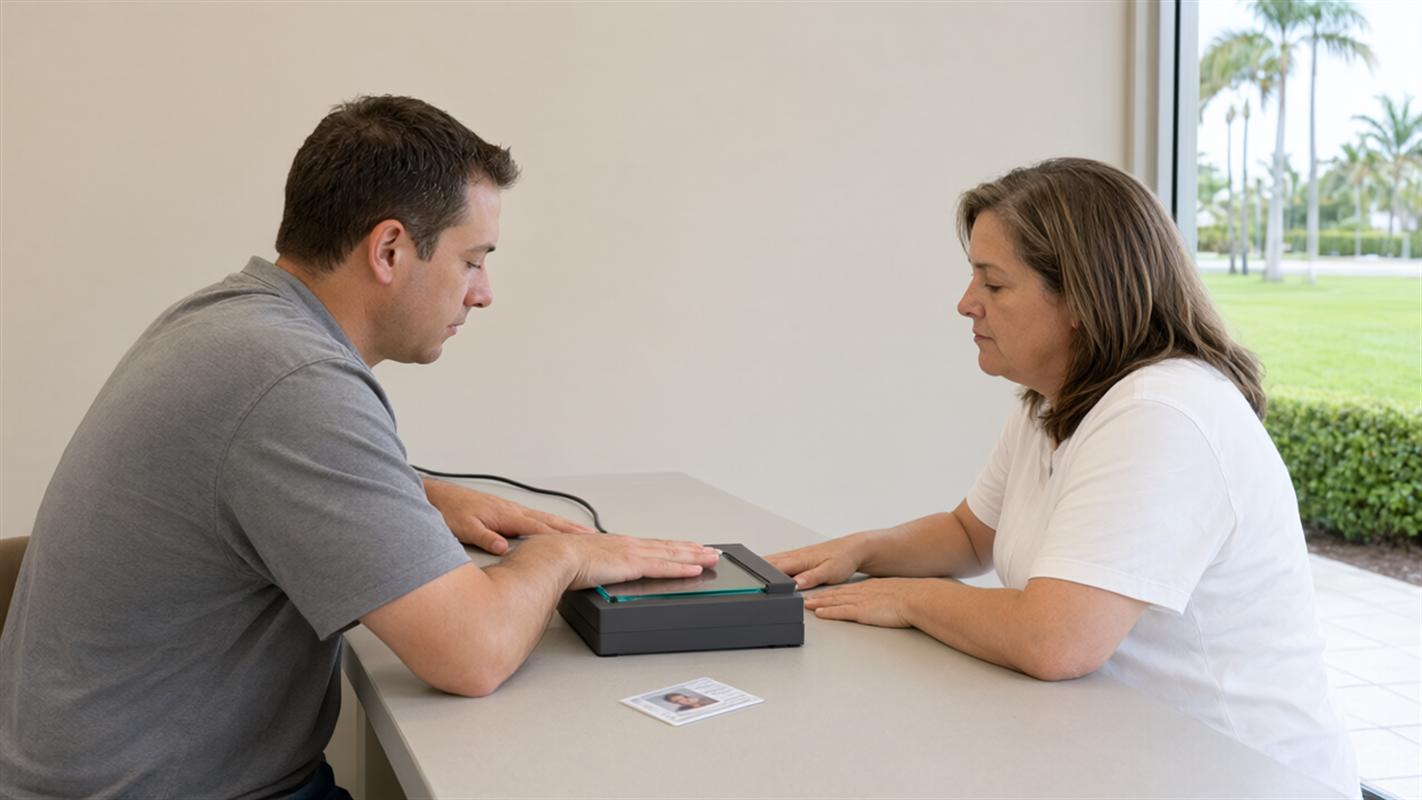
The employer may designate an authorized representative to review the employee’s identity and work-authorization documents in person, and that representative confirms what was seen; the eligibility decision stays with the employer. The questions then split cleanly. The employee asks the employer which documents are acceptable and when the review has to take place. The representative asks the employer what the arrangement covers. Neither routes an eligibility question to a notary. What employers and employees should expect from employment eligibility verification sets out how the appointment and the form fit together.
The Closing Team’s Route: Start With the Instructions
A Florida closing spreads its questions across several desks. The lender owns the loan terms and the closing instructions. The title company, escrow professional or settlement agent owns vesting, the settlement statement and the recording plan. An attorney owns anything that calls for advice. The loan signing agent gets the package signed and notarized according to the instructions provided, then returns it as directed.
In practice, that means a question about a fee, an escrow figure, a name on the vesting line, or a document missing from the package goes back to the desk that produced the instruction rather than to the signing table. A question about where a signature line falls, which certificate applies to a document inside the package, or how the return is handled belongs with the transaction coordinator or the signing service that issued the assignment. Mobile loan signing agent support for a Florida closing describes how the package, the signer and the return path are lined up before the appointment.
Questions That Travel the Wrong Direction
Two misroutes cause most of the friction. The first is a signer asking the person at the signing table to explain the page. The request sounds reasonable in the moment, and the answer still sits with the party that prepared the document, because the notary is not reading the document for meaning and is not advising anyone on whether to sign it.
The second is a receiving office that reads the notary as the author of the document rather than its witness — asking for a clause to be corrected, a name to be restated, or a certificate reworded after the fact. The notary can record what happened; the document itself goes back to whoever issued it. Knowing who to ask about a notarized document is largely a matter of noticing which direction a question is traveling in, and sending it back the other way.
Common Routing Questions
What to Do When the Recipient’s Instructions and the Form in Hand Disagree
Read the recipient’s written instruction as the version that governs acceptance, then take the conflict back to whoever issued the form. If the two cannot be reconciled, the form has to be reissued or the instruction confirmed in writing before an appointment is booked. A notary cannot settle that disagreement, and scheduling around it rarely helps. Working out who to ask about a notarized document in this situation means asking both — the issuer for a new form, the recipient for written confirmation.
Can One Person Fill Two Roles at a Signing, Like Notary and Witness?
That is settled by the instructions attached to the document rather than at the table. When a witness is required, the recipient’s instructions usually state how many are needed and whether the same person may also act as the notary. An appointment booked on an assumption about that is the one that gets repeated, so confirm the arrangement in writing and plan a second person into the timing when the answer is unclear.
Who Confirms That a Recorded or Delivered Document Actually Arrived?
It depends on the route. A recorded document can usually be checked in the county clerk’s searchable index, where many clerks publish their own reference number for the instrument. A delivered package is confirmed first by the carrier’s tracking and then by the receiving office’s intake. Neither answer comes from the notary, whose record of the transaction ends with the certificate.
Conclusion: Knowing Who to Ask Keeps the Appointment on Track
Routing a document question well is less about knowing the whole process than about knowing which part of it you are standing in. Sunshine Mobile Notary, LLC, owned by Valerie Nation, provides mobile notary work and remote online notarization across Southwest Florida, from Fort Myers and Cape Coral to Estero, Bonita Springs, Naples, North Fort Myers, Lehigh Acres, Marco Island, Port Charlotte and Punta Gorda. Appointments can be arranged at a home, an office, a hospital, an assisted living facility or a title office, and remote sessions run on two platforms, Notarize by PROOF and NotaryHUB.
Valerie Nation held a Texas notary commission for four years before opening the practice in July 2023, after 27 years of work with small and large companies across agriculture, real estate, and private and government settings. That background shapes how a signing is run — the preparation, the identification check, the certificate — rather than what a signing can decide on a signer’s behalf.
When the question is about the appointment itself, mobile notary service in Fort Myers covers how a visit is arranged and what to have ready. Recording and delivery steps stay with the county clerk and the receiving office, and the certificate stays with the notary’s record. Reach the office at 239-691-0885 or [email protected], or at 13300 S. Cleveland Avenue, Fort Myers, FL 33907. Appointment hours are 8 AM to 8 PM Monday through Saturday and 1 PM to 5 PM on Sunday.