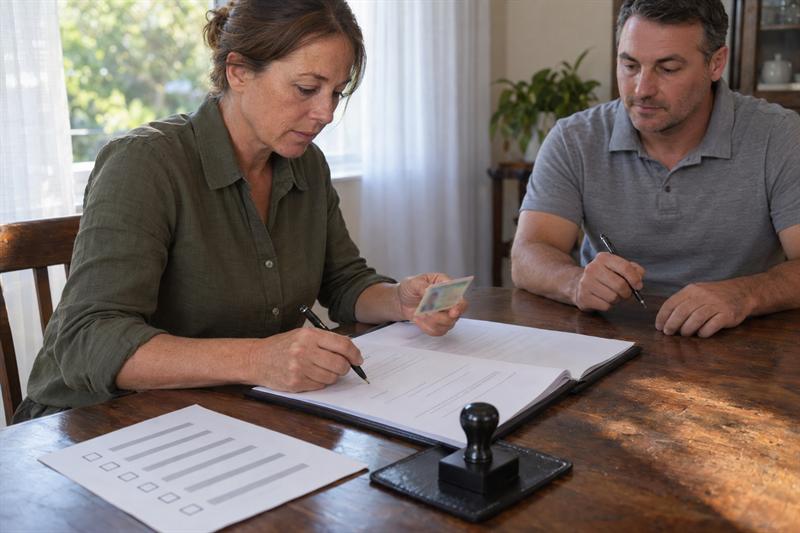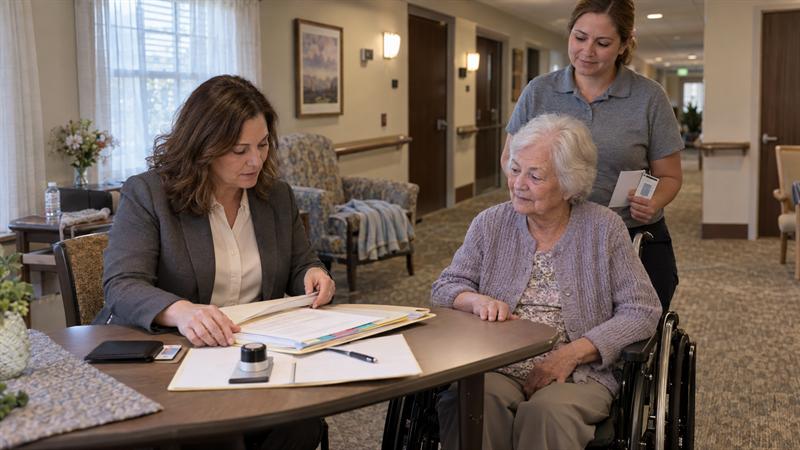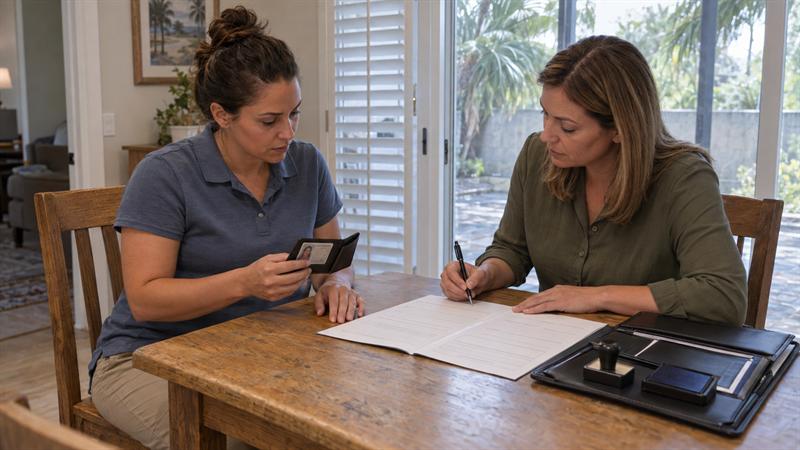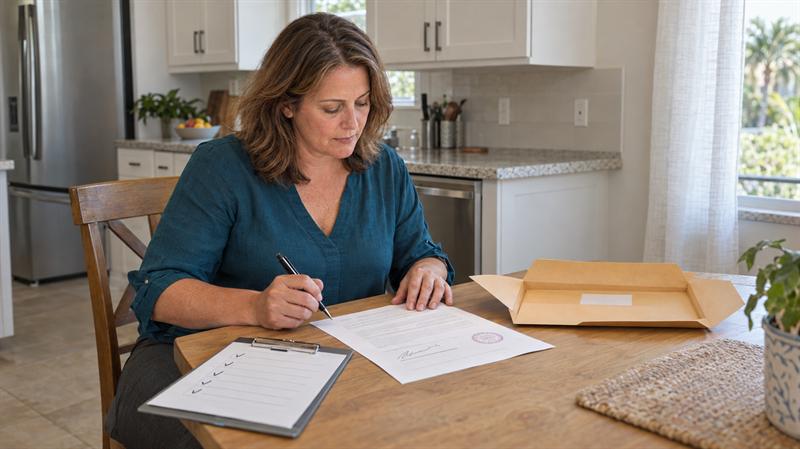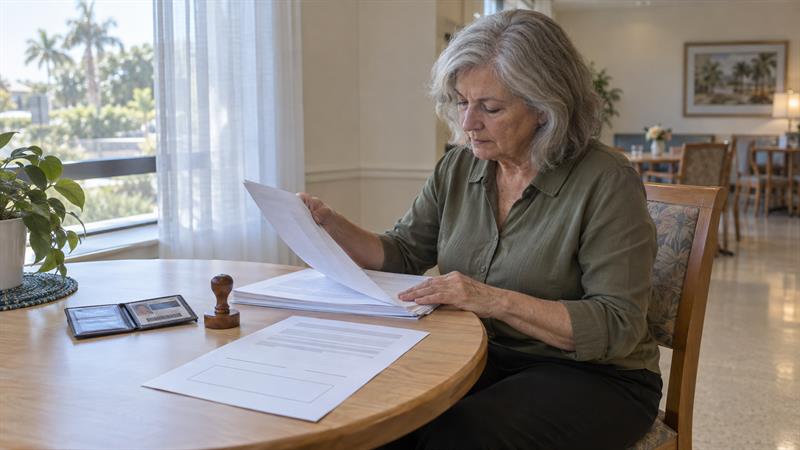
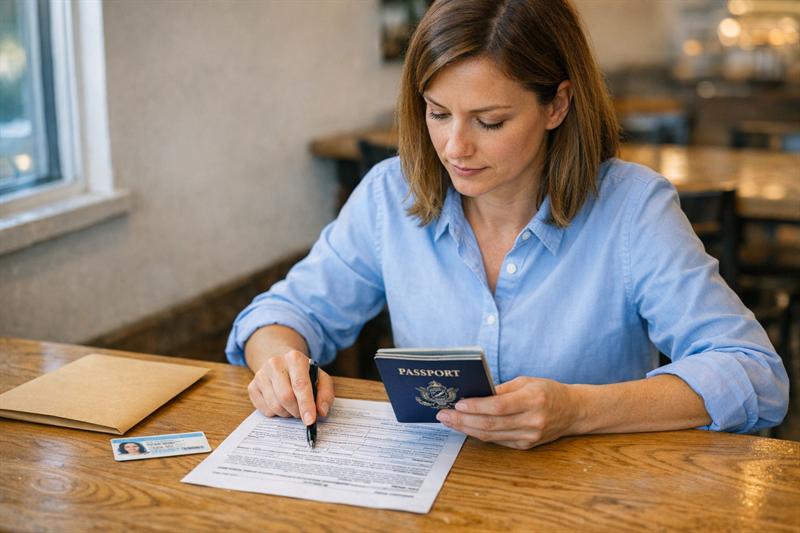
Remote onboarding can create a practical issue: a new employee completes much of the hiring process online, but the employer may still need an in-person review of identity and employment-authorization documents. Employees may search for a “notary for I-9” because they need someone local to meet with them, but an I-9 verification appointment is different from a standard notarization.
Clear roles matter. An employer may designate an authorized representative to meet with the employee, review original documents, and complete the employer-assigned portion of the form. This guide explains what the employee, employer, and representative should expect so the appointment is less likely to be delayed by missing documents, unclear instructions, or confusion about notarization.
What Is an I-9 Verification Service?
An I-9 verification service helps an employer arrange an in-person review of an employee’s identity and employment-authorization documents. It can be useful when a new hire works remotely, lives far from the employer’s office, or cannot reasonably travel to a company location for this part of onboarding.
The employer may designate an authorized representative to perform the in-person review. The representative follows the employer’s instructions, meets with the employee, reviews the documents the employee presents, and completes the assigned portion of Form I-9. The employer remains responsible for its overall Form I-9 process, including reviewing, retaining, and managing the form.
The appointment itself is usually straightforward. Delays can happen before the meeting when the employer has not provided authorization, form access, return instructions, or a clear explanation of what the employee needs to bring.
What Happens During an I-9 Verification Appointment?
- The employee brings acceptable original documents and follows the employer’s onboarding instructions.
- The authorized representative meets with the employee in person and reviews the documents presented.
- The representative completes and signs the employer-assigned section as authorized.
- The employer receives the completed information and handles its own review, retention, and Form I-9 process.
The appointment addresses the in-person document-review step. It does not replace the employer’s HR process, determine whether someone is eligible to work, or transfer the employer’s Form I-9 responsibilities.
Does Form I-9 Need To Be Notarized?
No. Form I-9 does not require notarization. Confusion can arise because a commissioned notary may be asked to serve as an employer’s authorized representative, but that role is not automatically a notarial act.
The distinction is important. A notarial appointment and an I-9 document-review appointment serve different purposes. A notarial seal or certificate should not be added to Form I-9 unless a separate document requires a notarial act.
Notarization vs. I-9 Document Review
- Notarization: A notary performs a notarial act for a document that requires one, such as acknowledging a signature or administering an oath.
- I-9 document review: An employer-authorized representative reviews the employee’s acceptable documents and completes delegated Form I-9 duties.
- Separate needs: An employment-related document may require notarization, but that does not mean Form I-9 requires notarization.
For readers comparing appointment types, this guide to documents that need notarization in Florida explains the difference between documents requiring a notarial act and documents involving other verification steps.
What an Authorized Representative Cannot Do
- Provide legal, immigration, tax, or employment advice as part of the I-9 appointment.
- Choose which specific I-9 document an employee should present.
- Make employment-eligibility or hiring decisions for the employer.
- Set an employer’s Form I-9 policy or make compliance decisions for the employer.
- Take over the employer’s responsibility to complete and retain Form I-9 correctly.
If an employee is unsure which documents are acceptable or has a question about employment eligibility, the authorized representative is not the person to make that decision. The employer’s HR team, qualified counsel, or current official Form I-9 guidance is the appropriate source for direction.
Who Is Responsible for Each Part of the I-9 Process?
Form I-9 appointments are more likely to go smoothly when each person handles the part assigned to them. When roles are unclear, the employee may arrive with incomplete materials, the representative may lack instructions, and the employer may receive an incomplete form. That can lead to rescheduling and onboarding delays.
The Employee’s Responsibilities
- Complete the employee portion of Form I-9 as directed by the employer.
- Bring acceptable original documentation to the appointment.
- Choose which valid document or document combination to present from the official List of Acceptable Documents.
- Direct questions about onboarding instructions, deadlines, or document concerns to the employer.
If an employee receives conflicting instructions from a recruiter, onboarding portal, and appointment message, the employer should clarify the process before the meeting. The representative should not be expected to resolve internal hiring instructions during the appointment.
The Employer’s Responsibilities
- Decide whether to use an authorized representative.
- Provide authorization, instructions, and form access before the appointment.
- Explain what must be completed, signed, and returned.
- Set up a secure method for receiving completed information.
- Review, retain, and manage the form according to the employer’s requirements.
The employer remains responsible when an authorized representative performs the in-person document review. Using a local representative can solve a distance issue, but it does not transfer the employer’s responsibility for the Form I-9 process.
The Authorized Representative’s Responsibilities
- Meet with the employee as arranged.
- Review original documents presented by the employee.
- Complete only the duties delegated by the employer.
- Follow the employer’s instructions for returning or transmitting completed paperwork.
- Maintain clear professional boundaries throughout the appointment.
Clear instructions before the appointment help prevent problems when the employee is ready for the meeting but the employer has not provided enough information for the representative to complete the assigned task.
What Employees Should Bring to an I-9 Verification Appointment
Employees should arrive with the information and original documents required for the employer-directed process. An appointment may need to be delayed if the employee brings a copy, a phone image, incomplete paperwork, or a document that is not acceptable for the Form I-9 process.
Form I-9 uses an official List of Acceptable Documents. In general, an employee may present one qualifying List A document or a valid combination of List B and List C documents. The employee chooses from the acceptable options and should not be told to bring one particular document when another valid option is available.
Employee Appointment Checklist
- Employer-provided appointment instructions.
- Completed employee information, if the employer instructed the employee to complete it before the meeting.
- Original acceptable documents.
- Employer contact details or onboarding access information, if provided.
- Enough time to complete the appointment without rushing.
Employees familiar with standard notary appointments may benefit from reviewing what to bring to a notary appointment. The preparation habits are similar, but an I-9 appointment has a different purpose and follows the employer’s instructions rather than a typical notarization workflow.
Original Documents Matter
For a standard in-person review, the employee generally needs original documents rather than a photocopy or image displayed on a phone. A photo of a driver’s license, passport, or other identification document is not a substitute for presenting the document in person.
Employees should use the current official List of Acceptable Documents provided through the Form I-9 process. If an employer has questions about document handling, it should rely on current official guidance and its own HR or legal resources rather than asking the representative to make an eligibility decision.
What Employers Should Arrange Before Scheduling Mobile I-9 Verification
A mobile appointment works best when the employer prepares the workflow before anyone meets. The practical issue is often not travel; it is incomplete authorization, unclear instructions, missing form access, or no secure plan for returning completed information.
Before scheduling, the employer should have the instructions, form workflow, and return process in place.
- The employee knows what original documents to bring.
- The representative has been designated and given completion instructions.
- The employer has explained how completed information should be returned.
- The employee has access to the required form or onboarding workflow.
Without these details, the meeting may be incomplete and require additional coordination. The employer should organize its authorization, instructions, form workflow, and secure return process before the in-person appointment takes place.
Confirm the Authorized Representative Arrangement
The employer should clearly designate the representative and provide written or otherwise documented instructions for the appointment. The representative needs to know what the employer expects to be reviewed, completed, signed, and returned.
The employer should also confirm the employee’s contact information, appointment location, and availability. A mobile meeting will not resolve an onboarding delay if the employee receives incomplete directions or the employer has not finalized who is authorized to perform the review.
Prepare the Form and Workflow Before the Appointment
- Confirm which portions of the form the employee should complete before meeting.
- Provide access to the employer’s required form, portal, or workflow.
- Explain how completed information should be returned.
- Set a secure process for handling personal information.
Sunshine Mobile Notary, LLC provides mobile document services for people and businesses that need an in-person appointment at an agreed location. A prepared employer workflow keeps the meeting focused on the planned document-review task rather than trying to determine next steps after the employee and representative are already together.
Plan Around Timing and Employee Availability
Employers should arrange the appointment early enough to account for travel coordination, document questions, and possible rescheduling. Waiting until the last moment can place unnecessary pressure on the employee and reveal missing instructions that could have been addressed earlier.
When an employee is remote, the employer should communicate directly about its own onboarding timing and expectations. The representative can complete the assigned in-person task, but the employer manages the larger hiring timeline.
When Mobile I-9 Verification Can Be Helpful
Mobile I-9 verification can be practical when an employer needs an authorized representative to meet an employee in person and a fixed office visit is not realistic. The service addresses a location gap in a distributed hiring process.
Remote and Hybrid Employees
A remote employee may live far from a company office or work in an area where the employer has no local staff. A mobile appointment can give the employer a way to arrange the in-person review without requiring the employee to make a long trip.
For a broader look at location-flexible document appointments, read what to expect from a mobile notary appointment in Fort Myers. Similar planning applies: confirm the location, bring the right materials, and make sure everyone understands the purpose of the meeting.
Employees With Limited Ability To Travel
Employees may have transportation limitations, caregiving responsibilities, demanding work schedules, or mobility concerns that make a fixed-location appointment difficult. A mobile appointment can reduce the need to find a bank branch, retail store, or other office that is not convenient or available at the right time.
Mobile service changes the meeting location, not the employer’s role. The employee still needs appropriate original documents, and the employer still needs a clear I-9 workflow.
Employers Hiring Across Southwest Florida
Employers hiring employees in Fort Myers, Cape Coral, North Fort Myers, Lehigh Acres, Bonita Springs, Estero, Naples, and nearby Southwest Florida communities may need a practical way to coordinate an in-person meeting away from a central office. Sunshine Mobile Notary, LLC’s mobile service model can fit that local logistics need when the employer has made an authorized representative arrangement.
Availability, appointment location, and employer instructions should be settled before scheduling. That preparation keeps the meeting focused on the document-review task instead of trying to correct missing onboarding details in real time.
Important Limits of an I-9 Verification Service
An I-9 verification appointment has a defined purpose. It supports an employer-authorized, in-person document review. It is not a legal consultation, immigration assessment, employment decision, or substitute for an employer’s internal Form I-9 process.
- The representative does not advise employees about immigration status or work authorization.
- The representative does not choose which acceptable documents an employee should present.
- The representative does not decide whether an employee should be hired or retained.
- The representative does not establish the employer’s Form I-9 policy.
- The employer remains responsible for its own Form I-9 completion, review, retention, and process decisions.
These boundaries clarify the roles of the employee, employer, and authorized representative. Questions about document eligibility, company policy, or legal interpretation belong with the employer’s qualified HR or legal resources, or current official guidance. Those issues fall outside the representative’s role during a mobile appointment.
Key Takeaways
- An I-9 verification service can help employers coordinate an in-person document-review appointment for a remote or offsite employee.
- Form I-9 does not require notarization.
- A notary may serve as an employer-authorized representative when designated, but that role is distinct from a notarial act.
- Employees should bring acceptable original documents and follow employer instructions.
- Employers should prepare authorization, form access, instructions, timing, and a secure return workflow before the appointment.
- The employer remains responsible for its Form I-9 process.
Need a Mobile I-9 Verification Appointment?
Remote I-9 coordination involves more than finding someone to meet the employee. The employer, employee, and authorized representative need to understand their roles before the meeting starts. Without that preparation, an appointment can result in unanswered questions, incomplete paperwork, or a need to reschedule.
Sunshine Mobile Notary, LLC is a practical option for employers that have designated an authorized representative and need an in-person I-9 document-review appointment in Southwest Florida. Before requesting service, have the authorization, employee contact details, original-document instructions, and form-return process ready. That preparation gives the appointment a clear purpose and helps reduce avoidable delays during remote onboarding.
Frequently Asked Questions About I-9 Verification Services
Can a notary complete my Form I-9?
A notary may serve as an employer’s authorized representative if the employer designates that person to perform the in-person document review. That does not mean Form I-9 itself is notarized. Form I-9 does not require a notarial seal, notarial certificate, or other traditional notarial act.
The distinction is important because the two roles involve different tasks. A notary performs a notarial act when a document requires notarization. An authorized representative reviews the employee’s original acceptable documents and completes the employer-assigned part of the I-9 process.
Do I need to bring original documents for I-9 verification?
Employees generally need to present acceptable original documents for an in-person I-9 document review. A photocopy, phone image, or document that is not acceptable under the Form I-9 process may create a problem because the representative needs to review the documents presented in person.
The employee chooses from the current official List of Acceptable Documents. One employee may present a qualifying List A document, while another may use a valid List B and List C combination. The representative reviews what the employee presents and does not select documents on the employee’s behalf.
Can an I-9 verification appointment be done at my home or workplace?
A mobile I-9 verification appointment may be arranged at an agreed location when an employer has designated an authorized representative and needs an in-person meeting. A home, workplace, or another suitable agreed location may be practical for employees who are remote or unable to travel easily.
The location is only one part of the process. The employer still needs to provide clear authorization and instructions, while the employee needs to bring appropriate original documents. Without those pieces in place, changing the meeting location does not resolve the underlying onboarding issue.
Can an authorized representative tell me which I-9 documents to bring?
No. An authorized representative should not tell an employee which specific document to present. Employees generally choose from the current official List of Acceptable Documents and may present any valid document or valid combination allowed by that list.
This matters because employees can have different acceptable options. The representative’s role is to review the original documents presented as part of the employer-directed process, not to advise the employee on immigration matters or decide which document is best.
Does the employer remain responsible if it uses an authorized representative?
Yes. The employer remains responsible for its Form I-9 process even when it uses an authorized representative for an in-person document review. The representative assists with the task assigned by the employer but does not take over the employer’s responsibility for the completed form.
Clear employer instructions matter for this reason. An authorized representative can meet the employee and complete the delegated task, but the employer still manages the form workflow, retention, review, and internal compliance questions.
What should an employer prepare before scheduling mobile I-9 verification?
The employer should prepare the authorized representative arrangement, employee contact details, appointment instructions, form workflow, and secure return process before the meeting. The employee should know what to bring, and the representative should know what the employer needs completed and returned.
A problem can arise when the employee arrives ready to show documents but the employer has not provided form access or return instructions. Preparing those details in advance keeps the appointment focused on the in-person review instead of trying to resolve unanswered onboarding questions.