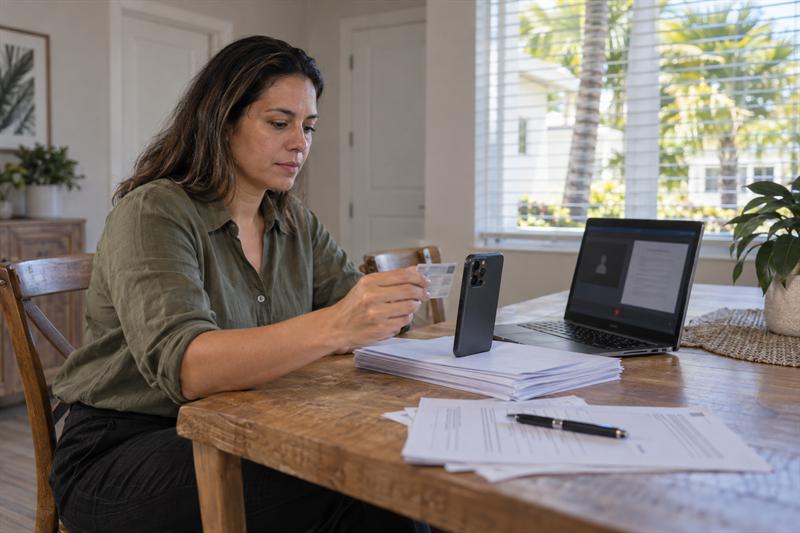
At Sunshine Mobile Notary, LLC, this question comes up with clients, families, and title teams who want to avoid preventable delays. The goal is simple: confirm that the notary you plan to use appears to be currently authorized in Florida before the appointment moves forward.
This guide explains what to check, what an active commission generally tells you, and what to do if the details do not line up.
Why verifying a Florida notary matters before you sign
Verifying a Florida notary commission helps confirm that the notary appears to be currently authorized to perform notarial acts in Florida. That matters when the document is important, the deadline is close, or the paperwork will be reviewed by a lender, county clerk, title company, employer, or another receiving party.
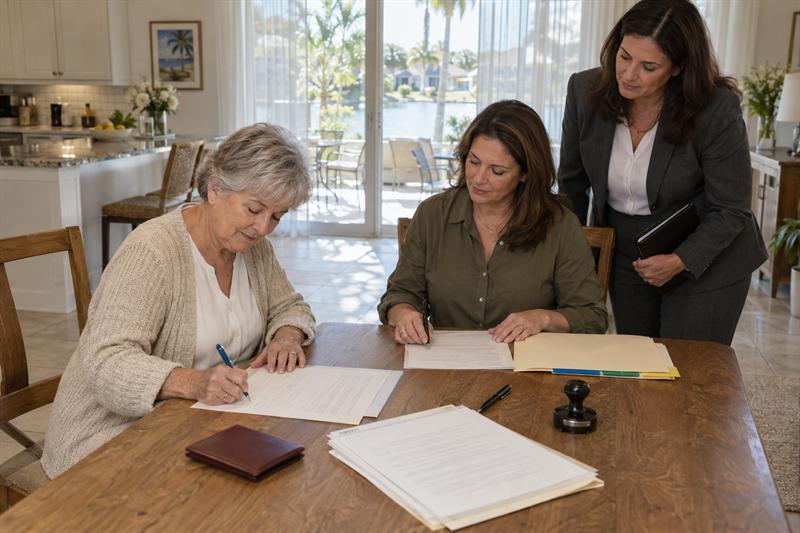
This usually comes up with real estate documents, affidavits, powers of attorney, family estate paperwork, and other signings where accuracy matters from the start. For example, if a family is preparing multiple estate documents at home, identity, witnesses, and signing order may already require coordination. Commission status is another detail to get right, similar to the planning issues covered in family estate document signing at home.
A common mistake is confusing visibility with validity. Someone sees a website, social profile, or directory listing and assumes the notary is active. That is not the same thing. As explained in what a notary can and cannot do during an appointment, notarization is not just a convenience service. It is a formal act tied to state requirements and document procedures.
If this step is skipped, the issue may show up late. The signer may have already arranged ID, witnesses, travel, or document handoff, and then the question becomes whether the appointment should proceed at all. That can lead to rescheduling, extra stress, and sometimes a missed deadline.
The official way to check a Florida notary commission
The most reliable way to verify a Florida notary commission is to use official Florida notary or Department of State resources. That gives you an independent way to confirm whether the commission appears active.
Directory listings, Google results, and association profiles can help you find a notary, but they do not replace official verification. This is where people lose time. They use a locator tool to find a name when what they really need is confirmation. That distinction matters for anyone comparing providers, especially if the signing is urgent or the document needs to be accepted the first time.
If you are still deciding who to use, this fits naturally into a broader screening process like the one explained in how to choose a mobile notary in Southwest Florida. Verification answers one question: does the notary appear to be currently commissioned? It does not answer every question about scheduling, document familiarity, or whether mobile or remote service is the better fit.
What information to have ready before you search
- The notary’s full name
- Any commission details the notary has already shared
- The city or service area, if you need to sort through similar names
- Whether the appointment is in person or remote online
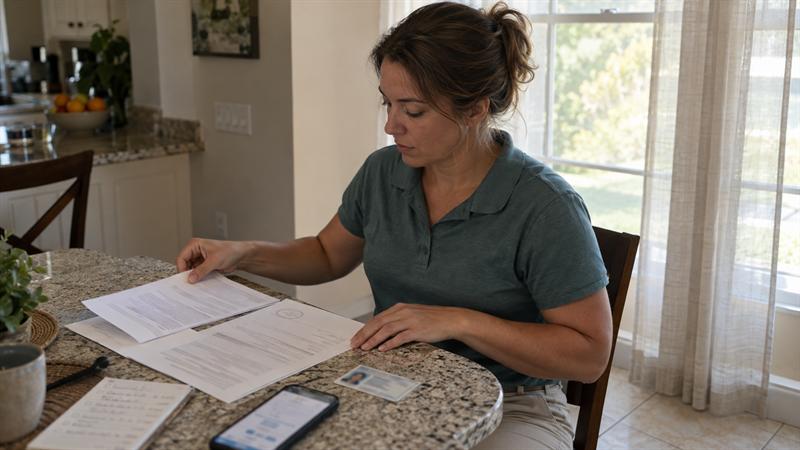
This matters because similar names are one of the most common reasons people think they found the right record when they have not. A small mismatch here can turn into a larger problem later, especially when the appointment is already scheduled.
Step by step: how to verify if a Florida notary is active
The practical way to handle this is to follow a short sequence and stop only when the result clearly matches the notary you plan to use. One common mistake is stopping too early. People find a similar name, see that a record exists, and assume that is enough.
If any of these signs apply, verify the commission before treating the appointment as confirmed:
- You found the notary through a directory, but not through an official Florida resource
- The name you searched returns multiple similar results
- The signing is tied to a closing, recording deadline, or other time-sensitive submission
- The appointment is remote online, and you have not confirmed the notary’s remote authorization status
Once one of these issues appears, the next step is direct verification.
Search for the notary using official Florida records
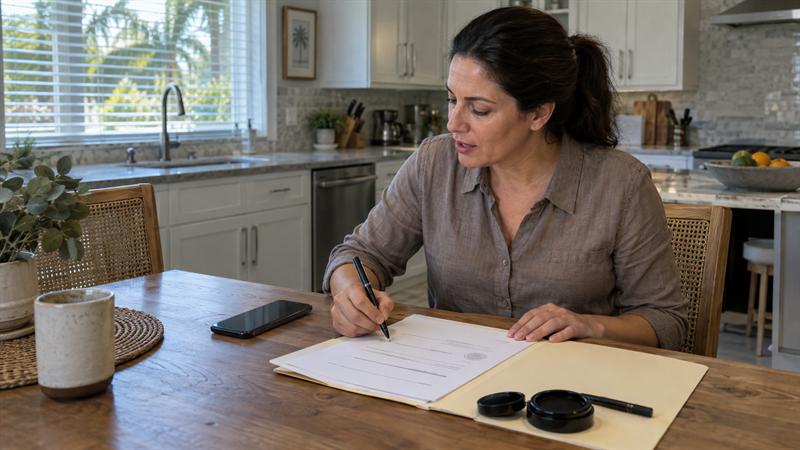
Start with the official Florida resource used for notary-related verification and search the notary’s name carefully. Use the full name when possible. If the name is common, do not assume the first result is the right one.
This is a common point of confusion when people are moving quickly. They focus on getting the appointment booked and the documents signed, so they scan for a name match instead of confirming the full record. That is where problems can start.
Review the commission status and expiration details
Once the record appears, review the commission status and expiration information carefully. You are looking for a current commission that still lines up with the timing of the appointment.
The practical issue here is timing. A record that looks close is not the same as a record that is current. If the commission information does not clearly support the appointment date, the signing should not be treated as fully confirmed yet.
Make sure the result matches the notary you plan to use
After that, make sure the result matches the actual notary handling your signing. Similar names are common, especially in larger service areas, and a name match by itself is not enough if there are multiple possible records.
This is where the problem gets worse when the signer is in a hurry. The assumption becomes, “the name is there, so it must be fine.” What matters is whether the record matches the specific person scheduled to perform the notarization.
What an active commission means — and what it does not mean
An active commission generally means the notary appears to be currently authorized to perform notarial acts in Florida. That is the main question this verification step answers.
What it does not mean is just as important. It does not automatically tell you whether the notary regularly handles your document type, whether the appointment logistics are organized, or whether the signing format fits your situation. A deed signing, a loan package, and an affidavit do not create the same preparation issues. The authority question and the logistics question are related, but they are not the same.
A common misunderstanding is treating active status as a full quality review. It is not. It helps confirm authority, not every other factor that affects whether the appointment goes smoothly. If you are dealing with affidavit paperwork, the signer still needs to confirm document readiness, identity requirements, and recipient expectations, similar to the issues covered in what the signer should confirm before an affidavit notarization appointment.
What to do if the notary is not found or the details do not match
If the notary is not found, start by checking whether the full legal name was used and whether anything was misspelled. Small search errors are common. So is searching a business name when the state record is tied to the notary’s individual name.
If the details still do not match, the issue shifts from routine scheduling to a verification problem. At that point, the appointment should not move forward on assumption. More confirmation is usually needed before the signing should be treated as ready.
- Double-check the spelling and full name
- Review any commission details already provided
- Compare the result carefully if multiple similar names appear
- Pause the appointment if the identity and commission details still do not line up
This often comes up when documents are already in circulation and everyone is trying to keep momentum. The pressure to move quickly can make the mismatch more serious, not less. If ignored, it may lead to last-minute cancellations, recipient concerns, or repeated signing coordination.
For online notarizations, confirm the notary is authorized for remote online notarization
For remote online notarization, a general Florida notary commission does not always answer the full question. The client also needs to know whether the notary is authorized for remote online notarization in the format required.
This is one of the most common gaps in general notary content. People assume that if a notary is commissioned, online service is automatically covered too. Remote signings require a separate check because the signing method changes the verification question.
If you are comparing mobile and online options, the distinction matters early. A signer who is ready for an in-person appointment is not always ready for a remote session, and an active notary is not automatically the right fit for a remote online transaction. For a full walkthrough of the process, see Remote Online Notary in Florida: How It Works Step by Step.
Quick checklist before your notary appointment
- Confirm the notary appears in official Florida records
- Review whether the commission appears active and current
- Make sure the record matches the specific notary you booked
- If the appointment is remote online, confirm the notary’s online authorization status
- Verify ID, document readiness, and any witness or access logistics before the appointment
This short checklist helps prevent common avoidable problems. It also separates simple booking from actual readiness. When these details are not confirmed in advance, the appointment may slow down, get rescheduled, or fail at the point everyone expected it to be finished.
Key Takeaways
- Use official Florida resources to check a notary’s commission status
- Do not treat a directory listing or online profile as proof of current authority
- Review the commission details carefully and make sure they match the notary you booked
- For remote online notarization, confirm the notary is authorized for that format as well
Conclusion
The real problem is not finding a notary. The real problem is assuming that visibility, availability, or a quick online listing answers the commission question for you. When that assumption goes unchecked, it can lead to preventable delays, confusion around authority, and signing problems that show up when the document is already urgent.
Sunshine Mobile Notary, LLC is a practical next step for clients who want a mobile or remote signing process handled with clear expectations from the start. Similar names, incomplete verification, rushed scheduling, and remote appointments that need a different level of confirmation can all create avoidable friction. Taking care of those details early helps keep a simple notarization from turning into a last-minute problem.
If your signing is time-sensitive or you want a clear path forward without the usual confusion, Sunshine Mobile Notary, LLC is a practical business to contact.
Company Approach
At Sunshine Mobile Notary, LLC, the approach is built around reducing friction before the appointment starts. That means helping clients think through the details that often create delays: who the signer is, what type of notarization is needed, whether witnesses are involved, whether the document recipient has special requirements, and whether the signing should happen in person or through remote online notarization.
This is why commission verification fits naturally into the larger process. It is not a standalone technical detail. It is part of making sure the appointment, the documents, and the signing format all line up before time is spent coordinating travel, access, or handoff.
FAQ
How can a client check if a Florida notary is active?
A client can check whether a Florida notary is active by using Florida’s official notary or Department of State resources and searching the notary’s name there. The point is to confirm current commission status through an official source, not through a directory or local listing.
The useful distinction is that discovery and verification are two different steps. A directory helps someone find a notary. Official state information is what answers whether that notary appears to hold a current commission.
Is a notary directory listing enough to prove a Florida notary is commissioned?
No. A directory listing is not the same as official confirmation that a Florida notary’s commission is active. It may show that the person offers notary services or participates in a listing platform, but it does not replace state-level verification.
This commonly gets misunderstood because directory pages can feel official enough to rely on. The practical implication is simple: if the commission question matters, a listing is not the finish line. It is only a starting point.
What should be done if the notary’s name does not appear in Florida records?
Start by checking whether the full legal name was used and whether the search included a spelling error. A missing result is often tied to incomplete search information, not just commission status.
If the name still does not appear or the details do not line up, that usually means the issue is no longer routine scheduling. It becomes a verification problem. At that point, the important takeaway is that the appointment should not be treated as fully confirmed until the identity and commission information make sense together.
What does an active Florida notary commission actually confirm?
An active Florida notary commission generally confirms that the person appears to be currently authorized to perform notarial acts in Florida. That is the practical value of the status.
What it does not confirm is broad service quality. It does not tell you whether the notary regularly handles your specific document type, whether the scheduling process is organized, or whether the notary is the right fit for mobile versus remote service. It answers the authority question, not every appointment question.
Does a Florida notary also need special approval for remote online notarization?
Yes. Remote online notarization creates a more specific verification question than standard in-person notarization. A general commission does not automatically resolve whether the notary is authorized for the remote format involved.
This matters because people often assume that “active notary” and “ready for online notarization” mean the same thing. They do not. The difference changes how the appointment should be evaluated and whether the signer is preparing for the correct process.
When should a title company or signer verify a notary’s commission?
The most practical time is before the appointment becomes the critical path for a deadline. In other words, once the notary’s name is known and before the document process depends on that signing going forward.
This timing matters because verification is easiest when it is still a planning step. Once witnesses, travel, closing timelines, or recording expectations are already in motion, even a small mismatch creates a larger scheduling problem.