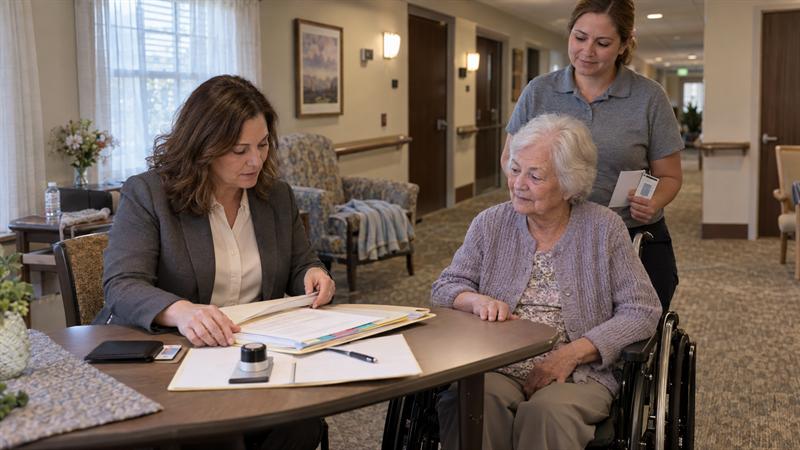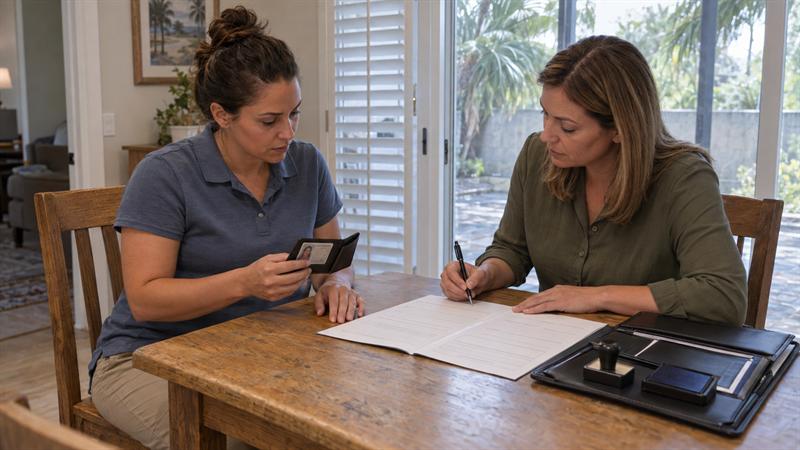
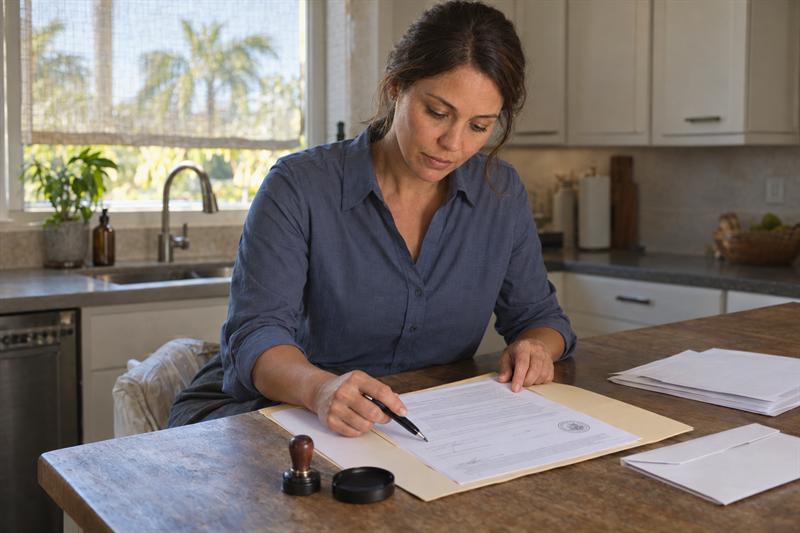
At Sunshine Mobile Notary, LLC, this is a common handoff point: the signing is complete, but the next question is whether the document is ready to be recorded without delay. Many problems start here. A document can be signed and notarized and still get held up because the wrong county was chosen, witness details are incomplete, or the filing package is missing something that slows submission.
This guide is for people who already have a signed or notarized document and need to confirm what comes next in Lee, Collier, or Charlotte County. It focuses on the step that usually creates confusion: moving from a completed signing to county submission.
What this guide helps you confirm before you record a document
This article is for signers, family members, title coordinators, property owners, and anyone handling a document after notarization. It is not about preparing legal forms. It is about checking whether the document is ready for county recording and whether it is headed to the right office with the right details attached.
A common mistake is assuming the signing appointment was the hard part. Then the document reaches the submission stage and small errors start slowing everything down. That often means going back through signatures, witness details, county instructions, or fee handling after time has already been lost.
Before a document is submitted, this guide helps confirm:
- which county should receive it
- whether the document is recording-ready or simply notarized
- what details commonly cause delay or rejection
- what fee and submission issues should be checked first
For a broader regional overview, see County Clerk Recording Support in Southwest Florida: What to Confirm Before Submission.
Before anything else, make sure the document belongs in the correct county
For property-related documents, the first question is usually the county itself. Recording is generally tied to where the property is located, not where the document was signed, where the signer lives, or where the package is being mailed from. When that gets mixed up, the filing may stall before the county even reviews the document details.
This comes up regularly with deeds and other property-related documents in Southwest Florida. A signer may live in one county, sign in another, and own property in a third. If the county check is skipped, the rest of the submission review may not matter yet because the package could be headed to the wrong office.
Confirm these first:
- the county where the property is located
- whether the document is tied to that property
- whether any return instructions match the intended county filing
If you are handling signings across the region, Mobile Notary Service Areas in Southwest Florida: Lee, Collier, and Charlotte Counties gives helpful geographic context.
Lee County clerk recording: what to check before submission
In Lee County, the practical review starts with whether the document includes the details commonly checked before recording. For many property-related documents, that means looking closely at names, legal description, witness lines, notary acknowledgment, and whether the document leaves appropriate recording space.
A common issue is that the document looks complete because the signatures are there, but the supporting details are inconsistent. This often shows up in printed names under signatures, incomplete witness information, or return handling that was treated as a last step. Those are the kinds of problems that can create preventable delay.
For Lee County, confirm:
- the names are consistent throughout the document
- the legal description is included where needed
- witness lines and printed names are complete if the document type calls for them
- the notary acknowledgment is fully completed
- the document leaves appropriate space for recording marks
- return instructions are clear
- current fees and any documentary stamp considerations have been reviewed
Deeds deserve extra attention because preparation issues can create recording problems later. For upstream review, see Deed and Property-Related Document Notarization Prep in Florida: What to Confirm Before the Appointment.
Collier County record a document: what to confirm first
In Collier County, the most practical approach is to review the filing in order. First confirm the document belongs in Collier County. Then confirm it is complete enough for recording. Then check the fee and submission method. People often run into trouble when they move straight to mailing or e-recording before the document itself has been reviewed closely.
This is where confusion between notarization and recording often gets worse. A signer may assume the county will sort out anything missing because the document is already signed. In practice, that can slow the process further. If the package reaches the clerk with incomplete signatures, missing return details, or unclear fee handling, delay is more likely.
Before recording in Collier County, confirm:
- the document type belongs in official records
- signatures, witness details, and acknowledgment are complete
- the package includes the information needed to process and return the document
- current fee schedules or calculators have been checked
- the submission method matches the document and the timeline
If you need a clearer distinction between documents that need notarization and documents that move into county recording, see What Documents Need Notarization in Florida? A Complete Guide.
Charlotte County clerk recording: practical submission checks
Charlotte County can be reviewed with the same decision path: right county, recording-ready document, confirmed fee handling, then correct submission method. That order matters because many delays do not come from one major problem. They come from a chain of small assumptions that were never checked.
A common issue is that people focus on the front end of the document and overlook the back-end logistics. The signatures are there, but return instructions are incomplete, names do not match exactly across lines, or the legal description was copied inconsistently. That can result in the package being slowed down or sent back for correction.
For Charlotte County, check:
- whether the document is being recorded in the correct county
- whether witness signatures and printed names are complete
- whether the acknowledgment section is fully and clearly completed
- whether names and property details are consistent across the document
- whether return handling and fee review have been completed before submission
The most common reasons a recorded document gets delayed or rejected
Most recording delays come from details that were treated as minor. In practice, those details often determine whether the package moves forward or stops. This is where many signers and coordinators run into trouble because the document feels finished when it is not.
- Missing witness signatures or printed witness names: If the document type calls for witnesses and those lines are incomplete, the filing may stop until it is corrected.
- Incomplete notary acknowledgment: A signature and seal alone do not fix a missing or incomplete acknowledgment block. If the notarial section is not complete, the document may not be ready for recording review.
- Mismatched names: If a name appears one way in the body of the document and another way on the signature line or acknowledgment, that inconsistency may create questions that slow the filing.
- Wrong county submission: Sending a property-related document to the wrong county can waste time because the package is misrouted from the start.
- Incomplete legal description or property information: If the property details are not complete or do not match the purpose of the filing, the issue often needs to be corrected before anything else can move forward.
- Formatting or recording space issues: If the document does not leave room for recording marks or is not prepared in a usable format, that can create friction at intake.
- Fee or payment mismatches: When the amount or method does not line up with the filing, the package may be delayed before the document itself is even reviewed.
- Missing return envelope or return instructions: Return handling is easy to overlook, but it affects what happens after the filing is processed and where the document ends up.
If you are seeing any of these signs, the document usually needs another review before submission:
- the document is notarized, but no one has checked witness lines or printed names
- the property is in one county and the signing happened in another
- the package is ready to send, but the fee total is still unclear
- the return instructions were added late or not added at all
At that point, it usually makes sense to review the package again before it is sent, not after it comes back delayed.
Notarized does not always mean recording-ready
Notarization confirms the signing act required for that document. It does not confirm that the full document package meets county recording requirements. That distinction matters because people regularly treat notarization like a final approval step, and it is not.
This is where problems often become harder to fix. Once a document is signed, people want to move it out quickly. If the package goes forward without checking witness requirements, layout, names, legal description, or return handling, the delay may simply shift downstream and take more time to sort out.
For example, a deed with a proper notarization can still run into a recording issue if witness information is incomplete or the document was not prepared with the needed recording details. If you need a related review point, Florida Notary Witness Requirements: When Witnesses Are Needed and How to Coordinate Them helps clarify one of the most commonly missed issues.
When to get help before submission
Help makes the most sense when the signing is done but the handoff still feels uncertain. That includes time-sensitive filings, document packages moving between multiple parties, or situations where the document appears complete but no one has confirmed whether it is actually ready for county recording.
At Sunshine Mobile Notary, LLC, county clerk recording support fits into that part of the process. The issue is often not that the signer failed to sign. The issue is that the next step was never fully checked, and that can lead to rework, delay, and confusion.
This also comes up after closings, when the package has to move cleanly from signing to the next party in the chain. If your situation overlaps with a title workflow, Loan Signing Document Return and Title Team Handoff: What Happens After the Closing Signing Is Complete explains how those post-signing transitions usually work.
Key takeaways for recording in Lee, Collier, and Charlotte Counties
- Confirm the correct county first, especially for property-related documents.
- A notarized document is not automatically ready for recording.
- Check names, witnesses, acknowledgment, legal description, formatting, and return instructions before submission.
- Review the fee and submission method before the package is sent.
- Many delays come from administrative issues that were missed after signing.
Company approach
Sunshine Mobile Notary, LLC approaches county clerk recording support as a post-signing workflow issue, not just a filing errand. That matters because the real problem is often not the signature itself. It is the gap between a completed signing and a package that is actually ready to move through county recording without unnecessary delay.
People often do not realize anything is wrong until the document is already in transit or already being reviewed. By then, even small issues can cost more time because the package has to be revisited, corrected, and routed again. That is why a careful check before submission is usually the practical move.
Conclusion
The real problem with county clerk recording is not just knowing where to send a document. It is knowing whether the document is truly ready before it leaves your hands. If that step is skipped, the same issues can keep showing up: wrong county, incomplete witness details, fee confusion, acknowledgment problems, and return handling mistakes that slow everything down after the signing is already over.
That is why the next step should be clear. If you are dealing with a signed document that needs to be recorded in Lee, Collier, or Charlotte County, Sunshine Mobile Notary, LLC can be a practical next step when the handoff needs to be checked, coordinated, and handled with fewer avoidable delays. Start with County Clerk Recording Support in Southwest Florida: What to Confirm Before Submission if you need help moving from completed signing to confident submission.
FAQ
Does a notarized document automatically mean it can be recorded?
No. A notarized document is not automatically recording-ready. Notarization covers the signing act, but recording depends on other details such as witness information, acknowledgment completion, legal description, formatting, and the county filing requirements tied to that document.
A deed is a clear example. It can have a valid notarization and still run into recording trouble because witness details are incomplete or the document package is missing something needed for submission. The misunderstanding is treating notarization like a final review. It is only one step in the process.
How do I know whether my document should be recorded in Lee, Collier, or Charlotte County?
For property-related documents, the county usually follows the location of the property, not the signer’s address or the place where the signing happened. That is why county confusion is one of the first things to check.
If a signer lives in Lee County but the property is in Collier County, the filing path usually follows the property. What matters most is the document’s connection to the property being recorded, not the convenience of the signing location.
What information is commonly missing when a deed is sent for recording?
The most common missing items are witness signatures, printed witness names, complete notary acknowledgment details, clear legal description, consistent names, and complete return instructions. These are the details that often look small until they stop the filing.
What gets misunderstood is that a deed can feel complete because the main signatures are on it. In practice, recording issues often come from the supporting details around those signatures. That is why deeds should be reviewed as full recording packages, not just signed forms.
Can I mail a document to the county clerk for recording, or do I have to submit it in person?
That depends on the county’s current options and on the type of document being submitted. Some filings fit mail-in handling, some work through other methods, and the practical choice depends on whether the package is complete and ready for that route.
The bigger issue is not just how the document is delivered. It is whether the chosen method matches the document and the timeline. Mailing a package before the fee, return handling, or document readiness has been checked often leads to slower correction later.
What fees should I confirm before recording a document?
Confirm the recording fee and, when relevant, any documentary stamp or transfer-related charges tied to the document type. The fee review should match the actual filing, not just the county name.
A deed is a useful example because the filing cost is not always just a basic recording amount. If the document involves transfer-related charges, the total submission handling changes. That is why fee review works best when it is tied to the document itself, not guessed from a general assumption.
When should I get help with county clerk recording support?
Help is usually needed when the document is signed, but the next step is still unclear. That includes time-sensitive filings, packages moving between multiple parties, and situations where the document looks complete but no one has checked whether it is actually ready for county submission.
The key distinction is that this type of help is about workflow and readiness, not rewriting the document. If the issue is what happens after signing, where the package should go, or what should be checked before submission, that is the stage where recording support becomes useful.