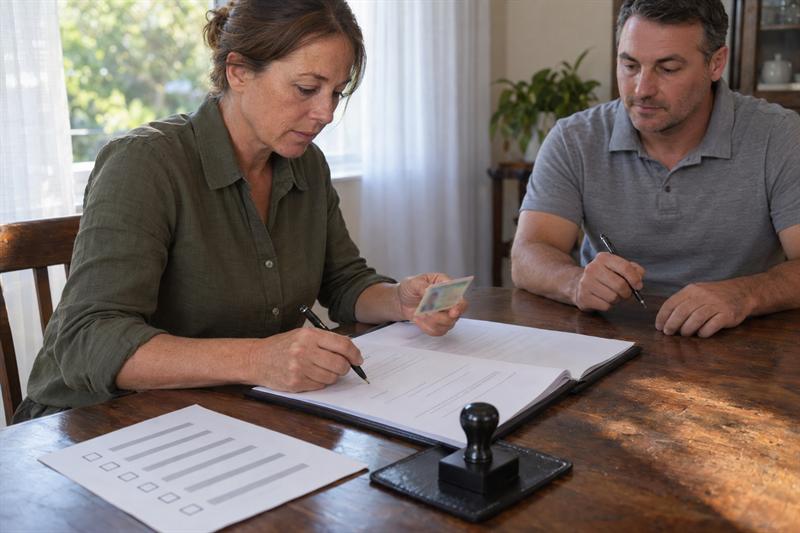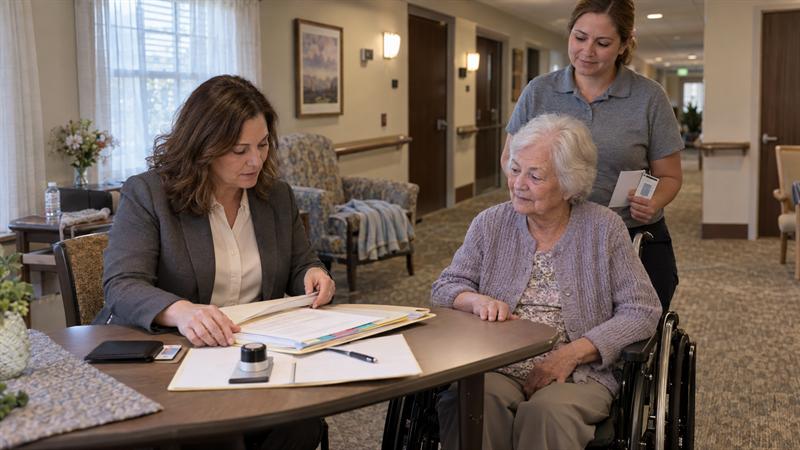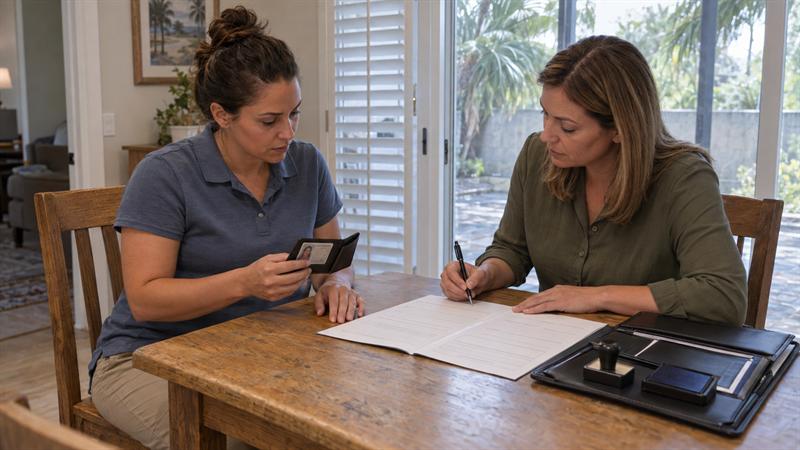
At Sunshine Mobile Notary, LLC, this is where many people get stuck. The signing is finished, the document looks complete, but the next step slows down because the submission details were not confirmed before handoff.
What county clerk recording means and what it does not
County clerk recording is the process of submitting an eligible document to a county’s official records system. It is an administrative filing step, not the same thing as having a document signed or notarized.
That distinction matters because many recording problems start with the assumption that notarization finishes the process. It does not. In many workflows, notarization is only one step before submission, payment, routing, and return handling.
Notarization vs. recording: the key difference
Notarization confirms the signing event and completes the notarial act required for that document. Recording places an eligible document into the county’s official records. They serve different functions, and confusing them can create delays.
A common situation is that a signer gets the document notarized and assumes it is ready to go straight to the county clerk. This is often where problems begin. If the wrong county is used, witness lines are missed, or return instructions are incomplete, the document is still not ready for recording even though the notarization itself was completed.
For readers who need a refresher on document categories that commonly involve notarization, this guide to what documents need notarization in Florida helps clarify the distinction.
When people usually need recording support
Recording support usually comes up after the signing appointment, not before. The document is executed, and then someone has to make sure it reaches the right county office with the right supporting details attached.
This is especially common in property-related workflows, but it also comes up in affidavit, estate, and business-related situations where the document path continues after the signer is done. In these cases, the issue is usually not the document itself. The issue is the handoff.
Common document situations that may involve recording coordination
- Real estate transfer-related workflows
- Mortgage or lien-related filings
- Supporting affidavits tied to official-record submissions
- Documents signed locally but submitted to a county office later in the process
This comes up regularly in time-sensitive document handling. The signer may be in Fort Myers, Naples, or Cape Coral, but the next step depends on where the document must be submitted and how the original needs to move after signing.
That is one reason mobile notary services in Southwest Florida often connect directly to larger logistics decisions. The signing itself matters, but the workflow after signing is often what determines whether the process stays on track.
What to confirm before submitting documents to a county clerk
If the goal is to avoid back-and-forth, this is the section that matters most. County clerk recording in Southwest Florida often breaks down because basic submission details were left unresolved before the document changed hands.
A pre-submission review usually includes:
- the correct county and recording office
- whether the original signed document is required
- complete names, signatures, notarization, and witness details
- fees, payment method, and return instructions
- formatting, attachments, and supporting pages
Confirm the correct county and recording office
Recording is county-specific. The county where the signer is located is not always the county where the document needs to be recorded, and that mismatch is a common cause of delay.
If a document goes to the wrong office, the process can stop there. That often leads to lost time, added delivery steps, and confusion about whether the problem is the document or the destination. If there is any uncertainty about where the submission belongs, confirm the routing before anything is sent out.
Confirm whether the original document is required
Many recording workflows depend on the original signed document. Once originals are involved, transport, tracking, and return routing matter just as much as the signing itself.
This can become more complicated when someone assumes a copy or scan will work without checking the submission path first. Once an original has to be located again, re-sent, or re-routed, the delay can affect everyone waiting on the file.
Check names, signatures, notarization, and witness details
Small completion errors can create significant delays at this stage. Missing names, incomplete signature lines, unfinished notarial sections, or overlooked witness requirements can turn a simple submission into a correction cycle.
This is a frequent issue with documents that look complete at a glance but are missing one final detail. Witness coordination is another common problem, especially when the signer assumes witnesses are optional or can be handled later. If witness lines are part of the document, Florida notary witness requirements should be reviewed before the document moves to the next step.
Verify fees, payment method, and return instructions
Submission does not end with the document itself. The fee and the return plan are part of the same workflow, and many avoidable delays happen here.
A common issue is that the document is ready, but the payment method is wrong or the return address is unclear. That can leave the package stalled while someone figures out where the recorded original should go next. If the original needs to go back to a person, title contact, office, or another destination, that routing should be clear before submission.
Review formatting, attachments, and supporting pages
Incomplete packages can slow everything down. Missing pages, missing attachments, or overlooked supporting forms can trigger a return or a hold, even when the document itself appears properly signed.
This is where problems often start when the document packet has been assembled by more than one party. One person handles the signature page, another handles the supporting pages, and the final package looks complete until a missing piece interrupts the recording step. A final page-by-page review can help prevent that.
If your document is already signed but any of these issues are still unclear, the next step should be confirmed before submission.
- You are not fully sure which county should receive the document
- The original has to be moved and returned to a specific person or office
- Witness lines or notarial sections were completed under time pressure
- Payment and return routing have not been confirmed yet
At that point, the next handoff is often where delays begin.
How recording support fits with mobile notary, courier, and return logistics
Recording support makes the most sense when the document process does not end at the signing table. Once an original needs to move from signer to county office and then back to the intended recipient, the workflow becomes a coordination issue.
Sunshine Mobile Notary, LLC helps bridge that gap by connecting signing logistics with the next administrative step. That matters because delays rarely come from one dramatic problem. They usually come from ordinary handoff failures between completed signing, document transport, submission, and return.
A typical recording support workflow
- The document is signed
- Notarization is completed if required
- Submission details are confirmed before the document is handed off
- The document is delivered or routed for recording
- Recorded originals or confirmations are returned to the intended recipient
This step-by-step view is often what people need most. Official clerk pages explain where to record, but they do not always show how small mistakes earlier in the chain can lead to avoidable delays later.
County-specific details can vary across Southwest Florida
County clerk recording in Southwest Florida is not one uniform process. Lee County, Collier County, and nearby counties may differ in how they present fees, forms, calculators, intake options, or submission instructions.
That is why broad assumptions cause problems. What worked in one county does not automatically transfer to another. This can lead to extra calls, re-checks, and submission slowdowns that could have been avoided with a county-specific review up front.
Why county confirmation matters before submission
County clerk websites are built to provide official information, but the layout, tools, and terminology are not always easy to interpret when someone is already in the middle of a document workflow. The confusion usually is not about whether a recording office exists. It is about which details matter before the package is sent.
If there is uncertainty around county-specific payment instructions, e-recording options, or what needs to be included in the packet, the submission stage is not ready yet. The next step should be confirmation, not guesswork.
Common issues that delay recording
Most recording delays are not caused by a complex issue. They are caused by preventable submission problems that were left unresolved before the handoff.
- Wrong county or wrong office
- Missing signatures or incomplete notarization details
- Fee issues or unsupported payment method
- Missing return instructions
- Incomplete pages or supporting paperwork
These problems show up in otherwise straightforward files. Everything looks close to complete, but one unresolved detail forces the process backward. Once that happens, the delay can affect not just the submission, but the return timing and anyone waiting on the recorded document.
Small errors that cause unnecessary back-and-forth
Assuming a notarized document is automatically recording-ready is one of the biggest examples. Another is leaving return details vague because someone plans to sort them out later. That can result in the document reaching the clerk stage before the logistics are actually finished.
Witness lines and supporting pages are another common friction point. If there is uncertainty about whether the packet is truly complete, the problem is still in the preparation stage, not the county stage.
When professional recording support may help
Professional recording support is often the practical choice when the submission is time-sensitive, the original has to move securely, or several parties are involved in the handoff. In those situations, the challenge is not just the signing. It is keeping the next step organized.
This becomes more important when a signer is local but the document path includes delivery, county submission, and return to a different person or office. Once multiple handoffs are involved, delays often come from coordination gaps rather than the signing appointment itself.
Key Takeaways
- County clerk recording is separate from notarization
- A signed document is not automatically ready for submission
- Common delays come from routing, completion, payment, and return-detail errors
- Original-document handling changes the process because transport and return become part of the workflow
- County-specific confirmation matters across Southwest Florida
- Coordinated support helps when the workflow includes signing, delivery, submission, and return
Conclusion
The main problem with county clerk recording in Southwest Florida is usually not recording itself. It is the gap between a completed signing and a clean submission. When the wrong county is used, witness details are missed, the original is mishandled, or return routing is unclear, the process can slow down quickly and turn into preventable back-and-forth.
That is why early coordination is practical. Sunshine Mobile Notary, LLC can be a useful next step when the document path includes notarization, original handling, and recording support that needs to stay organized from start to finish. If the file is signed and the next handoff still feels unclear, that usually means the coordination work should happen before the delay is built into the process.
Company Approach
Sunshine Mobile Notary, LLC approaches recording support as part of a document workflow, not as an isolated errand. The focus is on helping clients move from completed signing to organized submission with fewer handoff mistakes.
That matters because this is where delays often begin. A common pattern is treating the signing as the finish line, when the next administrative step is what determines whether the process keeps moving. Sunshine Mobile Notary, LLC supports clients who need mobile service, remote options where appropriate, and practical coordination across Southwest Florida when documents need to move securely and in the right order.
FAQ
Is a notarized document automatically ready to be recorded?
No. A notarized document may still be missing details needed for a clean recording submission, such as the correct county routing, complete witness lines, proper payment handling, or clear return instructions.
The key distinction is that notarization confirms the signing event, while recording is a separate filing step. A document can be properly notarized and still not be ready for the county clerk because the submission package itself is incomplete.
What should be checked before sending a document to the county clerk for recording?
The main items are the correct county, whether the original signed document is required, complete names and signatures, finished notarial and witness sections, the correct fee setup, and clear return instructions.
What often gets missed is that recording delays usually come from basic preparation problems, not major document disputes. If the packet is missing a page or the payment method does not match the county’s process, the submission can stall even when the signing was done correctly.
Do recording requirements vary between counties in Southwest Florida?
Yes. Counties may differ in how they handle fees, forms, intake methods, and submission instructions.
This changes the preparation stage because a process that worked in one county does not automatically carry over to another. The practical point is that regional convenience does not remove county-specific requirements at the final submission step.
Can recording support include courier delivery and return of original documents?
Yes. Recording support can include coordination around how originals move to the recording office and how they are routed back after submission.
This matters most when the original document needs to return to a specific office, title contact, or individual. In those situations, the transport plan is part of the workflow itself, not an afterthought.
What are common reasons a recorded document gets delayed or sent back?
The most common reasons are wrong county routing, incomplete signatures, unfinished notarial details, unclear payment, missing return instructions, or incomplete pages and attachments.
What matters most is that these are usually preparation failures, not surprise county issues. Once the packet reaches the submission stage with one of those gaps still in place, the process often moves backward before it can move forward.
When should someone use professional help with county clerk recording support?
Professional support is often most useful when the submission is time-sensitive, the original document has to be handled carefully, or multiple handoffs are involved after signing.
For example, if the signer is in one location, the county office is the next stop, and the recorded original needs to return somewhere else, the process becomes a coordination issue. That is the point where organized support often matters more than generic instructions.