
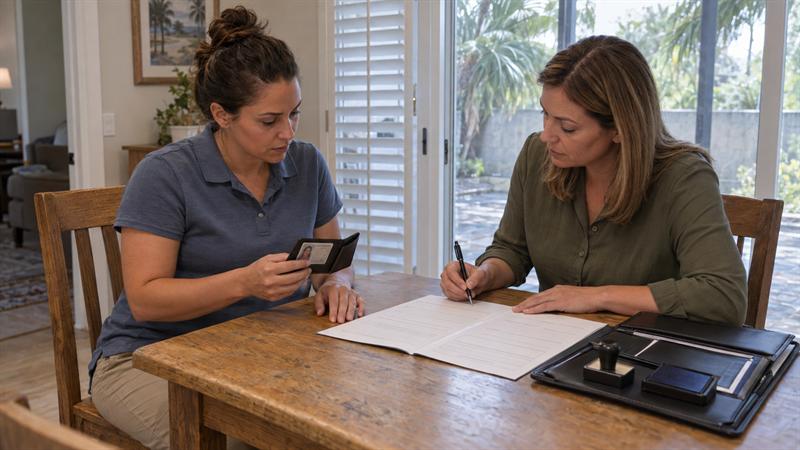
When a Minor Travel Consent Letter May Need to Be Notarized
A minor travel consent letter is often used when a child is traveling without both parents. That can include travel with one parent, grandparents, other relatives, or a school or group organizer. It also comes up frequently with international trips and cruise travel because travel providers and destination authorities may review child travel documents more closely.
Notarization requirements are not always the same from one situation to another. Some organizations require notarization, while others only prefer it. Families sometimes assume that because a consent letter is common, any version of it will work. That is where delays begin, especially when the airline, cruise line, school, or receiving party expected a different form or a different set of signatures.
A common scenario is that a parent searches for a travel consent letter late in the process, downloads a basic template, and assumes notarization will handle the rest. It does not. As explained in What Documents Need Notarization in Florida? A Complete Guide, notarization helps verify identity and the signing process, but it does not automatically make a document acceptable for every use.
- Travel with one parent often raises signature questions
- Travel with grandparents or relatives often raises authorization questions
- School, camp, or group travel often raises form-specific questions
- International or cruise travel often brings stricter documentation expectations
What to Bring to Notarize a Minor Travel Consent Letter
If the goal is a smooth appointment, bring the items that affect whether the notarization can move forward. This is a frequent issue with time-sensitive travel requests. The document matters, but the signer, the ID, and the supporting details usually determine whether the appointment works the first time.
- Valid government-issued photo ID for each signer
- The unsigned minor travel consent letter
- Trip details, including destination, travel dates, and the name of the accompanying adult or group if the form requires it
- Emergency contact information if the form includes it
- Custody or guardianship paperwork if the signer’s authority may need to be shown to the receiving party
- Any required witnesses
- The exact version of the form required by the airline, cruise line, school, camp, or other organization, if one has been provided
One of the most frequent breakdowns is incomplete preparation. A parent may bring a printed form with key details left blank, or another adult may arrive expecting to sign even though the document names someone else. That can stop the appointment before it starts.
ID issues also come up often. If the signer cannot be properly identified, the notarization may not be able to proceed. For a broader appointment checklist, see What to Bring to a Notary Appointment: A Simple Checklist.
What to Confirm Before Anyone Signs
This is one of the most important parts of the process because it affects whether the finished document will actually be usable. A properly notarized letter can still be rejected when the wrong person signs, the wrong form is used, or witnesses were required but never arranged.
Before signing, confirm these points:
- Who must sign the letter: one parent, both parents, or a legal guardian
- Whether witnesses are required
- Whether original signatures are expected
- Whether a remotely notarized version is acceptable if online notarization is being considered
- Whether the receiving party has its own required form
- Whether supporting documents should travel with the letter
This is where many avoidable problems begin. People treat the notary appointment as the first step instead of the final preparation step. A common scenario is signing a generic travel letter and only later finding out that the school, cruise line, or travel provider had its own form. That can force the document to be redone under time pressure.
Witness questions create another common failure point. Some signers assume that if a document is notarized, witnesses are unnecessary. That is not always true. Witnesses and notarization serve different purposes. If witness coordination is part of the requirement, Florida Notary Witness Requirements: When Witnesses Are Needed and How to Coordinate Them explains where people typically get stuck.
If any of the signs below apply, it is worth clarifying the document requirements before the appointment.
- The form does not clearly say whether one parent or both parents must sign
- The document has already been signed before notarization
- No one knows whether witnesses are required
- The airline, cruise line, school, or organizer gave verbal guidance but no exact form
When those signs show up, the issue is no longer just scheduling a notarization. The document setup may need to be corrected first.
Who Needs to Be Present for the Notarization?
The people who usually need to be present are the people who are signing. That clears up most confusion. The child is usually not the signer on a minor travel consent letter unless the form specifically says otherwise.
If both parents are signing, each signer generally needs to complete the notarization properly. If only one parent is signing, the main issue is whether that one signature matches the receiving party’s requirement. If a guardian is signing, the document may need to align with guardianship or custody paperwork that supports that authority.
This often comes up in divorced, separated, or blended-family situations. One parent may assume their signature is enough because they are traveling with the child, while the receiving organization expected consent from both parents. That can lead to a rejected document or a last-minute scramble to fix the paperwork.
Early signing creates another problem. If a signer completes the document in advance without regard to the required notarial act, the appointment may not work as planned. That can mean starting over with a clean copy.
What a Notary Can and Cannot Do During This Appointment
A notary can verify identity, witness the signature when required, and complete the notarial certificate if the act is appropriate for the document. A notary cannot decide which travel form an airline or school accepts, rewrite legal language, or guarantee that a receiving organization will honor the completed letter.
That distinction matters because many travel-document problems are not notary problems. They are document-selection problems. The notarization can be completed correctly and the letter can still fail if the wrong form was used or required signatures and supporting documents were missing.
This is where rushed appointments often break down. A signer may expect the notary to decide which version of the form to use or whether one parent is enough. That is outside the notary’s role. For a fuller explanation of these boundaries, see What a Notary Can and Cannot Do During an Appointment.
- A notary can: verify identity, observe the signing process when required, and complete the notarial certificate
- A notary cannot: choose the right travel form, give legal advice, or guarantee acceptance by an airline, border official, school, or cruise line
If the document is incomplete, altered, or already signed in a way that conflicts with the required notarial act, that may lead to delay, rework, or a failed appointment.
Mobile and Remote Notarization Options for Minor Travel Consent Letters
For travel documents, the most practical option is usually the one that fits the signer’s timing and the document’s acceptance requirements. Mobile notarization is often the better fit when a family needs an in-person appointment at home, at work, or another convenient location. It can also help when multiple signers need to coordinate in one place.
Remote online notarization can be a useful option when the document is eligible and the receiving organization accepts that format. The key question is not convenience alone. It is whether the completed document will be accepted in the format used. That point is easy to miss until the last minute.
At Sunshine Mobile Notary, LLC, both mobile and remote online notarization options are available depending on the document setup and the signer’s situation. If you are comparing the two, Remote Online Notarization in Florida: Document Eligibility, Recipient Acceptance, and Common Failure Points explains where acceptance issues usually come up.
Common Mistakes That Delay Minor Travel Consent Letter Notarization
Many delays follow the same pattern. The paperwork is rushed, assumptions replace confirmation, and the appointment becomes the point when the problems finally show up.
- Bringing a form the receiving organization does not use or accept
- Signing the letter too early
- Missing valid ID for one or more signers
- Failing to coordinate witnesses when they are required
- Assuming notarization alone makes the document acceptable everywhere
- Leaving trip details blank or inconsistent
This happens frequently with same-week travel. Parents may focus on getting the letter notarized quickly, but the real issue is often document readiness, not scheduling speed. If the form is wrong or incomplete, a faster appointment does not solve the problem. It only leaves less time to correct it.
Key Takeaways
- Confirm the receiving party’s requirements before the appointment
- Bring the correct signer or signers and valid photo ID
- Do not sign too early
- Arrange witnesses in advance if the form requires them
- Choose mobile or remote notarization based on acceptance requirements, not convenience alone
Conclusion
The real issue with a minor travel consent letter is usually not whether a notary is available. It is whether the document has been prepared correctly before the appointment begins. When that step is missed, the result may be delay, rework, or a letter that still does not meet the receiving organization’s expectations.
That is why Sunshine Mobile Notary, LLC can be a practical next step when this paperwork needs to be handled efficiently. The same issues come up repeatedly: wrong signer, missing ID, witness confusion, pre-signed forms, and unverified acceptance requirements. Sunshine Mobile Notary, LLC helps families move through the notarization process with mobile and remote options that fit real scheduling pressure, while keeping the focus on what needs to be confirmed before signing.
How Sunshine Mobile Notary, LLC Approaches Minor Travel Consent Letter Appointments
Sunshine Mobile Notary, LLC approaches these appointments with a preparation-first mindset. That matters because travel-document issues often develop before the notarial act starts, not during it. When the signer, ID, document version, and witness needs are lined up in advance, the appointment is usually more straightforward. When they are not, problems tend to show up right away.
This approach is especially useful for families working around school schedules, travel timelines, and multiple signers. Mobile appointments can reduce coordination friction, and remote online notarization can help when that format is acceptable. The advantage is not just convenience. It is reducing the common failure points that can delay completion.
FAQ
Does a minor travel consent letter always need to be notarized?
No. A minor travel consent letter does not need notarization in every situation. The real issue is whether the airline, cruise line, school, youth program, border authority, or other receiving organization expects notarization for that specific use.
What usually gets misunderstood is the difference between a common practice and a strict requirement. A family may hear that notarization is standard for international travel or one-parent travel, but that does not mean every provider handles it the same way. The practical takeaway is that the document needs to match the trip context, not a general assumption.
Do both parents have to sign a minor travel consent letter?
Not always. Whether both parents need to sign depends on the form being used and the requirement set by the organization reviewing it.
This matters most in one-parent travel and shared-custody situations. One parent may assume their signature is enough because they are traveling with the child, while the receiving organization expects both parents’ consent or proof of guardianship status. The key distinction is that signature expectations come from the document’s intended use, not from the notarization alone.
Can a minor travel consent letter be notarized online?
Yes, in some situations, if remote online notarization is appropriate for the document and the receiving organization accepts that format. Online notarization can be useful when timing is tight or the signer cannot appear in person.
The part that changes the decision is acceptance. A remotely notarized document can be completed correctly and still fail if the organization expected original signatures or a different format. That is why online notarization works best when the format question has already been resolved.
What ID is needed to notarize a minor travel consent letter?
Each signer should bring valid government-issued photo ID that allows the notary to verify identity. The signer’s identity is a core part of the notarization process.
The important distinction is that the parent or guardian signing the document is usually the person whose ID matters for the notarial act, not the child who is traveling. A common mistake is assuming travel documents or family information can substitute for proper identification. They do not. If the signer cannot be properly identified, the notarization may not be able to proceed.
Are witnesses required for a minor travel consent letter?
Sometimes, but not in every case. Witness requirements depend on the form itself or the standards of the organization that will review the letter.
This is one of the most common setup mistakes because people assume notarization covers every formal requirement. It does not. A witness signature and a notarized signature serve different roles. If the form expects witnesses and none are present, the document can still be incomplete even when the notarization is done correctly.
What happens if the letter was already signed before the appointment?
That can create a problem because the timing of the signature matters to the notarial act being performed. If the document was signed too early, the appointment may need to pause until a clean version is available.
This is where rushed preparation turns into rework. People pre-sign out of convenience, then discover the notarial process required a different signing sequence. The practical implication is straightforward: early signing often wastes time instead of saving it.