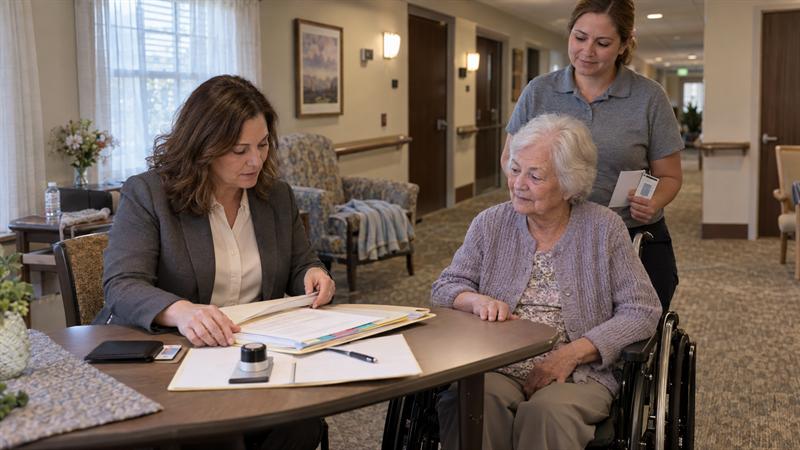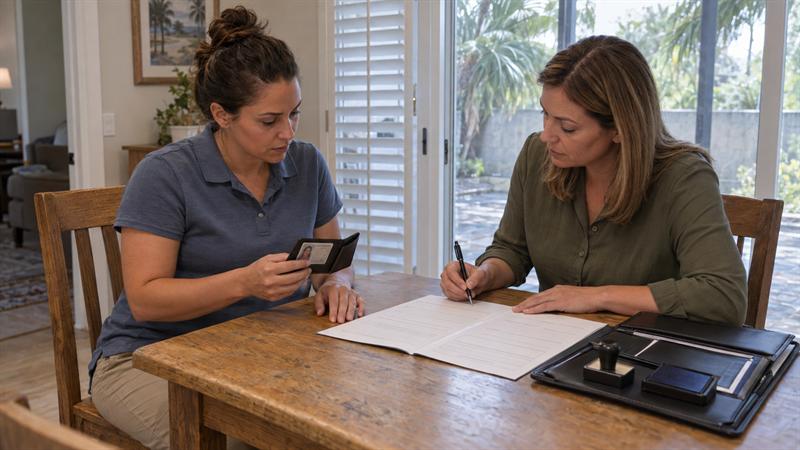
Quick Answer: Deed notarization in Florida usually becomes more difficult when key details are not confirmed before the appointment starts. The document should be final, the signer should have valid ID, witness requirements should be settled in advance, and the post-signing recording plan should be clear before anyone sits down to sign.
At Sunshine Mobile Notary, LLC, this is a common pattern with property documents. People sometimes expect a deed signing to work like a simple notarization, then discover the document is incomplete, the witnesses are not arranged, or no one has clarified who will handle recording afterward. When those details are still open, the appointment can slow down and the document may still not be ready for the next step.
Introduction
Property document signings tend to carry more pressure because the paperwork may affect ownership, title records, or both. A quitclaim deed, warranty deed, affidavit of title, or corrective deed may look simple on the page, but even small gaps can create delays, repeat appointments, or recording problems later.
This article explains what should be confirmed before a deed notarization appointment in Florida, what the notary can and cannot do, and what usually happens after the signing. The goal is to help reduce avoidable problems before the appointment begins.
Why Property Document Notarizations Need More Preparation Than a Standard Notary Appointment
Deeds and other property-related documents usually involve more than identity verification. The document needs to be complete, witness logistics may need to be coordinated, and notarization is only one step in a larger transfer or recording process.
That is why deed signings often require more preparation than routine forms. A standard notary appointment may only involve reviewing ID and completing the notarial act. Property documents often involve additional moving parts that should be settled before the appointment.
Common preparation issues include:
- unfinished or incomplete deed language
- missing legal description information
- unconfirmed witness requirements
- unclear instructions from a title company or attorney
- confusion about whether notarization alone completes the transfer
For a broader overview of document types, see What Documents Need Notarization in Florida?.
Common Property Documents That May Need Notarization
Property-related signings can involve several document types, and each one serves a different purpose in the transfer or title process. Common examples include:
- quitclaim deeds
- warranty deeds
- corrective deeds
- affidavits of title
- certain lien-related or ownership-transfer documents
The key point is not memorizing every document category. It is understanding that property documents are often more procedural than they first appear.
Why Small Errors Can Delay Signing or Recording
Small issues can create larger delays because a deed is part of a broader property record process. Common problem points include:
- Missing witness names or signatures: the appointment may stop even if the signer is ready.
- Name mismatches: if the ID and deed details do not line up clearly, the issue may need to be addressed before the notarization moves forward.
- Incomplete acknowledgment details: the notarial act still needs to be completed correctly.
- Missing legal description or mailing details: the document may be signed but still not be ready for recording.
- Assuming notarization finishes the transfer: this can lead to confusion after the appointment when the recording step is still unresolved.
First, Confirm Who Prepared the Document and Whether It Is Final
Before scheduling the appointment, start with two basic questions: who prepared the deed, and is it final? If no one can answer both clearly, the appointment may not be ready.
A notary does not draft the deed, choose the deed type, or interpret what the transfer language means. Sunshine Mobile Notary, LLC regularly works with signers who are ready to meet but still waiting on document answers from the preparer. By that point, the delay is already built into the appointment.
If the deed came from an attorney, title company, lender, settlement provider, or another preparer, it should already be complete before the notary arrives. If the signer is still asking whether the document is the right one, the signing likely needs clarification first.
For a clear breakdown of role boundaries, see What a Notary Can and Cannot Do During an Appointment.
The Notary’s Role vs. the Attorney, Title Company, or Document Preparer
The notary’s role is limited but important. The notary verifies identity, confirms the signer appears willing and aware, and completes the notarial act required for the document.
The attorney, title company, or document preparer handles the deed language, transaction instructions, and the legal or title side of the transfer. That distinction matters because it shows where problems should be resolved. If the question is about document meaning, ownership effect, or whether the deed should say something different, that issue belongs outside the notarial act.
What to Check Before Scheduling the Appointment
- Is the document complete and ready for signature?
- Are all signers correctly identified?
- Is the legal description included?
- Are witnesses needed, and if so, who is providing them?
- Is there a clear plan for what happens after signing?
- Have any attorney, title company, or filing instructions been reviewed in advance?
If you are seeing any of the following, the signing may need more preparation before it is scheduled:
- the signer is still waiting for the final version of the deed
- no one has confirmed whether witnesses are required
- the document has blanks or unclear party information
- there is no plan for who will handle recording afterward
When those details are still open, the appointment may turn into a delay instead of a completed signing.
What the Signer Should Have Ready Before a Deed Notarization in Florida
This is the main preparation stage. The signer should have identification ready, understand which party is signing, and keep any supporting instructions with the document. When those basics are not settled, even a short deed signing can become more complicated than expected.
Valid ID and Name Consistency
The signer should have acceptable identification available at the appointment, and the name on the ID should align closely enough for the notarial act to proceed properly. A common issue is focusing on the property document itself while overlooking the name format on the ID. That can become a delay point as soon as the appointment begins.
For a detailed ID overview, see Acceptable Forms of ID for Notary in Florida.
Grantor and Grantee Details
The signer should understand whether they are signing as the grantor or in another role connected to the document. Names should be complete and legible, and mailing details should already be included where the document or filing process requires them.
- Confirm the correct parties are named in the document.
- Confirm the signer understands which party is expected to sign.
- Confirm the written information is complete before the appointment starts.
Property Legal Description and Related Document Details
Property documents usually depend on the legal description, not just the street address. This is where signers can get caught off guard. A deed may look finished because the address appears on the page, but if the legal description or related detail is incomplete, the document may not be ready for the next step.
The notary cannot supply missing property information or decide what should be inserted. If that information is unresolved, the issue is with document readiness, not with the notarization.
Instructions From a Title Company, Attorney, or County Office
Some property documents are part of a larger transaction. Others are standalone filings. In both situations, any written instructions tied to the signing or return process should be available at the appointment.
This can become more complicated when the signer assumes the original document can simply be handed off later without checking where it goes next. If the return path is unclear, delays may continue after the signing is complete.
Do Florida Deeds Need Witnesses?
Many Florida deed signings involve witnesses, and this is one of the details that should be confirmed before the appointment, not during it. The practical issue is not just whether witnesses are expected. The real issue is whether the signing has been organized so the required people are present at the right time.
Witness coordination is one of the most common reasons property signings stall. For a deeper look at setup and logistics, see Florida Notary Witness Requirements: When Witnesses Are Needed and How to Coordinate Them.
When Two Witnesses Are Commonly Required
Many deed transfers are signed with two witnesses, but the exact document and filing context still matter. A common mistake is treating witness requirements like a minor technical detail. In practice, this can determine whether the appointment moves forward smoothly or stops before the signature is completed.
If the document preparer, title company, attorney, or filing instructions call for witness participation, that requirement should be settled in advance. Waiting until the appointment starts can lead to rescheduling or confusion about who can serve.
How Witness Logistics Affect a Mobile Signing
Witness logistics may matter more in mobile signings because everyone needs to be in the same place at the right time. Sunshine Mobile Notary, LLC regularly encounters this with off-site property signings. The signer may be ready and the document may be ready, but the witness plan was never fully arranged.
- Witnesses need to be available when the signing happens.
- Names may need to be printed beneath witness signatures.
- Last-minute witness substitutions can create delays.
- Off-site locations can make missing parties harder to solve in real time.
This can result in a wasted trip or a second appointment if the witness setup is incomplete.
What to Confirm if Someone Else Is Arranging the Witnesses
- Confirm who is responsible for providing the witnesses.
- Confirm the witnesses know the appointment time and location.
- Confirm the document instructions match the witness setup being used.
- Confirm any printed-name requirements are understood before signing begins.
What the Notary Can and Cannot Do During a Property Document Signing
The notary can verify identity, observe the signing as required, and complete the acknowledgment or other notarial act attached to the document. The notary cannot draft the deed, choose the property transfer form, explain the legal effect of the transfer, or decide how missing details should be filled in.
This matters because property signings can break down when the appointment is expected to solve document problems that should have been handled earlier. If the deed is still under review, the notarial step may be too early.
- The notary can: verify ID, confirm signer presence, complete the notarial certificate, and follow the instructions attached to the notarial act.
- The notary cannot: prepare the deed, select the deed type, interpret the transfer language, or give guidance about ownership consequences.
Identity Verification and the Notarial Act
The signer needs to appear for the notarial act with valid identification and should not assume a previously signed document is always ready to be notarized. If the instructions require signing in front of the notary, signing too early can create another preventable problem.
Many property documents use acknowledgments, and the signing process should match the notarial act attached to the document. Readers who want more context on notarial act types can review Florida Notarial Acts Explained.
Why the Signing May Need to Pause for Clarification
- Missing pages: the document packet may not be complete.
- Incomplete blanks: the document may not be truly final.
- Unclear signer roles: the person present may not be the person expected to sign that section.
- Questions about deed type or ownership effect: those are not notary decisions.
- Mismatch between instructions and document: the appointment may not be able to fill that gap on the spot.
When those issues show up, pausing the signing can protect the process. Moving forward without resolving them may create a larger problem after the appointment, not a faster solution.
What Happens After the Deed Is Notarized
After the deed is notarized, the process is usually not finished. This is one of the biggest misunderstandings with property documents. Notarization completes the notarial act. Recording and filing are separate steps, and that difference matters.
When people ignore that distinction, they may assume the transfer is done once the signatures are complete. That can lead to delays, missed filings, or confusion about why the document still has not been placed into the official records.
Recording With the County Clerk
Deeds are generally recorded in the county where the property is located. Recording readiness depends on more than signatures. The document may also need the right witness details, formatting, and complete information for the filing process to move forward properly.
For a practical look at post-signing filing steps, see County Clerk Recording Support in Southwest Florida: What to Confirm Before Submission.
Documentary Stamp and Filing Considerations
Some property transfers involve documentary stamp tax or filing fees as part of the recording process. The amount and application depend on the document and the details of the transfer. The important takeaway is that notarization does not replace those filing requirements.
If those details have not been discussed before the appointment, the delay may simply move to the recording stage.
Who Usually Handles the Next Step
Sometimes the signer handles the next step. In other situations, the attorney, title company, or another coordinator takes over after the deed is signed. What matters is that this responsibility is clear before the appointment ends.
- Who is submitting the deed?
- Who is keeping the original after signing?
- Where will the recorded document or return copy be sent?
If no one knows who owns that next step, the signing may be complete but the process is not.
Standalone Deed Signing vs. Loan Closing: Why the Process May Look Different
Some property document notarizations involve one deed, one affidavit, or one correction. Others are part of a broader closing package with a title company, lender, and multiple signatures. The process looks different because the coordination behind it is different.
A common mistake is assuming every real estate-related signing follows the same workflow. It does not. A standalone quitclaim deed signing usually needs tighter attention to document readiness, witness setup, and recording responsibility because there is often less built-in transaction support around it.
When a Loan Signing Agent May Be Part of the Process
When the signing is tied to a larger closing, the deed may be one document within a much bigger packet. In that setting, title or lender instructions usually shape the process, and the signing is coordinated as part of the closing workflow.
Readers comparing those scenarios can review Loan Signing Agent Services Explained: What Happens at a Closing in Florida.
When the Appointment Is Just One Deed or Affidavit
Standalone appointments are simpler in volume, but not always simpler in execution. Without the structure of a full closing, more responsibility may fall on the signer or coordinator to make sure the document is complete, the witnesses are arranged, and the next filing step is understood.
This is where problems often develop. The appointment feels smaller, so the preparation may be treated casually. That can lead to the same delays a larger transaction would have caught earlier.
Florida Property Document Notarization Checklist
A short checklist helps reduce the problems that commonly cause deed appointments to stall. This is the point where explanation turns into action.
Checklist for the Signer
- Confirm the deed or property document is final.
- Bring valid identification.
- Review name spelling and signer role in advance.
- Confirm whether witnesses are required.
- Keep attorney, title company, or filing instructions with the document.
- Know what happens after signing and who handles the next step.
Checklist for the Person Coordinating the Signing
- Confirm all signers will be present.
- Confirm the witness plan is complete.
- Confirm the document has no unresolved blanks.
- Confirm return and recording instructions are already set.
- Confirm whether the appointment is a standalone deed signing or part of a larger closing.
Key Takeaways
- Deed notarization in Florida involves more than showing ID.
- The document should be complete before the appointment begins.
- Witness planning is one of the most common failure points.
- Notarization and recording are separate parts of the process.
- The notary can complete the notarial act, but cannot draft or interpret the deed.
Conclusion
The real problem with deed notarization is usually not the signature itself. It is the unfinished preparation behind it. Missing witnesses, incomplete documents, unclear signer roles, and no recording plan are the issues that tend to slow everything down and create repeat work after the appointment should already be done.
If those details are not addressed properly, the signing may not move cleanly from notarization to recording. It can turn into delays, confusion, and a document that still needs more work after everyone thought the hard part was finished.
Sunshine Mobile Notary, LLC is a practical next step when a property document signing needs to be handled clearly from the start. Mobile and remote options may help depending on the document type and witness setup, and the process works best when the appointment is built around document readiness, signer logistics, and what needs to happen after the signatures are complete.
Company Approach
Sunshine Mobile Notary, LLC approaches property document signings as a readiness and coordination issue first. The focus stays on whether the document is final, whether the right parties will be present, whether witness logistics have been handled, and whether the next filing step is already understood.
That approach matters because deed problems rarely begin with the notarial certificate itself. They often begin earlier, when a property document is treated like a basic notarization instead of a multi-step signing and recording process. A smoother path is to resolve those issues before the appointment begins, not after the signatures are already on the page.
FAQ
Can a Florida notary prepare or correct a deed for me?
No. A Florida notary can verify identity, witness the signing when required, and complete the notarial certificate, but preparing the deed or correcting substantive content is a different function.
A useful distinction is the difference between spotting a problem and solving it. If a deed is missing part of the legal description or the signer is unsure whether the document transfers a full interest or only part of one, the notary may recognize that the document is not ready. That does not mean the notary can rewrite or interpret it. In practice, a deed should already be final before the appointment begins.
Do I need two witnesses for a quitclaim deed in Florida?
Many quitclaim deed signings in Florida involve two witnesses, but the exact document and filing context still matter. The key point is that witness planning should be settled before the appointment, not left open until signing time.
What people commonly misunderstand is that a notarized document is not automatically the same thing as a properly executed document for recording purposes. When witness participation is expected and no one planned for it, the signing may stop there. This is why witness logistics matter as much as the document itself.
What should I bring to a deed notarization appointment?
Bring the final document, valid identification, and any instructions tied to the signing or filing of the property document. Those three items usually determine whether the appointment can move forward cleanly.
The most common mistake is bringing a document that looks complete but still has unresolved details behind it. For example, the signer may have the deed in hand but no witness plan, no filing instructions, or no clarity about who keeps the original after signing. In property document signings, readiness is about the full process, not just the paperwork in front of you.
Is a deed transfer complete once the document is notarized?
No, not necessarily. Notarization completes the notarial act, but it does not automatically complete the full transfer or recording process.
This distinction matters because a deed can be properly signed and notarized and still not be in the county’s official records yet. That usually means another step is still pending. If the document has recording issues or no one has been assigned to submit it, the transfer process may continue moving slowly even though the signing itself is finished.
Who records the deed after it is signed and notarized?
That depends on the situation. The next step may be handled by the signer, an attorney, a title company, or another coordinator involved in the property transfer.
The important part is not who handles it in theory, but whether that responsibility is clear before the appointment ends. In a larger closing, that role is usually built into the transaction workflow. In a standalone deed signing, the gap is more visible. If nobody clearly owns the recording step, that is often where the delay begins.
What if the deed has blanks or missing information at the appointment?
If the missing information affects the substance of the document or the signing instructions, the appointment may need to pause. A deed with unresolved blanks is usually not truly final.
That matters more with property documents than people expect. Missing grantor or grantee details, incomplete legal description language, or unclear ownership wording are not minor cleanup items. They change whether the document is ready to be signed at all, and those are not decisions the notary can make at the table.