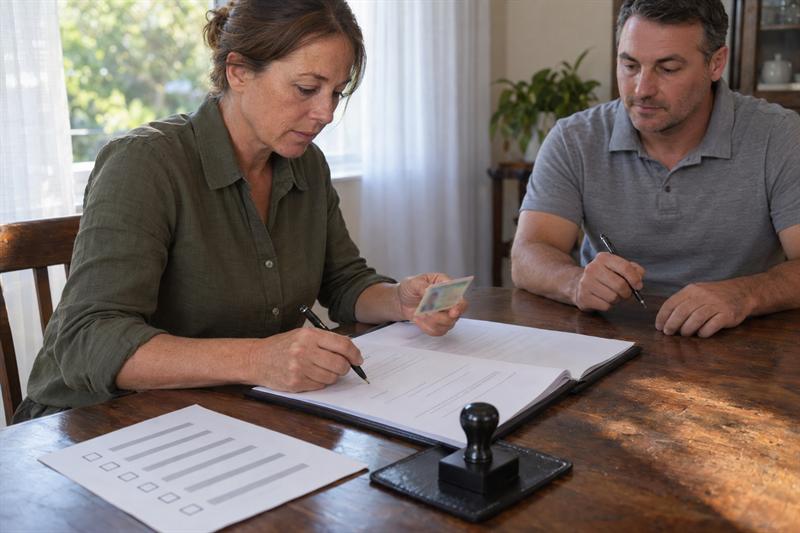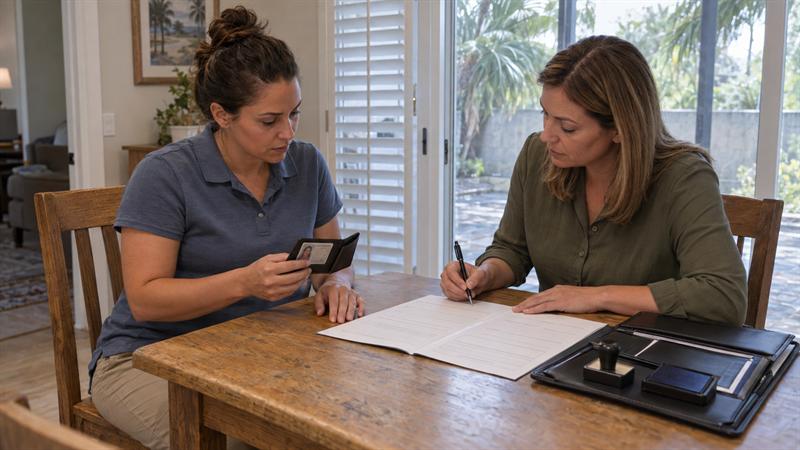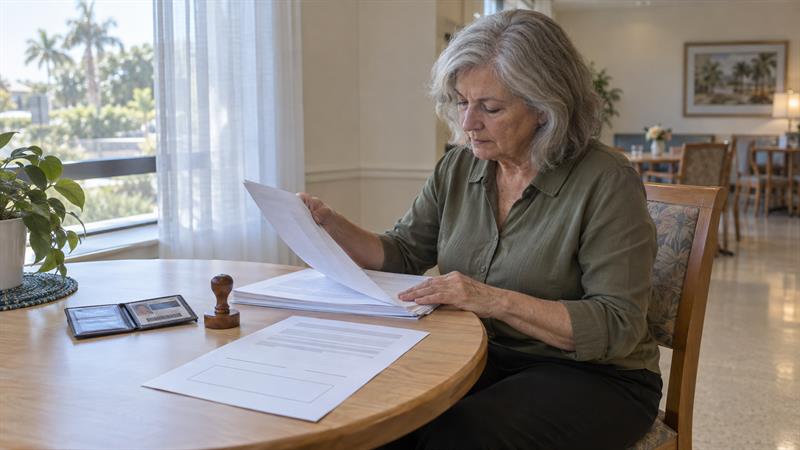
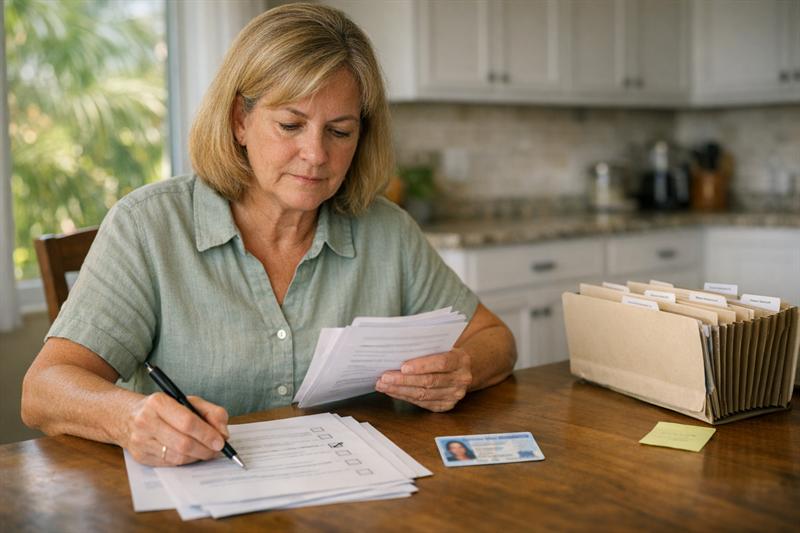
A closing package can include many pages, several required signatures, and instructions from more than one party. Sunshine Mobile Notary, LLC helps signers prepare for the appointment by focusing on details that can create last-minute delays: missing ID, an unavailable signer, unclear access instructions, witness arrangements, or unanswered questions for the lender or title team.
This checklist covers signing readiness, not whether to accept a loan, how to resolve a title issue, or the legal meaning of a document. Those questions should reach the appropriate transaction professional before signing begins.
What Is a Loan Signing Appointment?
A loan signing appointment is a scheduled meeting where borrowers, sellers, or other required parties sign real-estate or loan documents, some of which may require notarization. The lender, title company, escrow professional, closing agent, or attorney generally prepares the package and provides transaction instructions.
The appointment brings several moving parts together. If identification, signers, documents, witnesses, or location details are unresolved, the issue may not become apparent until everyone is ready to sign.
What a Signing Agent Does During a Closing
A signing agent helps facilitate the signing and notarization process according to the appointment instructions. This can include reviewing identification for the notarial act, guiding signers to signature and initial lines, completing applicable notarial certificates, and handling completed documents according to return instructions.
A signing agent does not create the loan package, approve the transaction, change loan figures, or determine whether a document is legally correct. For a broader overview, read what happens at a closing with a Florida loan signing agent.
Who Answers Questions About Loan Terms or Closing Documents?
The right contact depends on the question. Sending a question to the wrong person can delay the signing, especially when the issue surfaces at the table instead of before the appointment.
- Loan amount, interest rate, payment, escrow, or lender conditions: Contact the lender or loan officer.
- Title, settlement figures, closing instructions, or transaction logistics: Contact the title company, escrow professional, or closing agent.
- Legal meaning, ownership rights, or legal consequences: Contact an attorney.
- Signing and notarization logistics: Ask the signing agent.
The distinction matters: a signing agent facilitates signing and notarization, while transaction professionals address loan, settlement, title, and legal questions.
Loan Signing Appointment Checklist
Prepare the people, paperwork, place, and point of contact before the appointment. This reduces the chance of missing signatures, repeated calls, and rescheduling discussions while the signing is underway.
1. Confirm the Appointment Time, Address, and Access Details
Confirm the date, time, and exact signing location with the party coordinating the closing. A mobile appointment may require more than a street address when the location has a gate, office suite, condominium entrance, hospital check-in process, senior-living community, or limited parking.
- Verify the address, unit or suite number, and building name.
- Provide gate codes, parking instructions, and entry details.
- Confirm the best phone number for arrival updates.
- Report a location or schedule change as soon as it is known.
At a mobile signing, documents may be ready while the notary is unable to reach the signer because an access detail was not shared. That can affect the timing of the appointment for everyone involved.
2. Make Sure Every Required Signer Can Attend
Every person identified in the signing instructions should be available at the scheduled time. Depending on the transaction, that may include borrowers, sellers, spouses, trustees, authorized representatives, or other required parties.
Do not assume one person can sign for another simply because both are connected to the loan or property. If someone cannot attend, the closing professional needs to determine whether another approved arrangement is available. Waiting until the appointment begins can lead to revised instructions or rescheduling.
3. Have Acceptable Identification Ready
Set out a current, acceptable government-issued photo ID before the appointment. Compare the name on the identification with the name shown in the transaction documents, since name differences are usually easier to address before the signing begins.
A signer may use a married name, shortened name, or an ID that does not match the name in the document package. That does not necessarily stop the closing, but the responsible transaction professional may need to review it. Review acceptable forms of ID for a Florida notary appointment before the scheduled signing.
4. Confirm the Loan Document Package Is Ready
Make sure the title company, lender, escrow professional, closing agent, or attorney has provided the package to the appropriate party or confirmed its delivery. Keep identification, transaction instructions, and any closing materials specifically requested by the responsible party together in one place.
Do not fill in missing transaction details, change figures, or sign documents in advance unless the responsible transaction professional confirms the process and the notarial requirements allow it. Problems can arise when signers try to complete documents before the appointment. Questions about the package should go to the party that prepared it.
5. Ask Whether Witnesses Are Required
Some documents or transactions require witnesses in addition to notarization. Witness requirements are document-specific, so the right source is the party handling the closing instructions, not an assumption based on another closing or another type of document.
Do not assume a family member, neighbor, or signing agent can serve as a witness. If witnesses are required, arrange for them in advance and make sure they know the appointment time, location, and any identification instructions that apply.
6. Prepare a Quiet, Well-Lit Signing Location
Choose a place with a flat surface large enough for the document package, enough lighting to review identification and documents, and room for all required signers. The best setting is one where the appointment can proceed without repeated interruptions.
- Clear a table, desk, or other stable signing surface.
- Reduce interruptions from work calls, visitors, meals, or other commitments.
- Allow enough uninterrupted time for the document package.
- Keep a phone available in case the lender, title company, escrow professional, closing agent, or attorney needs to answer a transaction question.
Scheduling pressure can increase when a signing is squeezed between appointments or held in a noisy shared space. Interruptions can lead to missed instructions, uncertainty about who has signed, and pressure to rush through a package that should be handled carefully.
If the appointment details are still changing, address them before the notary arrives. Common signs include:
- An ID name does not match the documents.
- A required signer is not certain they can attend.
- The document package has not arrived or appears incomplete.
- No one has confirmed whether witnesses are required.
These issues are best handled before the signing table. Send them to the lender, title company, escrow professional, closing agent, or attorney early enough for updated instructions.
The Day-Before Loan Signing Checklist
The day before the appointment is a useful time to catch logistical problems. A short review can prevent a last-minute search for ID, a required signer, or a workable signing location.
- Reconfirm the appointment time, address, parking, and access details.
- Verify that every required signer is available.
- Place identification and requested materials together.
- Read the latest instructions from the lender, title company, escrow professional, closing agent, or attorney.
- Confirm witness arrangements when witnesses are required.
- Prepare a quiet, well-lit signing space.
- Save the contact information for the professional handling transaction questions.
Details that seem minor the day before can become harder to manage once the appointment is underway. A broader notary appointment checklist can also help organize the basic items to have ready.
What to Do if There Is a Problem Before the Appointment
Address the issue with the person responsible for that part of the transaction. A signing agent cannot correct loan figures, revise title documents, authorize a missing signer, or decide how a name discrepancy should be resolved.
If the Documents Have Not Arrived
Contact the title company, escrow professional, closing agent, lender, or attorney coordinating the closing. The signing agent works with the completed package and does not create, revise, or approve loan documents.
If the package is missing, the next step is to obtain document delivery or revised transaction instructions. Trying to proceed without a complete package can result in an incomplete signing.
If a Required Signer Cannot Attend
Notify the closing professional promptly. Whether the signing needs to be rescheduled or another approved arrangement is available depends on the transaction documents and instructions.
Do not wait until the appointment time to report the conflict. Once the notary, other signers, and closing parties are scheduled, a late notice can affect more than one person’s calendar.
If the Name on the ID Does Not Match the Documents
Report the difference before the signing rather than waiting for identity review at the table. The title company, lender, closing agent, escrow professional, or attorney determines whether updated documents, additional records, or other instructions are needed.
A name mismatch should not be ignored because the identification and document package need to support the notarial act. Early review gives the responsible party time to determine the next step.
If You Have Questions About Fees, Loan Terms, Title, or Legal Consequences
Send the question to the professional who handles that part of the transaction. Loan payments, rates, escrow, and lender requirements belong with the lender or loan officer. Settlement figures, title issues, and closing instructions belong with the title company, escrow professional, or closing agent.
Legal consequences, ownership questions, and document interpretation belong with an attorney. Getting an answer before signing is generally better than leaving the question unresolved during the appointment.
What to Expect During a Loan Signing Appointment
A prepared appointment generally follows a straightforward sequence. The signing agent reviews identification as required, guides signers to the indicated signature and initial lines, completes applicable notarial certificates, and handles completed documents according to established return instructions.
Not every package has the same forms or follows the same order. The important expectation is that questions about the transaction should have a clear contact path, allowing the appointment to stay focused on signatures and notarization.
Mobile Loan Signing Support for Southwest Florida Closings
Sunshine Mobile Notary, LLC provides mobile notary service for signings coordinated at an agreed location across Southwest Florida, including Fort Myers, Cape Coral, North Fort Myers, Lehigh Acres, Bonita Springs, Estero, Naples, and surrounding communities. A mobile appointment can be useful when travel, work schedules, mobility needs, caregiving responsibilities, or multiple-party coordination make a fixed-location visit difficult.
Mobile service addresses the location challenge, not the transaction requirements. Identification, required signers, witness instructions, and a complete document package still need to be in place before the appointment can move forward.
Remote online notarization may also be appropriate for some transactions when permitted and accepted by the parties involved. The practical choice depends on the closing instructions and documents, not simply on which option seems faster.
Key Takeaways
- Confirm the time, location, access details, and every required signer before the appointment.
- Have current identification ready and report name differences early.
- Do not sign documents in advance without confirming the transaction instructions and notarial requirements.
- Find out whether witnesses are required before the signing date.
- Send loan, title, settlement, fee, and legal questions to the professional responsible for that issue.
Conclusion: Be Ready Before the Notary Arrives
The real challenge with an unprepared loan signing is not the paperwork alone. It is a breakdown between people, documents, location details, and unanswered transaction questions. When those issues are left until the appointment starts, the result can be a delayed signing, missing instructions, or a need to coordinate everyone again.
Sunshine Mobile Notary, LLC is a practical option for Southwest Florida signers who have closing instructions in place and need a mobile notary appointment coordinated at an agreed location. Preparing the ID, signers, documents, witnesses, and access details first gives the appointment a stronger foundation for an efficient signing process.
Frequently Asked Questions
What should I bring to a loan signing appointment?
Bring a current, acceptable government-issued photo ID and any materials specifically requested in the closing instructions. A loan signing differs from a basic notary appointment because the lender, title company, escrow professional, closing agent, or attorney may require transaction-specific materials in addition to identification.
The useful distinction is between items needed for notarization and items needed for the closing itself. Keeping requested materials together helps prevent the appointment from stopping while someone searches for a document or instruction.
Do all borrowers need to be present at a loan signing?
Every person required by the transaction documents needs to be available to sign according to the closing instructions. That can include borrowers, sellers, trustees, spouses, or other named parties.
A common misunderstanding is assuming one borrower can sign for another because both are involved in the transaction. Required attendance is controlled by the document package and closing instructions, so an absent signer can trigger revised instructions or rescheduling.
Can I sign loan documents before the notary arrives?
Do not sign documents in advance unless the closing professional confirms that the document and notarial requirements allow it. Some notarized documents may require the signature to be completed in the notary’s presence, while others may involve different notarial procedures.
Reviewing documents beforehand is different from signing them early. Loan packages can include notarized and non-notarized forms, so signers should follow the transaction instructions rather than deciding on their own which pages can be completed before the appointment.
Do I need witnesses for a Florida loan signing?
Witnesses may be required for some documents, but the requirement depends on the transaction and the forms being signed. Not every loan signing uses the same witness instructions.
What matters is whether the closing instructions require witnesses and whether those witnesses must meet particular conditions. Simply having a friend or family member at the location does not establish that person as an appropriate witness for the transaction.
Who can answer questions about my loan terms or closing costs?
The lender or loan officer handles questions about loan terms, interest rate, payment, escrow, and lender requirements. The title company, escrow professional, or closing agent handles settlement figures, title matters, and closing instructions.
An attorney handles legal meaning, ownership rights, and legal consequences. A signing agent supports the signing and notarization process but does not interpret the financial or legal effect of the documents.
Can a mobile notary come to my home for a loan signing in Southwest Florida?
A mobile loan signing can be coordinated at an agreed location, such as a home, office, community, hospital, or senior-living setting, when the transaction instructions and schedule support it. The location needs a workable signing surface, adequate lighting, clear access details, and enough uninterrupted time for required signers.
The practical benefit is location coordination. It does not replace the need for proper ID, complete documents, required signers, witnesses when applicable, or closing instructions from the responsible transaction professional.