
Before You Schedule: Understand the Purpose of the I-9 Appointment
An I-9 appointment is more than a meeting where an employee shows identification. It involves the employer, the employee, and the person the employer has designated to assist with its document-review process. When one party is missing instructions or materials, the meeting may be delayed or need to be rescheduled.
This article covers appointment preparation only. Employers should follow their own procedures and current official Form I-9 instructions when managing their employment-verification process.
Form I-9 Document Review Is Not a Notarization
Form I-9 document review is not a notarization. Form I-9 does not require a notary seal or notarial certificate simply because a remote employee needs an in-person document review. An employer may designate a person, including a mobile notary when its process permits, to assist with the review without turning the form into a notarized document.
This distinction matters because employees sometimes search for “I-9 notarization” and expect a standard notarial appointment. The actual need is usually an employer-directed document review. For a fuller explanation of roles and expectations, review what employers and employees should expect from I-9 verification services.
The Employer Remains Responsible for Its I-9 Process
The employer establishes its process, provides the needed materials, chooses how completed information should be returned, and identifies the person who can answer internal questions. The employer-designated representative follows the applicable instructions during the appointment.
The designated representative should not provide immigration, employment, or legal advice, or choose documents for the employee. Questions about employer policy, document selection, or legal requirements belong with the employer’s HR, onboarding, or qualified legal contact.
When a Mobile Appointment May Help a Remote Employee
A mobile appointment may be useful when a remote employee cannot reasonably meet at the employer’s office or when a nearby agreed-upon location is more practical than a fixed retail location. The location addresses an access issue; it does not replace the employer’s instructions, designation, or return process.
Sunshine Mobile Notary, LLC coordinates mobile appointments based on the employer’s directions, local availability, and a workable meeting location. The appointment is usually smoother when the employer and employee have prepared the required details in advance.
Employer I-9 Verification Checklist: What to Prepare Before the Appointment
Employers should prepare the workflow before requesting an appointment. A common problem is that the employee has a meeting time, but the reviewer has no clear designation, no accessible materials, and no direction for returning completed information.
- Confirm the employer’s current Form I-9 materials and internal process.
- Provide clear authorization or designation instructions for the employer-designated representative.
- Send clear instructions to the employee and appointment reviewer.
- Set the required completion timeframe.
- Identify the approved return method for completed materials.
- Provide an HR or onboarding contact for questions outside the reviewer’s role.
Confirm the Current Form and Internal Process
The employer should provide access to its current form, instructions, and internal workflow before the appointment is scheduled. Form editions and official instructions can change, so directions copied from an old email or prior hire can create avoidable problems.
The employer should also make clear which steps belong to the employee, which belong to the designated representative, and which remain internal. A document-review appointment should not become a guesswork exercise at the meeting table.
Designate the Appointment Reviewer Clearly
Clear employer designation gives the appointment a defined purpose and chain of communication. Written directions are practical because they can identify the employee, explain the representative’s expected role, and provide employer-specific instructions where needed.
When designation or instructions are unclear, the reviewer may have no reliable basis for acting on the employer’s behalf. This can lead to a delayed appointment, additional messages between parties, and a second round of coordination.
Give Clear Written Instructions to the Employee and Reviewer
Both the employee and reviewer need the same core details: appointment time, meeting location, contact information, expected materials, and the employer’s process. The employee should know to bring acceptable original documents as directed. The reviewer should know what materials must be available before the meeting begins.
In mobile document appointments, one person may receive only a calendar invite while another receives only part of the instructions. When details are scattered across several emails or people, the appointment becomes harder to complete smoothly.
Set a Completion Deadline and Form-Return Method
The employer should establish the required completion timeframe before arranging the meeting and explain how completed information must be returned. The return process might involve an employer portal, an employer-approved email process, courier instructions, or another internal method.
Do not leave return routing until after the appointment. If no one knows where completed materials belong, the document review can create another delay instead of moving the onboarding process forward. When time is limited, this guide to how mobile appointments can be coordinated when time is limited explains the information that should be ready first.
Provide a Contact for HR or Legal Questions
An employer contact should be available for questions involving internal policy, document process, timing, or unclear instructions. The appointment reviewer should not be expected to interpret legal requirements or decide how the employer wants an exception handled.
Without a contact person, small questions can stop an appointment. A clear escalation path helps keep the representative within the correct role and reduces the chance of the employee receiving guidance the representative is not authorized to provide.
If the employer has not provided clear designation, current materials, return instructions, and a contact person, the appointment may not be ready to proceed.
- The employee has a meeting time but no clear instructions about original documents.
- The designated representative has not received clear employer directions.
- The employer has not identified how completed information should be returned.
- Questions about the process are being directed to the appointment reviewer instead of HR or onboarding.
These signs generally mean the workflow is incomplete. The employer should organize the handoff before the meeting, or the appointment may lead to rescheduling and more back-and-forth.
Remote Employee I-9 Checklist: What to Bring and Confirm
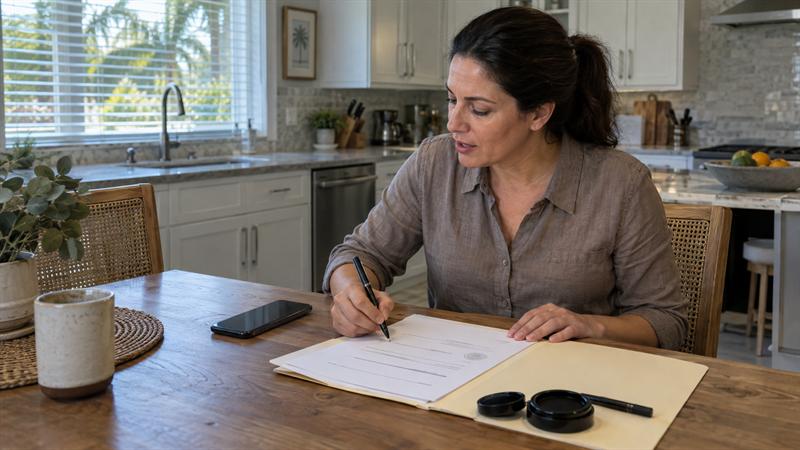
Remote employees should arrive ready to present acceptable original documents for the employer’s in-person review process and should understand the meeting logistics before leaving. The employee’s preparation is usually straightforward, but one missing detail can affect everyone involved.
- Review the employer’s written instructions.
- Bring acceptable original documents for the in-person review.
- Confirm the time, location, and contact information.
- Know whether the employer expects any information completed before the meeting.
- Direct document-choice or eligibility questions to the employer.
Bring Original Documents, Not Just Images or Photocopies
For a standard in-person document review, the employee should have the required original documents available according to the employer’s process and current official instructions. A phone image, scan, or photocopy generally does not serve the same purpose as an original document presented in person.
This is a common reason an appointment cannot move forward as planned. If an employee arrives with only copies, the employer should provide direction on the next step rather than the reviewer treating a copy as a substitute or making an independent decision.
Review the Employer’s Instructions Before the Meeting
Employees should review the employer’s instructions before the appointment, including any materials, forms, timing information, or secure workflow the employer has provided. If the employer has asked the employee to complete certain information before the meeting, those directions should be followed.
Employees should not sign or complete documents based on assumptions about a typical notary appointment. An I-9 document review follows the employer’s designated process, not a one-size-fits-all appointment script.
Choose Documents Independently From the Current List of Acceptable Documents
The employee should use the employer’s instructions and the current official List of Acceptable Documents when determining what to bring. The appointment reviewer does not choose documents for the employee or advise which document would be best.
That boundary helps protect everyone involved. If the employee is unsure what the employer expects, the question belongs with the employer’s HR or onboarding contact, not with the person conducting the appointment.
Confirm the Appointment Time, Location, and Contact Information
Confirm the address, parking or entry details, and a reliable contact number before the appointment. For a mobile meeting, access details matter. A reviewer who cannot enter a workplace, find the correct building, or reach the employee can lose time that should have been spent on the document review.
For broader appointment preparation, see a general checklist for preparing for a document appointment. I-9 document-review instructions should still come from the employer because this process is different from a standard notarization.
I-9 Document Review Checklist for the Employer-Designated Representative
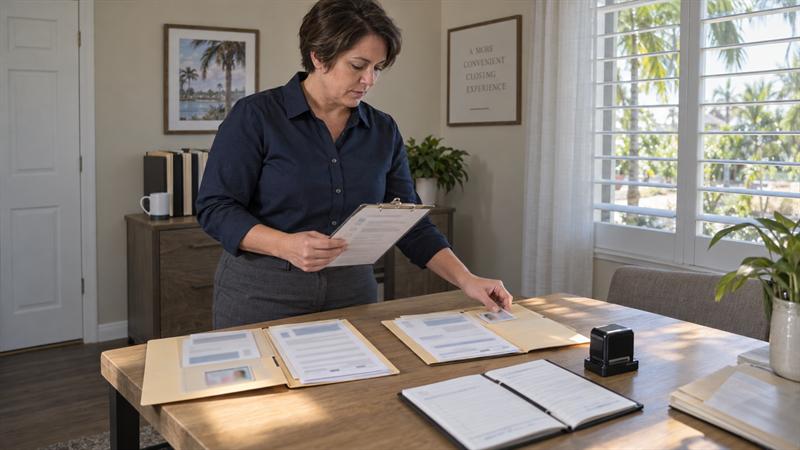
The employer-designated representative should arrive with clear employer designation, accessible instructions, and a defined return process. The role is to follow the employer’s stated workflow and applicable Form I-9 instructions, not fill gaps in the workflow.
Confirm Employer Designation and Appointment Instructions
Before meeting the employee, confirm that the employer has designated the representative for the appointment and supplied the relevant instructions. The representative should know who to contact if the materials are incomplete or if the employer’s directions are unclear.
In some appointments, the employee assumes the reviewer has received everything from the employer, while the reviewer assumes the employee is carrying the required materials. Both assumptions can stall the meeting. Confirming instructions before travel helps prevent that breakdown.
Confirm That Original Documents Are Available for Review
The representative should confirm that the employee has acceptable original documents available for the in-person review, consistent with the employer’s process and current Form I-9 instructions. If the employee has only copies or has not received adequate instructions, the representative should pause and direct the matter back to the employer.
Trying to solve a missing-document issue during the appointment can create a larger process problem. The appropriate next step is employer direction, not improvisation.
Follow the Employer’s Process Without Making Eligibility Decisions
The designated representative follows the employer’s directions for the appointment and carries out the document-review tasks assigned by the employer. The representative should not advise an employee on document selection, interpret immigration status, or provide legal advice.
This role boundary keeps a practical document-review appointment from becoming an inappropriate legal or HR discussion.
Return Completed Materials Through the Employer’s Requested Channel
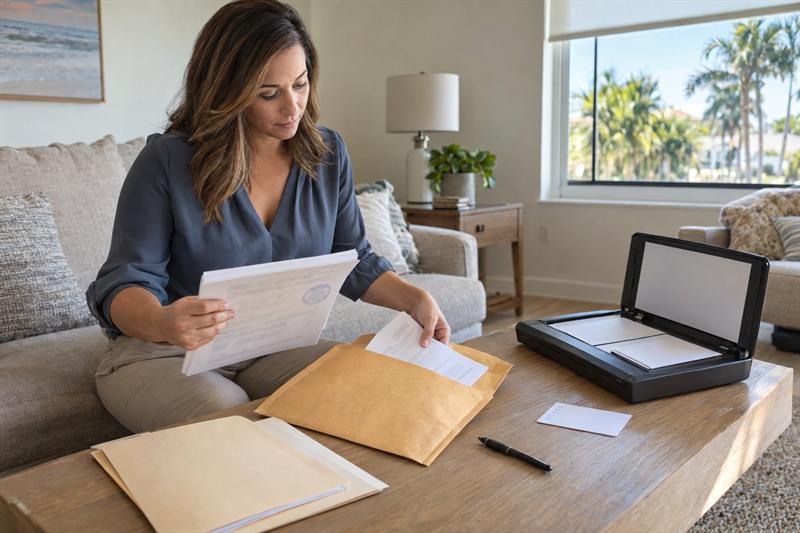
Completed materials should be returned through the employer’s requested channel. Personal email, informal text messages, and unapproved file-sharing methods can create unnecessary privacy and process concerns.
The representative should follow the employer’s stated return and retention instructions. If the employer requires confirmation after submission, that confirmation should be handled through the employer’s process.
Appointment Logistics That Help Avoid Delays
Good I-9 appointment logistics are specific. The meeting location, access details, document readiness, and return path should be settled before the representative travels. Vague arrangements can turn a short appointment into a longer delay.
Select a Private, Practical Meeting Location
Choose a location where the employee can present documents, the parties can communicate clearly, and basic document privacy is respected. A home, workplace, office, or another agreed-upon location may work when it is practical for everyone involved.
For mobile appointments, access details should be part of the appointment instructions. Building entry rules, parking, gate codes, reception desks, and workplace policies affect whether the meeting starts on time.
Allow Time for Document Access and Form Review
Schedule enough time for the employee to access documents and for the representative to follow the employer’s instructions. Rushing an appointment does not resolve missing information. It can result in incomplete handoffs and more follow-up work.
If a deadline is close, early coordination matters. Waiting until the last moment becomes more difficult when the employee needs to locate original documents, the employer has not supplied clear designation, or the return process is still unclear.
Plan for Missing Documents, Schedule Changes, or Unclear Instructions
If the employee has only copies, cannot access originals, or does not have employer instructions, the issue should be sent back to the employer. The same applies when the representative has no clear designation or no way to return completed materials.
Rescheduling can be more productive than guessing. A new appointment with complete instructions supports a clearer process; an appointment based on assumptions can create repeated delays.
Keep Communications Secure and Limited to Needed Information
Use the employer’s approved process for transmitting sensitive information and completed materials. Appointment messages should stay focused on the time, location, contact details, and materials needed for the meeting.
Sharing more personal information than needed through informal channels can create avoidable exposure. The employer’s designated workflow should control how information is handled after the review.
Common I-9 Appointment Problems and How to Prevent Them
Many I-9 appointment problems are preventable because they begin with missing coordination, not with the meeting itself. Addressing these points before scheduling helps keep each party in the right role.
No Clear Employer Designation
Without clear designation, the representative may lack a defined basis for assisting with the employer’s process. Prevention starts with an employer email or instruction document that identifies the employee, the purpose of the meeting, and an employer contact.
The Form or Instructions Are Missing or Inaccessible
An appointment can be difficult to complete when the needed materials are buried in an inbox, held by someone who is unavailable, or not supplied at all. The employer should confirm access to current materials and instructions before the appointment is confirmed.
The Employee Brings Copies Instead of Original Documents
This can result in a paused appointment because the employee is not prepared for the intended in-person review. The prevention is direct: employees should review the employer’s instructions and have acceptable original documents available before leaving for the meeting.
The Employer Has Not Explained How to Return Completed Materials
When return instructions are missing, the appointment can end without a completed handoff. The employer should name the approved channel before the meeting so the representative knows what happens next.
Everyone Assumes the Form Needs a Notary Stamp
This misunderstanding can send people toward the wrong type of appointment and distract from the actual employer-directed process. Clarifying the difference between notarization and I-9 document review before scheduling helps prevent that confusion.
A Question Requires HR, Legal, or Immigration Guidance
When a question involves employee eligibility, document selection, immigration matters, or employer policy, the appointment reviewer should not answer it. The employer’s designated HR contact or qualified legal resource should provide the direction needed to continue.
Mobile I-9 Document Review Support in Southwest Florida
Mobile document-review support can be useful when an employer needs an in-person meeting coordinated for a remote employee without requiring that employee to travel to a fixed office or retail location. Sunshine Mobile Notary, LLC focuses on appointment logistics: a practical meeting place, clear coordination, and an employer-directed process.
When Mobile Document Review Support May Be a Practical Option
A mobile appointment can be a practical choice when the employer has already defined its process and the employee has acceptable original documents ready for review. It may help when the employee works remotely, has limited access to a nearby employer office, or needs to meet at an agreed-upon local location.
Sunshine Mobile Notary, LLC does not provide legal, immigration, or HR compliance advice. The employer supplies designation and instructions; the mobile appointment supports the in-person coordination required by that process.
Areas Served
Sunshine Mobile Notary, LLC provides mobile service in Fort Myers, Cape Coral, North Fort Myers, Lehigh Acres, Bonita Springs, Estero, Naples, North Naples, Ave Maria, Immokalee, Marco Island, Port Charlotte, Punta Gorda, and surrounding Southwest Florida communities.
Key Takeaways
- An I-9 document-review appointment is different from a notarization.
- The employer should provide clear designation, current materials, written instructions, and return directions.
- The remote employee should follow employer instructions and bring acceptable original documents for the in-person review.
- The employer-designated representative follows the employer’s process and does not provide legal, immigration, or document-selection advice.
- Mobile support works best when the three-party handoff is organized before the appointment begins.
Conclusion: Prepare the Handoff Before the Appointment
The central problem behind many delayed I-9 appointments is incomplete coordination. When the employer has not provided clear designation, the employee arrives without original documents, or the representative has no return instructions, the appointment can pause and the onboarding process can take longer.
Prepare the handoff first: the employer should send its instructions and return process, the employee should confirm document readiness and meeting details, and the designated representative should stay within the employer-directed role. For remote employees and employers who need a practical local meeting option, Sunshine Mobile Notary, LLC can coordinate a mobile document-review appointment in Southwest Florida. Before scheduling, review what employers and employees should expect from I-9 verification services.
Frequently Asked Questions About I-9 Verification Appointments
Does Form I-9 need to be notarized?
No. Form I-9 is not a notarized document and does not require a notarial certificate or seal. An employer may designate a person to assist with its document-review process, but that role does not convert the form into a notarized document.
The focus is on following the employer’s documented process and applicable Form I-9 instructions, not performing a standard notarial act.
What should I bring to an I-9 verification appointment?
Bring acceptable original documents required for the in-person review under the employer’s process, along with the appointment details and any materials the employer has provided. The employee should know the time, location, contact information, and whether the employer expects anything completed before the meeting.
The important distinction is between original documents and images of documents. A clear photo on a phone generally does not resolve a missing-original issue in a standard in-person review.
Can I use photocopies or phone images of my documents for I-9 verification?
For a standard in-person review, photocopies, scans, and phone images generally do not serve the same purpose as presenting original documents. The employer’s process and current official instructions determine what is required, but the appointment is commonly arranged around reviewing originals in person.
If originals are unavailable, the issue needs employer direction. The representative should not treat a copy as an automatic substitute or decide which alternative document the employee should provide.
What does an employer need to provide before an I-9 document review appointment?
The employer should provide clear designation, access to current materials, directions for the employee and reviewer, a completion timeframe, an employer contact, and a return method for completed information. These items create the handoff that makes the appointment workable.
For example, a meeting time alone does not help if the representative has no clear designation or does not know whether completed materials go to a portal, an internal contact, or another employer-approved channel.
Can a mobile notary help with an I-9 document review?
A mobile notary may be able to assist as an employer-designated representative when the employer’s process permits it. The mobile service addresses the location challenge by coordinating an in-person meeting at a practical agreed-upon place.
It does not mean the Form I-9 is being notarized, and it does not give the mobile provider authority to provide legal or immigration advice. The employer still controls the process and instructions.
What happens if the employee does not have the required original documents at the appointment?
The appointment should pause rather than shift into guesswork. The designated representative should not substitute copies, select another document for the employee, or make decisions outside the employer’s instructions.
This situation requires direction from the employer’s HR or onboarding contact. That keeps the process within the proper roles and helps prevent a document-readiness problem from becoming a larger process issue.